Shandong Xuye New Materials Co., Ltd. logo

News & insights

What are the advantages of using CPVC?

What are the advantages of using CPVC?

Key Benefits of CPVC Over Traditional Materials (Metal & Standard PVC)
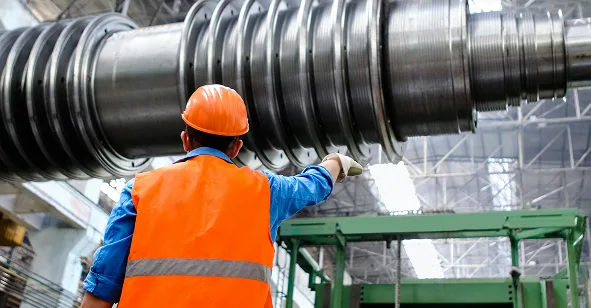

1. Superior Heat Resistance
• Continuous service up to 93 °C (200 °F)—far above PVC’s 60 °C limit—making it ideal for hot-water lines, solar heaters and industrial heat-transfer systems.
2. Exceptional Chemical & Corrosion Resistance
• Inert to most acids, alkalis and salts, eliminating rust, scale and pitting that plague metallic pipes.
• Meets NSF/ANSI 61 potable-water standards, ensuring long-term purity.
3. Higher Strength & Safety
• Handles pressures up to 1.6 MPa, 30 % higher than standard PVC.
• Self-extinguishing, UL94 V-0 rated for fire-safety applications.
4. Lower Lifetime Cost
• Weighs 1/6 of steel, cutting transport and labor costs.
• 50-year service life with virtually zero maintenance, slashing total cost of ownership.
5. Easy Installation
• Solvent-weld or mechanical joints—no welding or heavy tools required—reduce install time by up to 40 %.
6. Energy & Environmental Benefits
• Low thermal conductivity (0.14 W/m·K) minimizes heat loss, lowering insulation needs.
• Fully recyclable and consumes 80 % less energy to produce than copper.
7. Application Versatility
• Successfully replaces copper, galvanized and stainless-steel piping in hot-water plumbing, fire sprinklers, chemical transport and ultra-pure water systems.

In short, CPVC delivers the durability of metal at a fraction of the cost, while outperforming both metal and standard PVC in heat, corrosion and fire resistance.
Keep reading

More from the knowledge center.

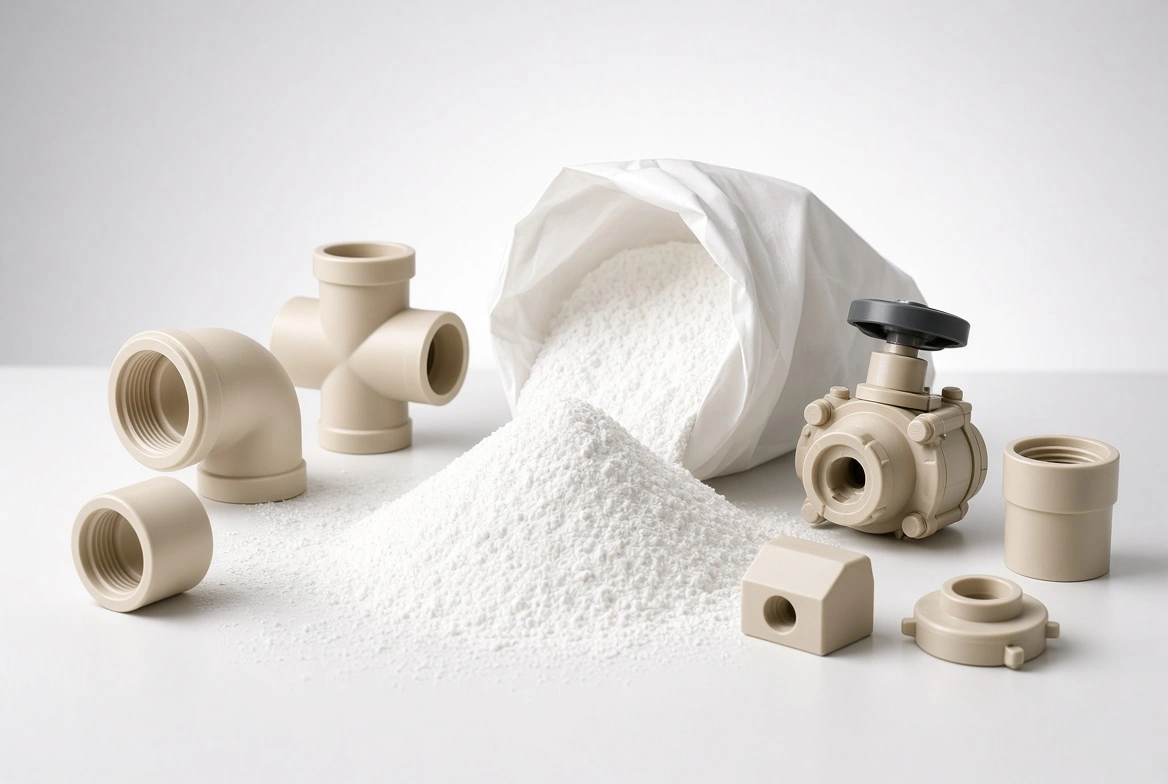
  • Injection-Grade CPVC Resin for Fittings, Valves, and Molded Parts

    Injection-Grade CPVC Resin for Fittings, Valves, and Molded Parts

    Injection-molded fittings, valves, and complex molded parts need injection-grade CPVC resin. Extrusion-grade resin is designed for pipe production and does not deliver the flow, packing, and knit-line performance these parts require. Using the wrong base resin leads to incomplete fill, weak weld lines, dimensional inconsistency, and higher scrap rates. This guide explains the specific challenges…

    Read more

  • CPVC Resin Chlorine Content: What It Means for Pipe and Fitting Production

    CPVC Resin Chlorine Content: What It Means for Pipe and Fitting Production

    CPVC resin chlorine content is an important purchasing specification. It is not a stand-alone rule for picking a grade. If you formulate and compound in-house, evaluate the base resin. If you buy a prepared compound, evaluate the formulated material and its suitability for your production line. A resin chlorine figure alone does not set the…

    Read more

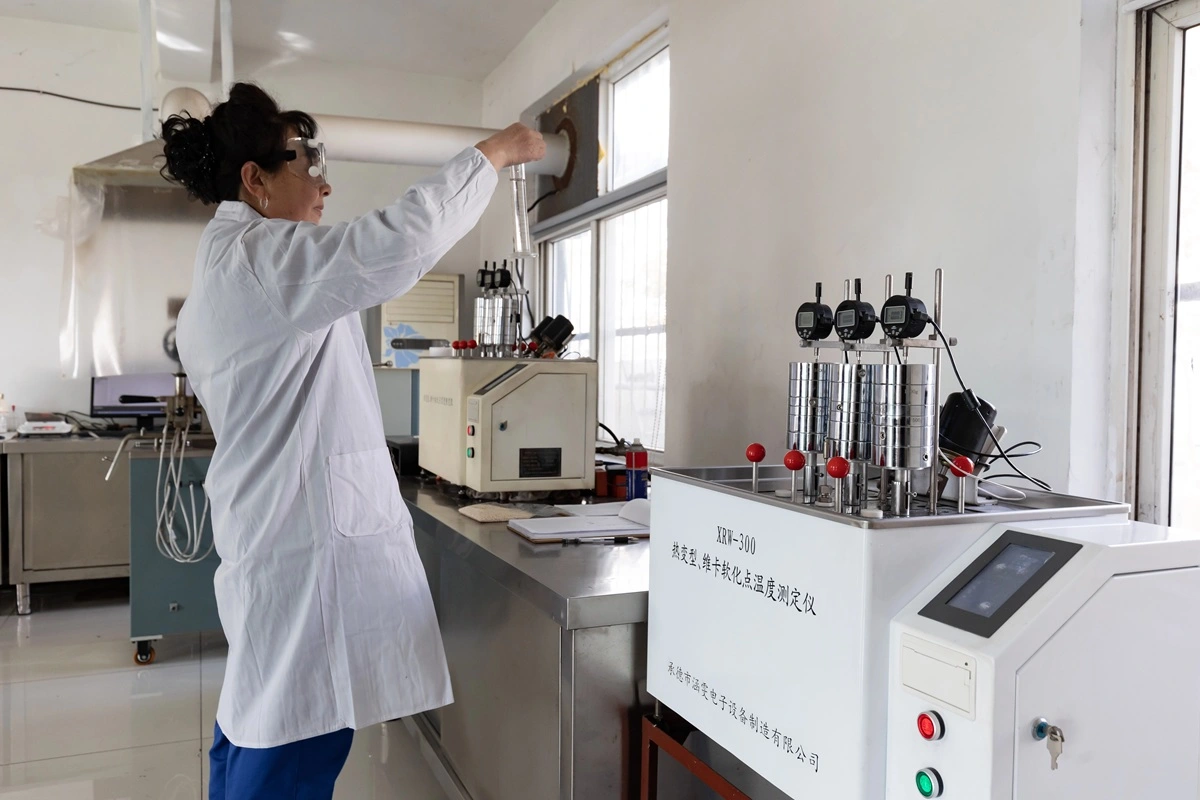
  • Vicat Softening Temperature of CPVC Resin and Compound for Hot-Water Pipe and Fittings

    Vicat Softening Temperature of CPVC Resin and Compound for Hot-Water Pipe and Fittings

    When a pipe plant buys CPVC resin or compound, Vicat is the number on the incoming sheet. It is the heat floor of the material, not the temperature the finished pipe is allowed to run at. A low Vicat lot can still run on the extruder or the press. It can still come out looking…

    Read more

Contact XUYE

Request a sample or technical consultation

Tell us your application and target grade. XUYE will help confirm the next practical step.

Tel
+86 546 363 7919
Mob
+86 189 5463 8366
Add
No.2 Heqing Road, Hekou District, Dongying, Shandong, China

*We respect your privacy. We only contact you in accordance with our Privacy Policy