
Knowledge center
Blog
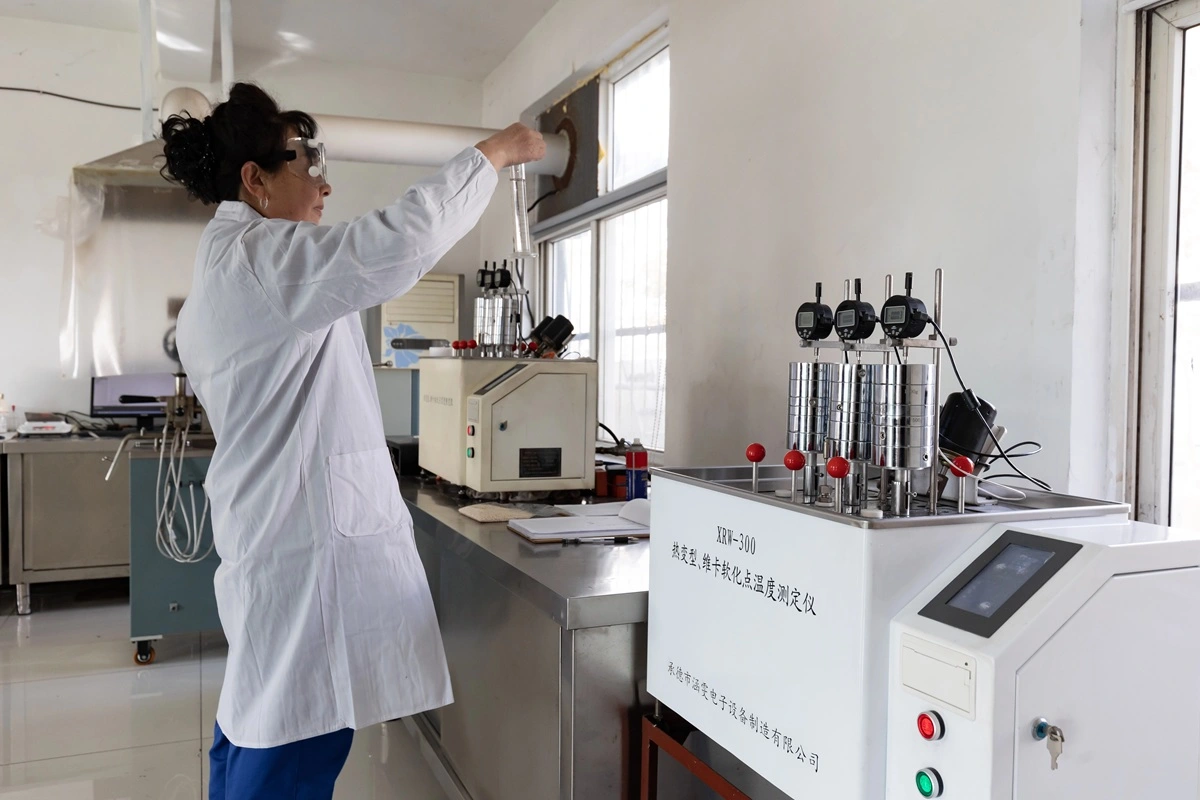
CPVC Resin Chlorine Content: What It Means for Pipe and Fitting Production
CPVC resin chlorine content is an important purchasing specification. It is not a stand-alone rule for picking a grade. If you formulate and compound in-house, evaluate the base resin. If you buy a prepared compound, evaluate the formulated material and its suitability for your production line. A resin chlorine figure alone does not set the…
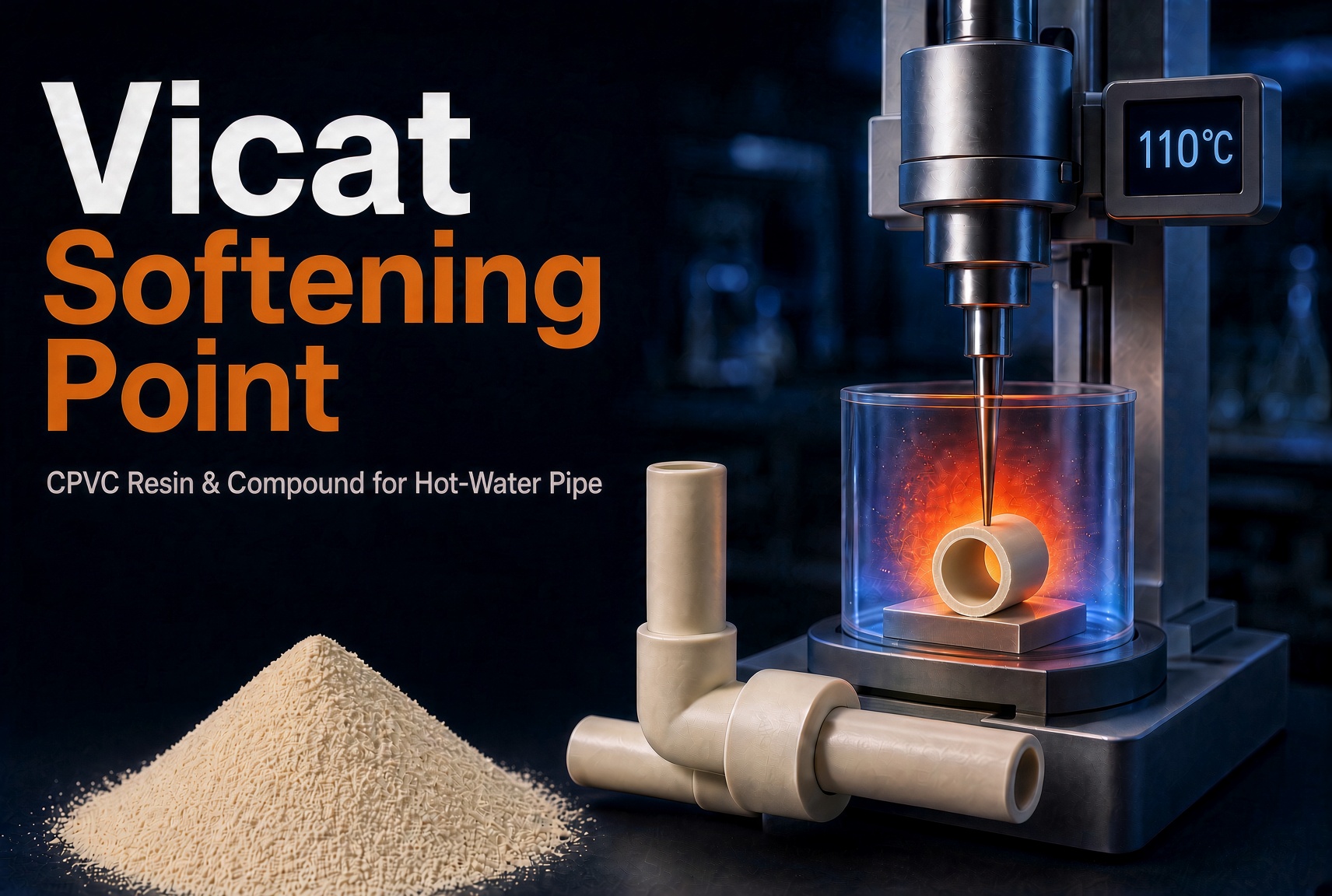
Vicat Softening Temperature of CPVC Resin and Compound for Hot-Water Pipe and Fittings
When a pipe plant buys CPVC resin or compound, Vicat is the number on the incoming sheet. It is the heat floor of the material, not the temperature the finished pipe is allowed to run at. A low Vicat lot can still run on the extruder or the press. It can still come out looking…
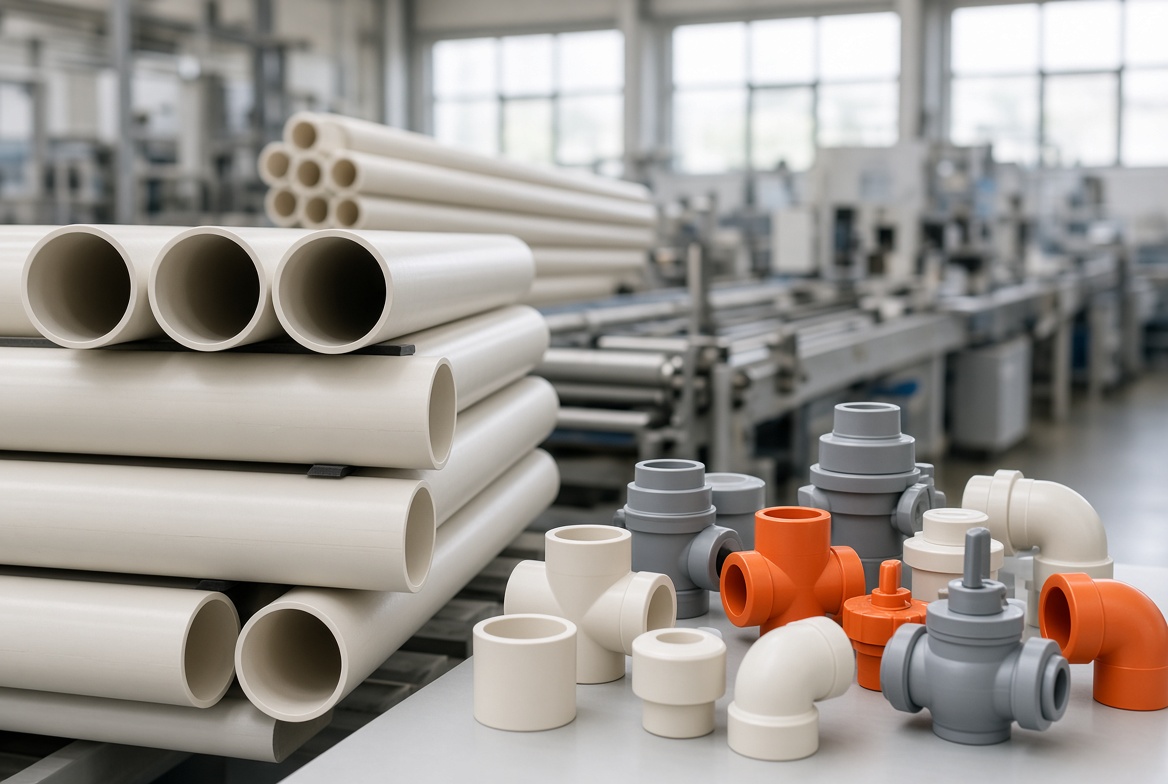
Using CPVC Compound in Hot-Water Pipe and Fitting Production
A hot-water line can use chlorinated polyvinyl chloride (CPVC). The pipe and the fittings have to be made from a hot-water CPVC compound, not from standard PVC, and the extrusion line and the injection press do not run the same grade. Can You Run CPVC on a Hot-Water Line? Yes, if the pipe and fittings…
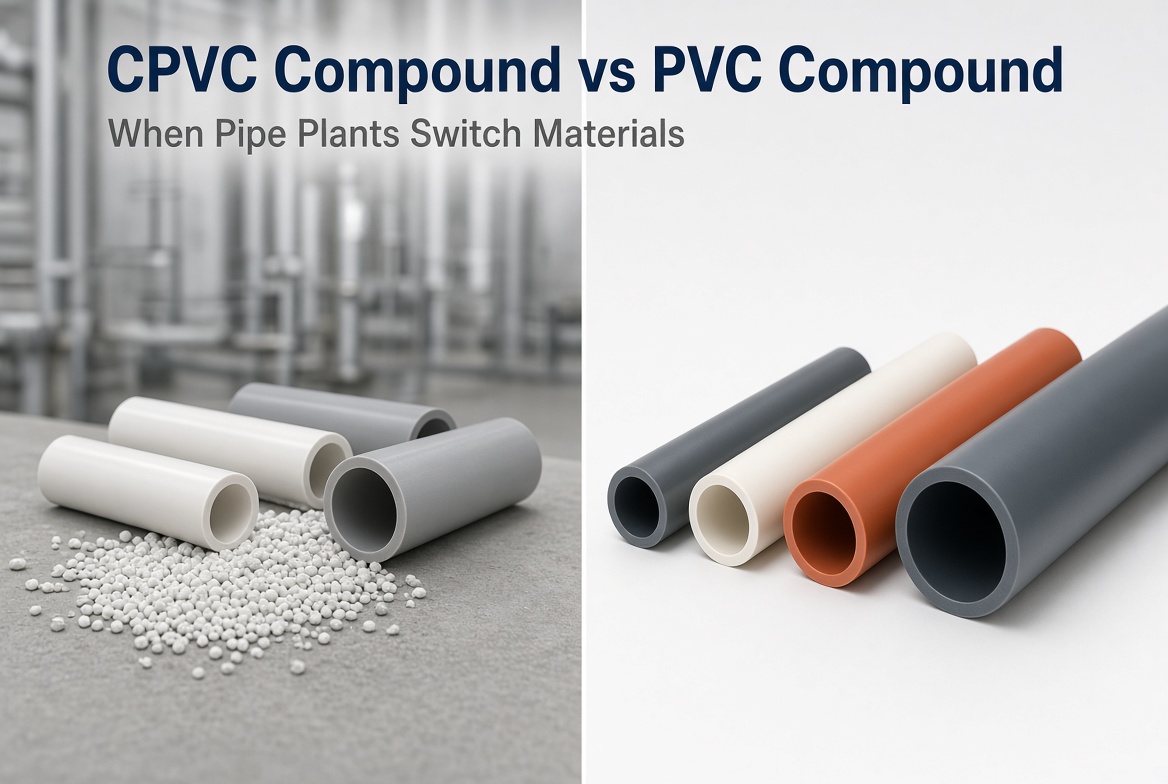
CPVC Compound vs PVC Compound: When Pipe Plants Switch Materials
If you are adding hot-water potable pipe, industrial pipe, or fire-protection pipe and fittings, you should order CPVC compound, not another lot of PVC compound. XUYE supplies CPVC compound in two machine routes. You specify the grade with our team by how you will run it. How you will run it Grade to put on…

The Role of Chlorinated Polyethylene (CPE) in Impact Modification of Rigid PVC Profiles
Discover how CPE 135A improves rigid PVC profile durability, cold-impact resistance, and processing stability. Compare CPE vs ACR and optimize your extrusion line.

Why CPVC Remains a Preferred Material for Modern Piping Systems
Selecting the right piping material for industrial engineering and commercial construction impacts safety, long term efficiency, and operational expenses. Metallic pipes such as copper or carbon steel are vulnerable to internal corrosion, heavy scale accumulation, and high installation costs. These structural challenges often lead to premature fluid leaks and unscheduled system downtime, forcing engineering teams…

CPVC Resin vs CPVC Compound: Which Solution Best Fits Your Extrusion & Injection Lines?
How do you select the right CPVC resin or pre-mix? Compare pure resin powder with ready-to-use pellets regarding thermal stability, melt flow index, equipment wear, and total cost in extrusion and injection molding applications. Request samples and processing recommendations for Xuye Chemical’s CPVC resins and compounds.

5-SSIPA vs SIPM: Optimizing Cationic Dyeable Polyester (CDP) Production and Processing Costs
How should one choose between 5-SSIPA and SIPM for the production of cationic dyeable polyester (CDP)? This comparison highlights the differences between the two regarding esterification efficiency, energy consumption (methanol recovery), and fiber spinning performance. Contact us now to obtain samples of Shandong Xuye’s 5-SSIPA monomer and receive recommendations for process optimization.
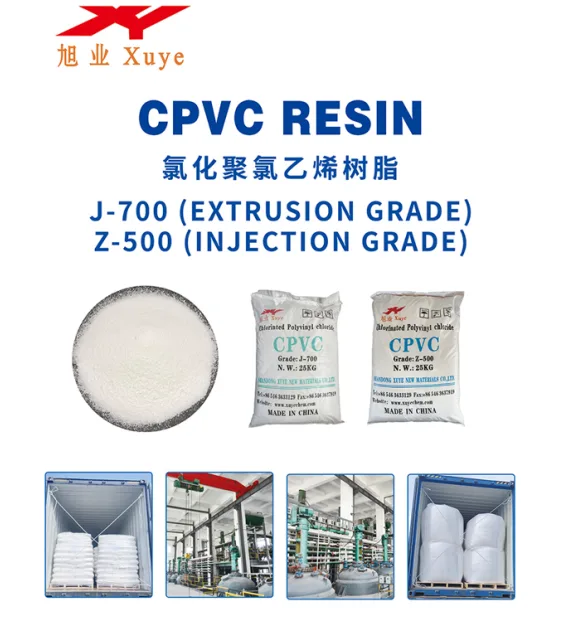
CPVC Resin Buying Guide for Pipe and Fitting Manufacturers
Selecting the right CPVC resin is one of the most important decisions a pipe or fitting manufacturer can make. Even with advanced extrusion lines, precision injection molding machines, and strict quality control, the performance of the finished product depends heavily on the quality and characteristics of the raw material.

XUYE: A Leading CPVC Manufacturer in China
XUYE serves customers worldwide with high-performance materials for piping systems, coatings, industrial plastics, and other demanding applications. Behind every product is a history of continuous innovation, investment, and commitment to quality.
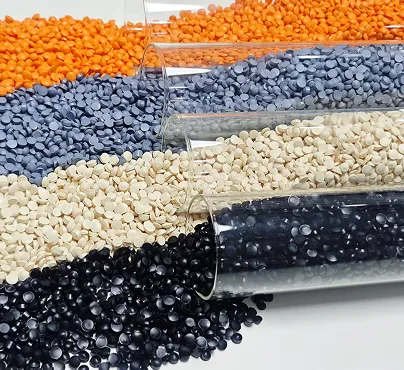
How Is CPVC Made? Manufacturing Process Explained
CPVC (Chlorinated Polyvinyl Chloride) is a high-performance thermoplastic known for its excellent heat resistance, corrosion resistance, and long service life. Compared with standard PVC, CPVC can withstand higher operating temperatures while maintaining excellent mechanical strength, making it a preferred material for hot water piping, industrial fluid handling systems, fire sprinkler networks, and chemical processing applications.
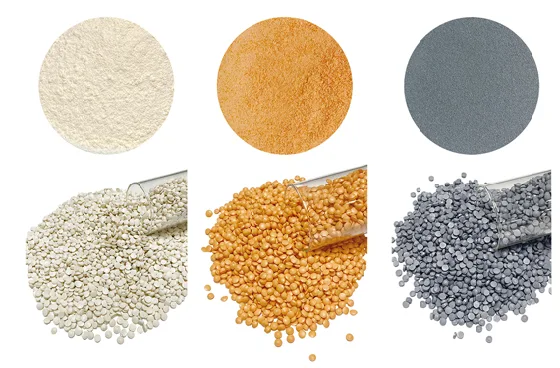
Why Choose CPVC for Hot Water Piping Systems
Among the many piping materials available today, CPVC (Chlorinated Polyvinyl Chloride) has become one of the most widely used solutions for hot water distribution. Its excellent heat resistance, corrosion resistance, and ease of installation make it a practical alternative to traditional metal piping. This article explains why CPVC has become the preferred choice for modern…