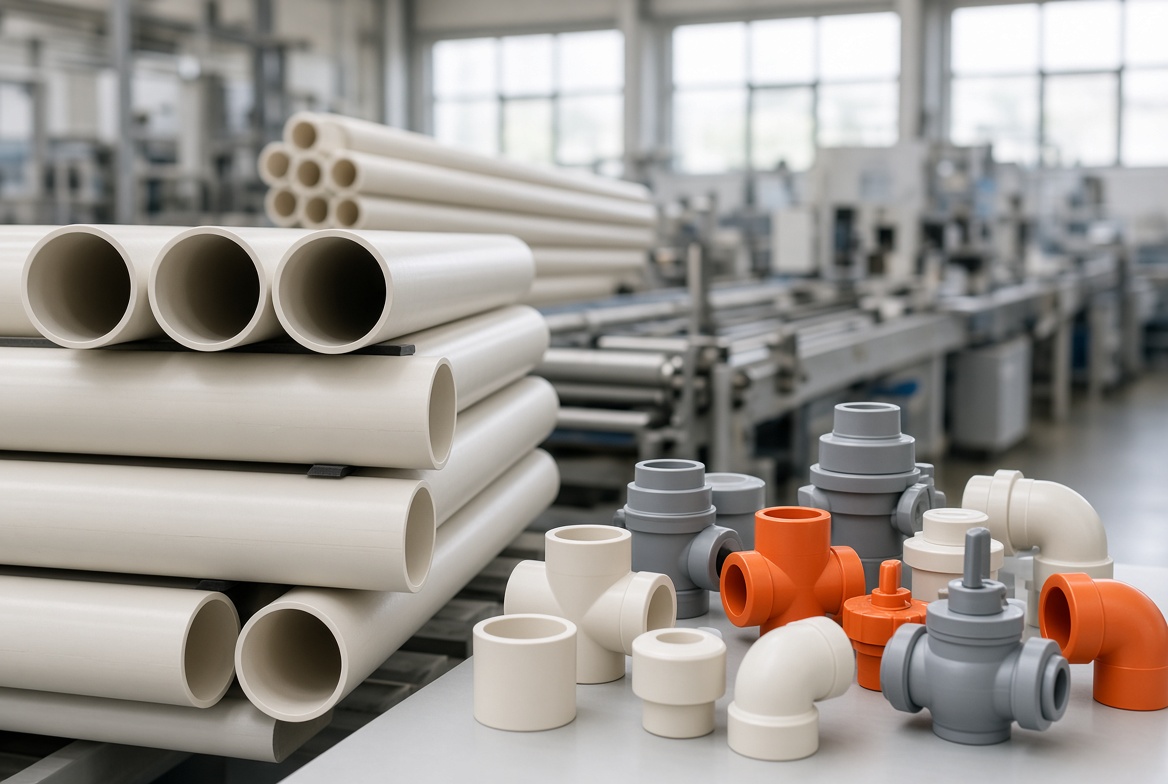
When a pipe plant buys CPVC resin or compound, Vicat is the number on the incoming sheet. It is the heat floor of the material, not the temperature the finished pipe is allowed to run at.
A low Vicat lot can still run on the extruder or the press. It can still come out looking fine on the day of production. The problem shows up later, on the customer’s line. The pipe or fitting softens, loses shape, or loses pressure capacity once the water is hot.
Some compound suppliers lower Vicat to win the price. The pipe plant is the one who owns the failure. That is why Vicat belongs on the purchase sheet before the order is placed.
What Vicat Softening Temperature Actually Measures
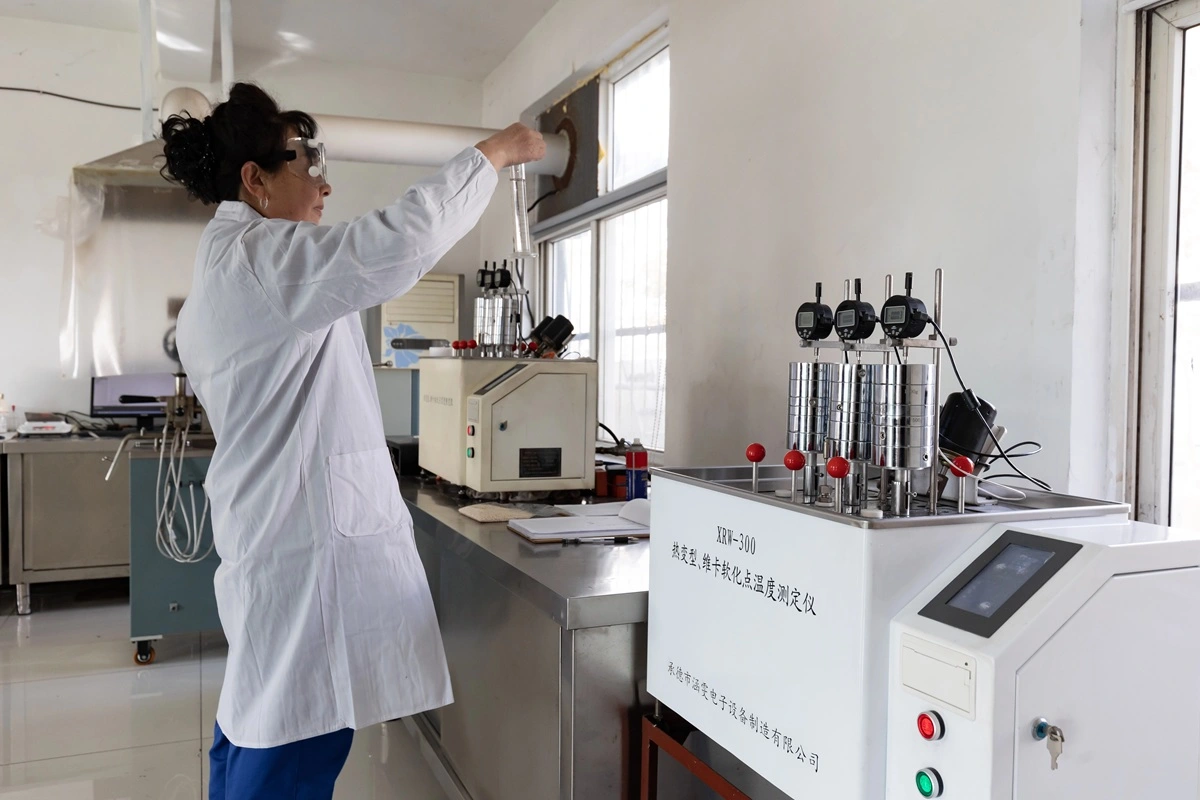
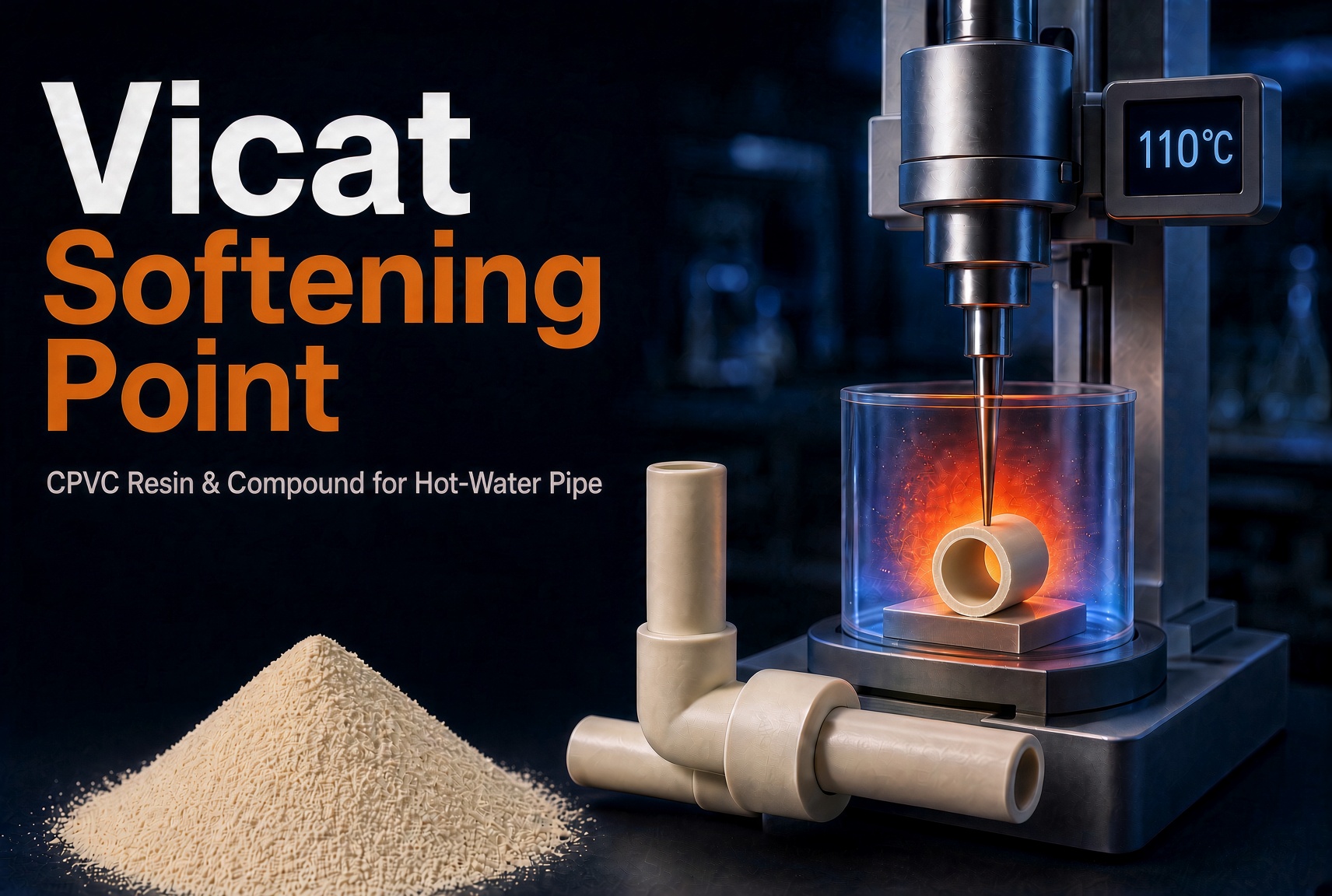
Vicat is the temperature where a flat needle sinks 1 mm into the material under a set load. It shows when the material starts to soften under heat. It is not the temperature a pipe is allowed to run at.
On resin and compound, the test is done on a molded or pressed sheet. Two common methods are used.
ASTM D1525 is the US material method.
ISO 306:2022 is the international material method. It has four combinations, depending on the load and the heating speed:
| Method | Load | Heating rate |
| A50 | 10 N | 50 °C/h |
| B50 | 50 N | 50 °C/h |
| A120 | 10 N | 120 °C/h |
| B120 | 50 N | 120 °C/h |
A 10 N result and a 50 N result are not the same number. When you compare two supplier sheets, check the load first.
Finished pipe and fittings use a different specimen. ISO 2507:2026 cuts the sample from the pipe wall or the fitting wall, and uses ISO 306 method B50 (50 N, 50 °C/h). A resin sheet number and a finished pipe number are not interchangeable.
Why a Pipe Plant Checks Vicat Before Buying Resin or Compound
Hot water pipe needs a heat floor that ordinary PVC compound cannot give. PVC compound is commonly limited to about 60°C (140°F). CPVC sits above that, which is why hot water pipe moves off PVC. See CPVC vs PVC.
Two lots can both process. Only one still holds the pipe after months of hot water. A plant that only checks price, or only checks that the powder extrudes, misses this.
Hot and cold water CPVC fittings have published floors in ISO 15877-3, tested on the finished fitting:
- Type I: 103°C or higher
- Type II: 115°C or higher
Those are finished product floors. The material sheet has to leave enough margin for the plant to hit them after extrusion or molding. A compound sold well under those floors is the risk. It can still make a pipe that looks right on day one. Later, on a hot line under pressure, the wall softens.
Vicat Is Not the Temperature the Line Runs At
Vicat is the heat floor of the resin or compound. Service temperature is the temperature the pipe is rated to carry water.
ASTM D2846 rates US hot water systems up to 180°F (82°C). It does not print a Vicat number. A Vicat of 110°C does not make a 110°C pipe. The service limit does not protect a soft compound, which is why the Vicat check still belongs on the incoming sheet.
Heat deflection temperature (HDT) is a different test. ASTM D1784 uses HDT for cell classification. Do not treat Vicat and HDT as the same number.
Why CPCV Compound Vicat Does Not Have to Sit Below Resin Vicat
CPVC Resin is the base polymer. Compound is resin plus stabilizer, lubricant, pigment, and other aids so the plant can extrude or mold it.
Those additives often pull Vicat down. That is why many compound sheets sit below the resin they were made from. Some suppliers accept that drop, or cut Vicat further, to make the powder cheaper and easier to process.
Xuye does not. J-700 resin and J-700C compound are both held at 110°C or higher. The compound does not give up the heat floor to make the package easier to sell. That is the point of matching the two sheets.
Injection fittings still take more flow aids than extruded pipe, so a fitting grade is a separate formulation. Z-500C, the injection compound, is held at 103°C or higher. A pipe grade and a fitting grade do not share one Vicat line.
J-700 Reference Spec
J-700 is extrusion grade CPVC resin, white powder, for plants that formulate their own compound for hot water pipe.
| Property | Value |
| Vicat softening temperature | 110°C or higher |
| Chlorine content | 65–70% |
| Thermal stability | 60 seconds or higher |
| Volatile matter | 0.3% or lower |
| 40 mesh | 98% or higher |
| Appearance | white powder |
The resin sheet does not print the test load, so no load is assumed here. These figures are a starting reference, not a fixed recipe. If the plant’s pipe standard or surface target needs a different balance, Xuye can produce against that requirement, as long as the hot water extrusion floor stays at 110°C or higher.
J-700C: Ready-to-Extrude Compound for Hot Water Pipe
Some plants compound resin in-house. Others buy a ready-to-extrude compound and run it on the line. J-700C is the ready compound for hot and cold water pipe. Line use is covered in Using CPVC Compound in Hot-Water Pipe and Fitting Production.
J-700C Vicat is reported to ASTM D1525 at 0.49 MPa (4.9 kg): 110°C or higher (230°F or higher). A load of 4.9 kg is about 48 N, so it sits with the 50 N class, not the 10 N class. The sheet does not print a heating rate, so it is not called an ISO 306 B50 result. It is a compound sheet value, not a finished pipe result to ISO 2507.
Additives usually pull Vicat down from neat resin. J-700C is still held at the same 110°C floor. That is the point of the sheet. The compound does not give up the heat floor to make the powder easier to sell.
Against the ISO 15877 fitting floors, 110°C sits above Type I (103°C) and below Type II (115°C). It is not a claim that every finished pipe meets Type II. The plant still has to make the pipe.
Other catalog lines, for context only:
| Property | Method | Value |
| Density | ASTM D792 | 1.45–1.65 g/cm³. Ask for the lot value. |
| Tensile strength at yield | ASTM D638 | 50 MPa or higher (7540 psi or higher) |
| Modulus of elasticity in tension | ASTM D638 | 2758 MPa or higher. Room temperature sheet values. |
| Color | — | ivory white, gray, or orange |
For fittings, the matching injection grade is Z-500C, with a Vicat floor of 103°C or higher. Fitting formulations are not pipe formulations.
Send whether you compound in-house or buy a ready compound, and the Xuye team will match the grade and walk through the Vicat line before the trial. The parameters shown are just a benchmark, not the limits of what Xuye can deliver. We offer complete customization based on your specific requirements.
Frequently Asked Questions
Does a high Vicat guarantee a good-looking pipe?
No. Vicat is the heat check on the material. It does not set gloss, color, or surface. A lot can meet the floor and still leave the die under fused, yellow, or dull. Under fusion, over heat yellowing, and a rough surface can all show up on a lot that still passes Vicat. Fusion and color are the appearance check. The heat check decides whether the pipe holds after the sale. The appearance check decides whether the pipe is sellable on the day it leaves the line. A plant needs both.
What if the catalog spec is not the right spec for our line?
A pipe plant does not need the highest Vicat on the market. It needs a floor that does not move from lot to lot, and a compound that still processes. Use J-700 if you compound resin in-house. Use J-700C if you buy a ready-to-extrude compound. Use Z-500C if the part is a fitting.
Xuye can match the resin or the compound to your pipe standard and the surface you need. Color and the stabilizer package can be adjusted before the trial. The Vicat floor for hot water pipe stays at 110°C or higher. We do not lower Vicat to win a price.