
CPVC Resin
Xuye manufactures CPVC resin for pipe extrusion and fitting injection, with consistent quality for formulation teams.
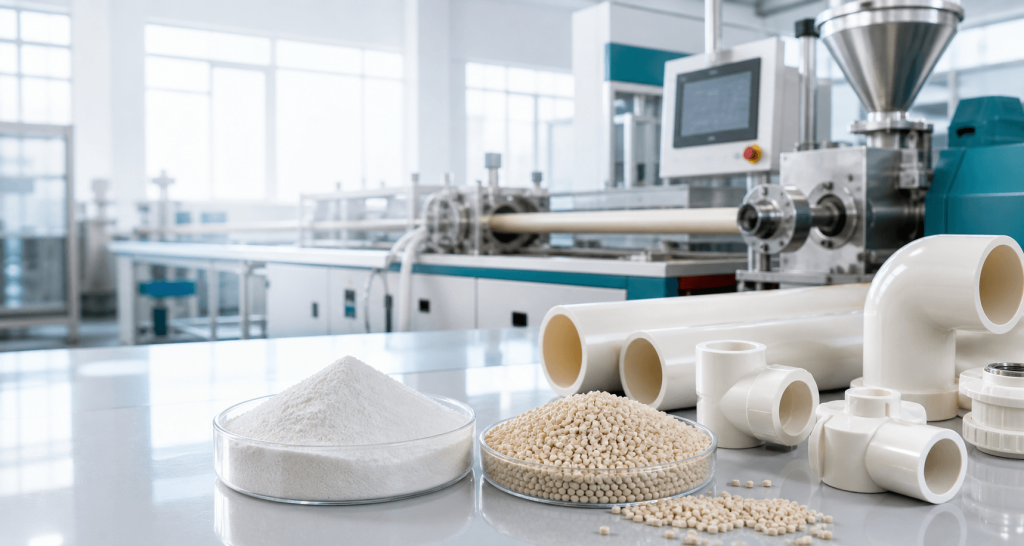
Product Grades
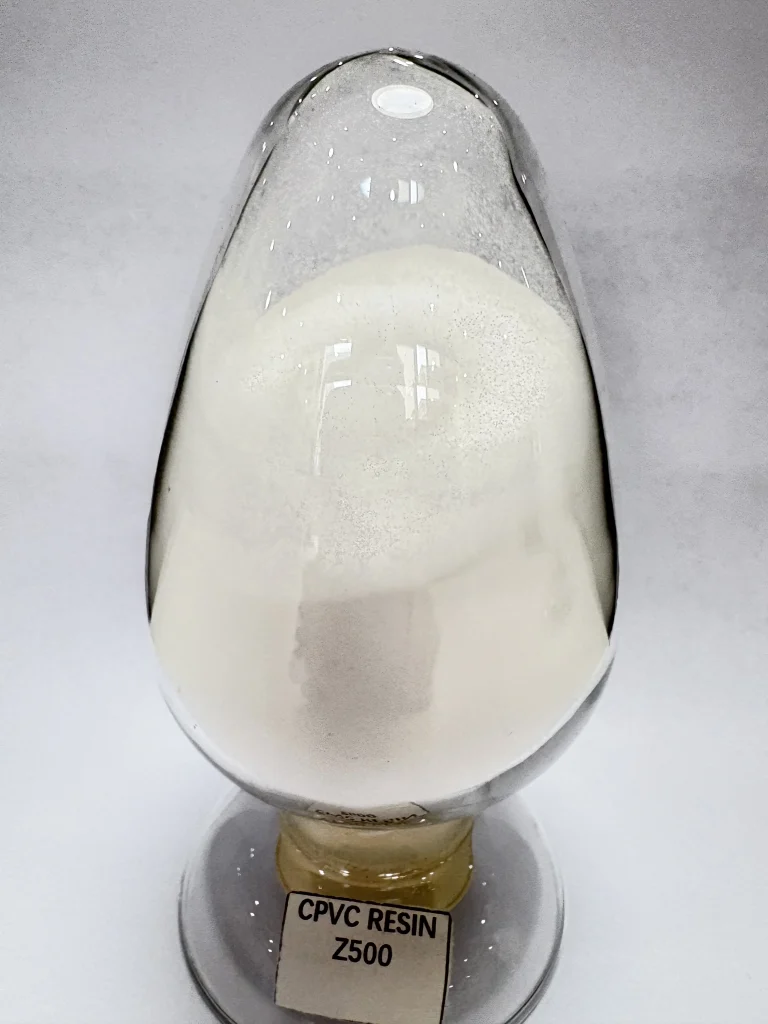
Chlorinated Polyvinyl Chloride (CPVC) Z-500 for Fittings
Injection-grade CPVC resin for formulation teams developing CPVC fitting, valve, and molded component materials.
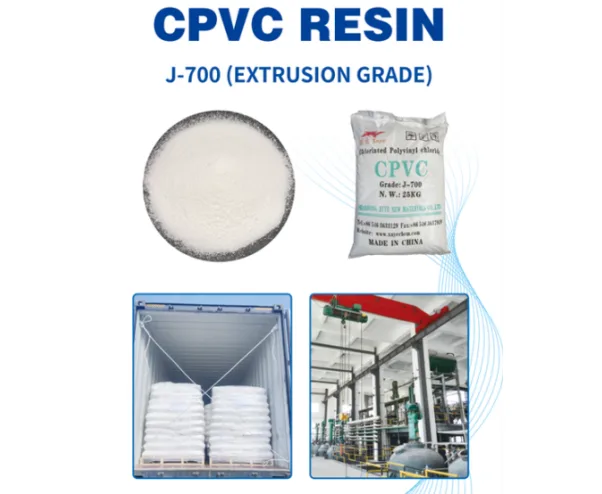
Chlorinated Polyvinyl Chloride (CPVC) J-700
Extrusion-grade CPVC resin for formulation teams producing CPVC pipe materials and customized chlorinated polymer compounds.
Selection Guide
| Item | Extrusion Grade J-700 | Injection Grade Z-500 |
|---|---|---|
| Appearance | White powder | White powder |
| Granularity (40 mesh) | ≥98% | ≥98% |
| Chlorine content | 65–70% | 64–65% |
| Volatile matter | ≤0.3% | ≤0.3% |
| Vicat temperature | ≥110°C | ≥103°C |
| Static thermal stability | ≥60 s | ≥60 s |
| Application | Pipe extrusion | Fitting injection |
Specifications are typical values for reference. Products can be adjusted to your process requirements.
What is CPVC Resin?
CPVC (Chlorinated Polyvinyl Chloride) resin is a thermoplastic polymer produced by chlorinating PVC (polyvinyl chloride) resin. The chlorination process increases the chlorine content from around 56–57% in PVC to approximately 63–69% in CPVC. This chemical modification enhances the material’s thermal resistance, chemical stability, and mechanical strength, making it suitable for high-temperature and corrosive applications.
What is the relationship between CPVC resin and CPVC compound?
As a CPVC resin manufacturer, Xuye provides base resin for customers who prefer to develop their own formulations, while also offering ready-to-process CPVC compound for direct production. CPVC compound is a granular material produced by blending CPVC resin with various additives such as heat stabilizers, lubricants, impact modifiers, and pigments. This compound can be directly used for injection molding or extrusion processing. The relationship between the two can be summarized as: “CPVC resin is the raw material, while CPVC compound is a semi-finished product ready for direct processing.” The former determines the material's fundamental physical and chemical properties, while the latter enhances its processing performance and application characteristics through optimized formulations.
FAQ
What is the difference between CPVC and PVC?
CPVC is further chlorinated from PVC. This gives CPVC stronger heat resistance and chemical resistance, making it more suitable for hot water and industrial piping applications. For a detailed comparison of each step, check out our article CPVC vs. PVC
What is the difference between CPVC and other plastic materials?
Compared with the commonly used PP (polypropylene) and PE (polyethylene), CPVC has better heat resistance, flame retardancy and mechanical strength. In addition, CPVC also has stronger acid and alkali resistance.
What is the difference between CPVC and metal in piping applications?
The disadvantage of metal materials is that they are prone to rust and aging, and scale (water stains) easily builds up inside. CPVC does not rust and is resistant to scaling. In addition, pipes made of CPVC are easy to cut and bond during installation, which helps to reduce labor costs during installation. Workers' training hours will also be reduced.
What is the main application of CPVC?
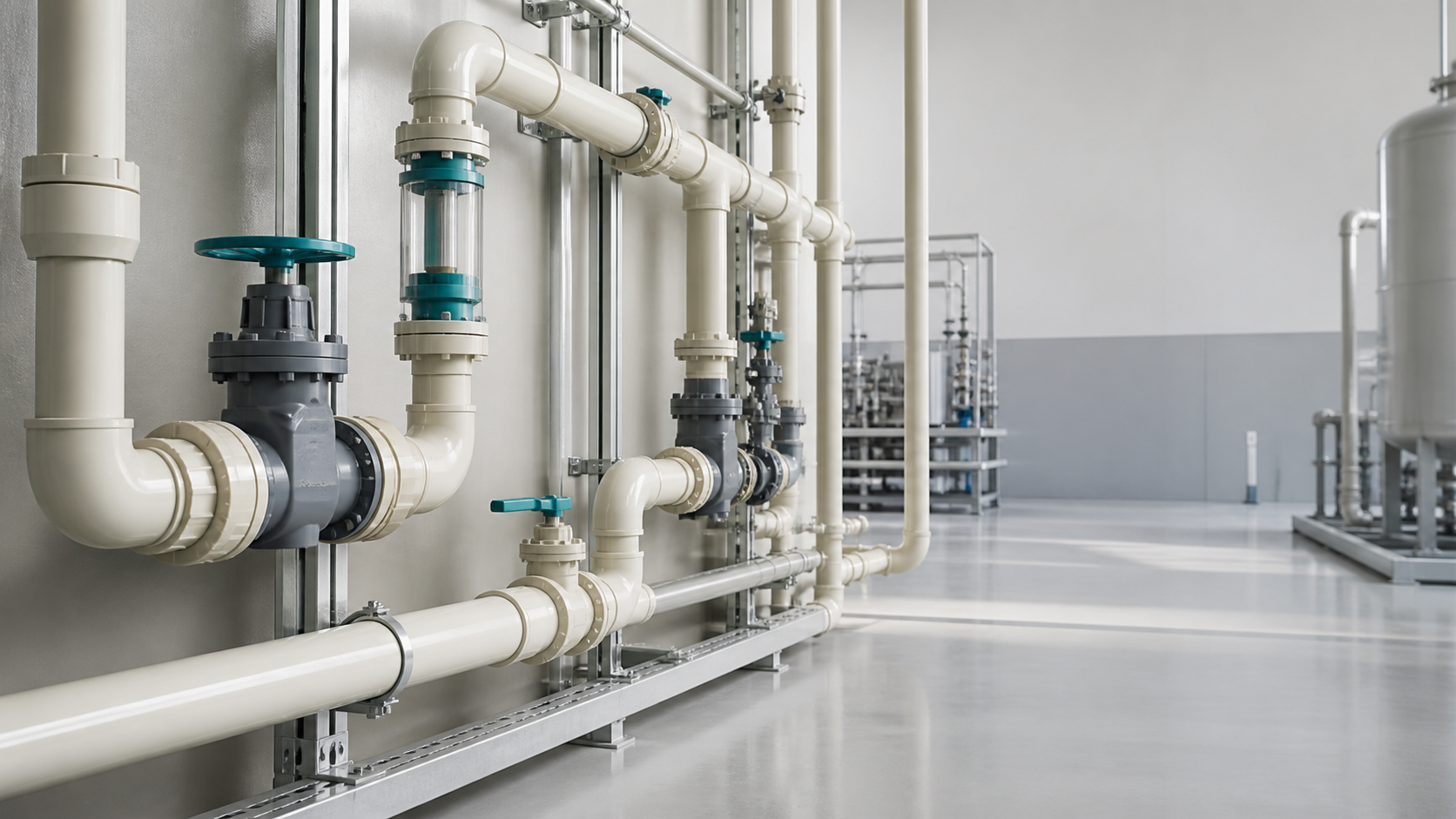
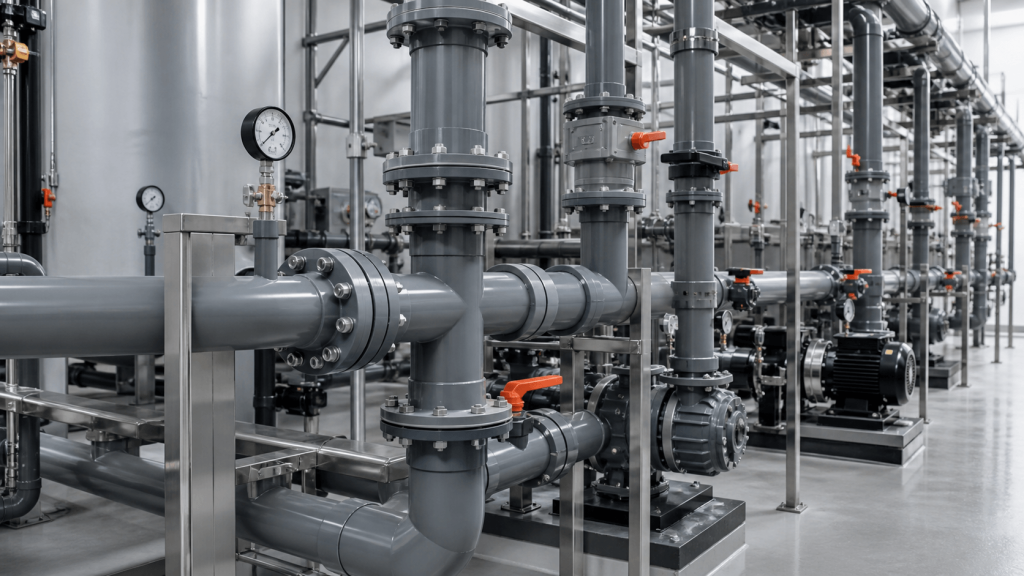
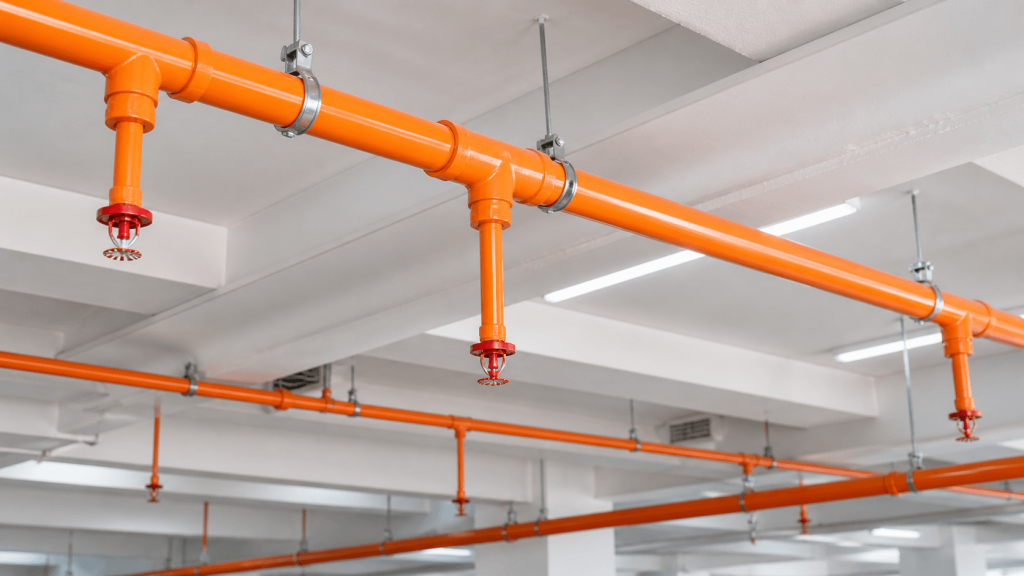
CPVC is commonly used in piping systems in harsh environments. For example, hot water supply pipes and fittings that require high temperature resistance, fire sprinkler pipes and fittings that require high flame retardancy and heat resistance. In addition, it can also be used in industrial applications where chemical resistance is required.
Why Choose Xuye as your CPVC Resin manufacturer?
Xuye manufactures CPVC resin with consistent batch quality for pipe extrusion and fitting injection. Our laboratory provides technical data and formulation support for customers developing their own compounds. We offer sample evaluation and processing guidance to help you validate J-700 and Z-500 resin on your production line before bulk orders.