Shandong Xuye New Materials Co., Ltd. logo

News & insights

CPVC Production Quality Control

CPVC Production Quality Control

CPVC Production Quality Control System

1. Raw-Material Control

  • PVC resin: high-grade resin with controlled molecular-weight distribution and purity.
  • Chlorine gas: ≥99.5 % purity to prevent side-reactions.

2. Chlorination Process Control

  • Temperature, pressure, residence time and chlorine feed rate monitored on-line; alarms and interlocks shut down feed when limits are exceeded.
  • Reaction medium (solvent or suspension) selected for uniform chlorination; post-reaction washing, drying and pelletizing are performed under validated temperature and moisture limits.

3. Product Performance Testing

  • Chlorine content (63–69 %) by titration.
  • Thermal stability: TGA onset ≥260 °C, DSC glass-transition ≥110 °C.
  • Mechanical: tensile ≥55 MPa, Izod impact ≥10 kJ/m².
  • Chemical resistance: 168 h immersion in 40 % H₂SO₄ and 10 % NaClO shows <0.5 % weight change.

4. Processing Quality

  • Melt flow index (MFI) 190 °C/2.16 kg 1.0–3.0 g/10 min for consistent extrusion.
  • Rheological curve monitored to set optimum extruder and injection parameters.

5. Finished-Goods Inspection

  • Dimensional tolerance ≤±0.2 mm (OD & wall thickness).
  • Visual: no bubbles, black spots or discoloration.
  • Hydrostatic pressure test: 1.5 × rated pressure for 1 h without leakage.

6. Quality Management

  • ISO 9001-certified system covering incoming material to final shipment.
  • Full lot traceability via barcode linked to production data and test results.

7. Environment & Safety

  • Scrubbed exhaust, closed-loop water treatment; chlorine detectors and emergency interlocks protect personnel.

CPVC quality control spans raw materials, production processes, product performance, processing behavior, finished-goods inspection, quality-management systems, and environmental & safety oversight. Rigorous controls guarantee CPVC’s high performance and reliability.
Keep reading

More from the knowledge center.

  • Injection-Grade CPVC Resin for Fittings, Valves, and Molded Parts

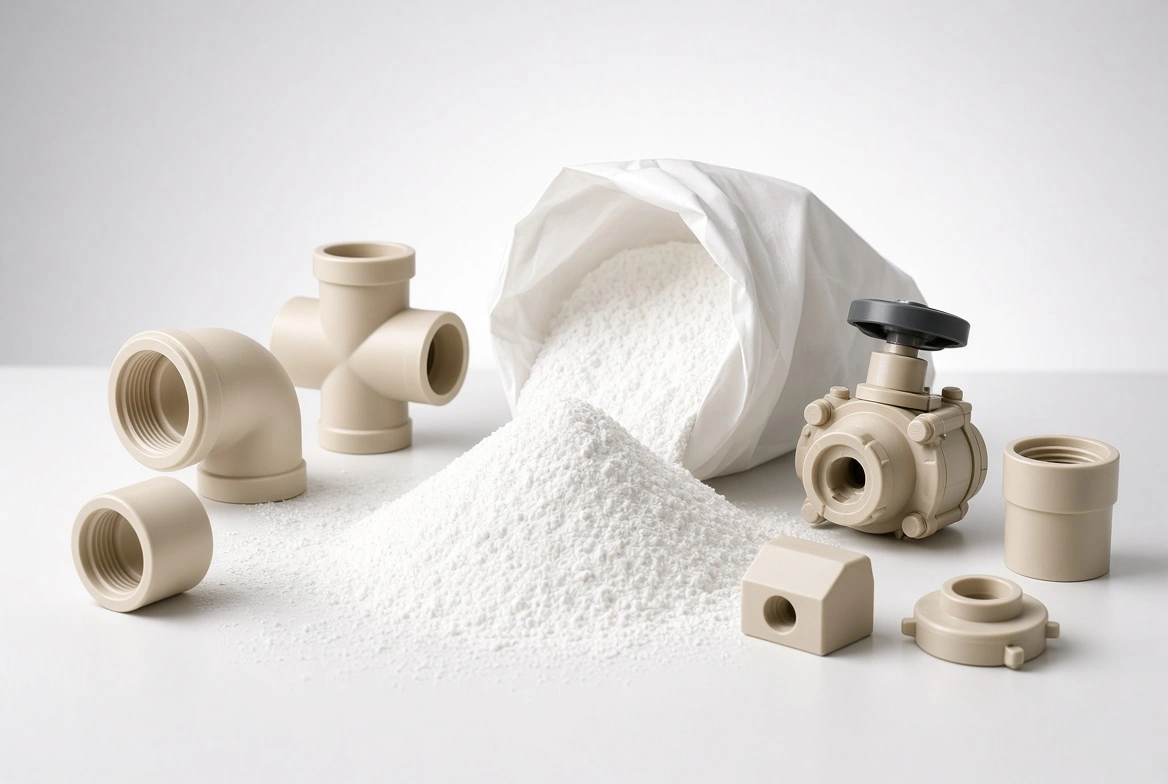
    Injection-Grade CPVC Resin for Fittings, Valves, and Molded Parts

    Injection-molded fittings, valves, and complex molded parts need injection-grade CPVC resin. Extrusion-grade resin is designed for pipe production and does not deliver the flow, packing, and knit-line performance these parts require. Using the wrong base resin leads to incomplete fill, weak weld lines, dimensional inconsistency, and higher scrap rates. This guide explains the specific challenges…

    Read more

  • CPVC Resin Chlorine Content: What It Means for Pipe and Fitting Production

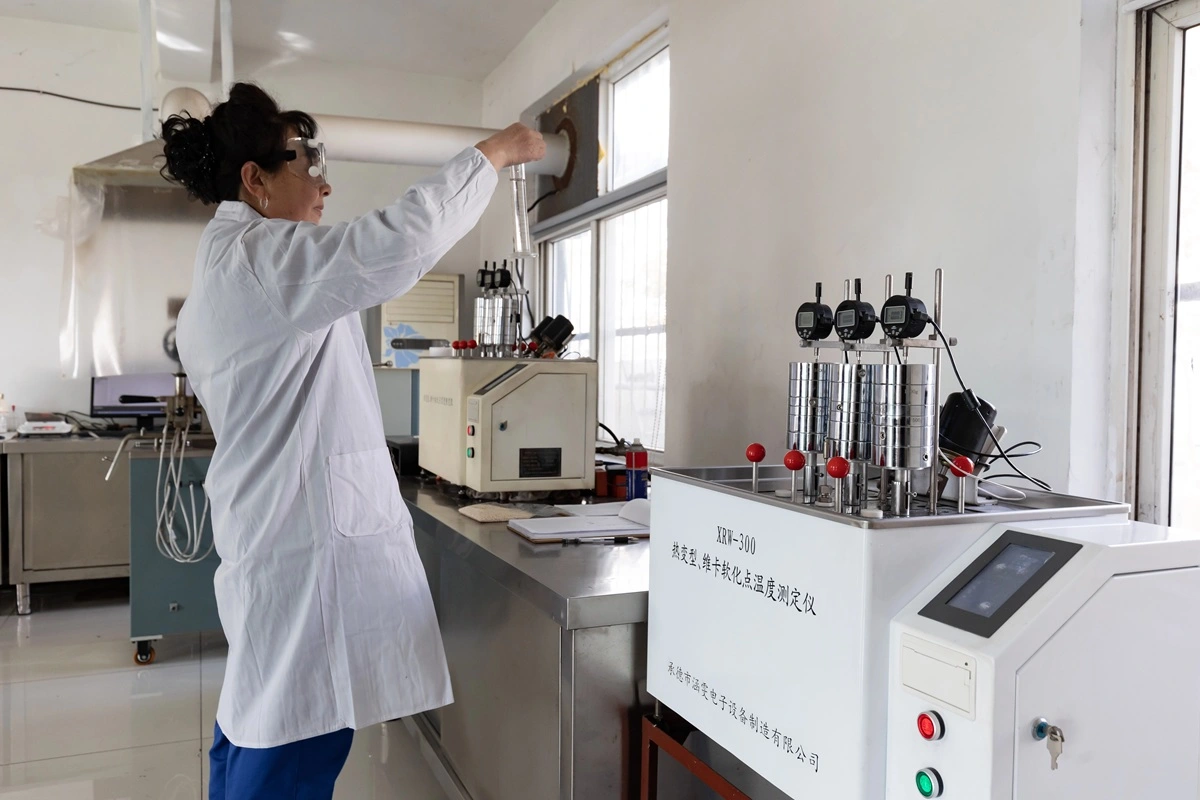
    CPVC Resin Chlorine Content: What It Means for Pipe and Fitting Production

    CPVC resin chlorine content is an important purchasing specification. It is not a stand-alone rule for picking a grade. If you formulate and compound in-house, evaluate the base resin. If you buy a prepared compound, evaluate the formulated material and its suitability for your production line. A resin chlorine figure alone does not set the…

    Read more

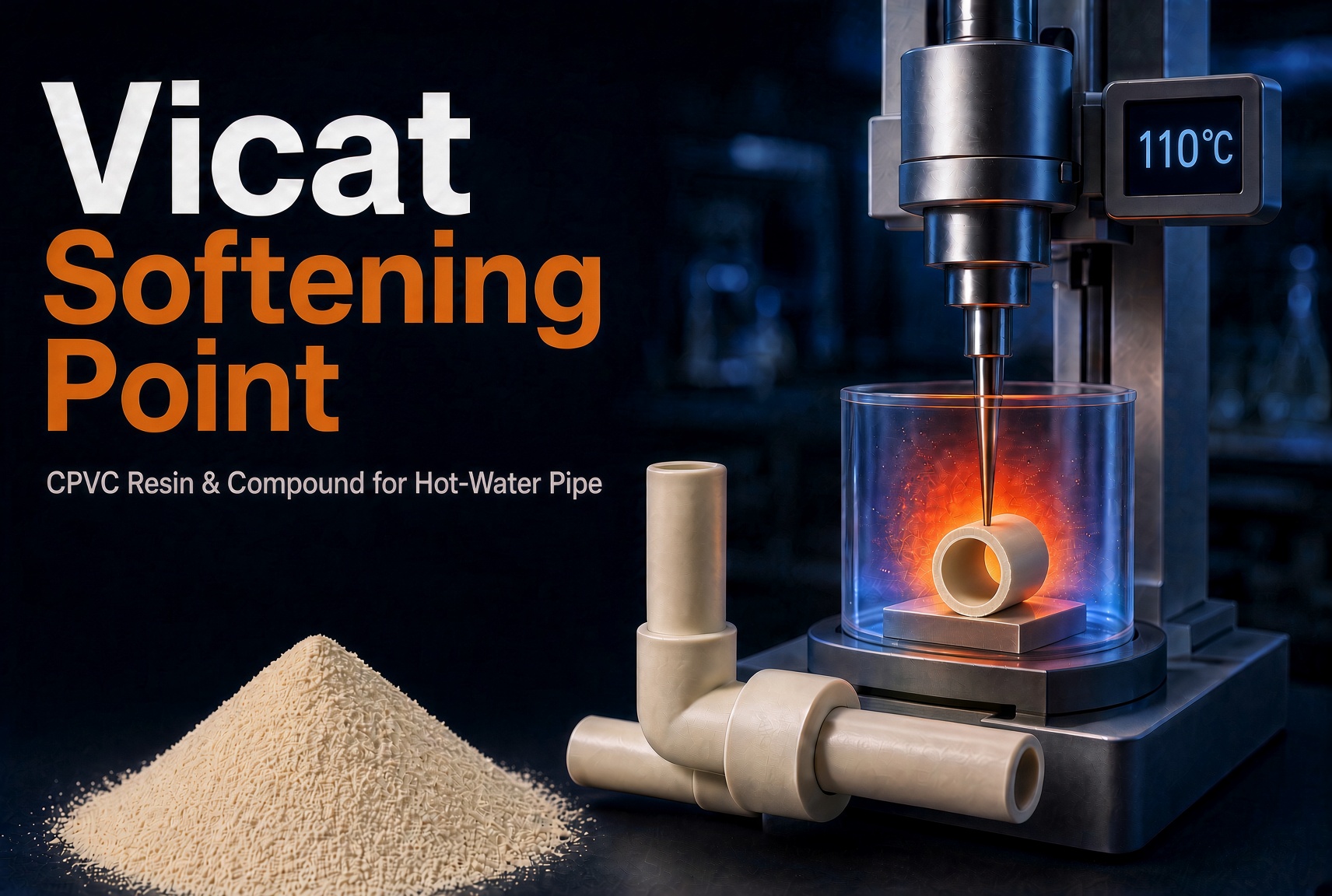
  • Vicat Softening Temperature of CPVC Resin and Compound for Hot-Water Pipe and Fittings

    Vicat Softening Temperature of CPVC Resin and Compound for Hot-Water Pipe and Fittings

    When a pipe plant buys CPVC resin or compound, Vicat is the number on the incoming sheet. It is the heat floor of the material, not the temperature the finished pipe is allowed to run at. A low Vicat lot can still run on the extruder or the press. It can still come out looking…

    Read more

Contact XUYE

Request a sample or technical consultation

Tell us your application and target grade. XUYE will help confirm the next practical step.

Tel
+86 546 363 7919
Mob
+86 189 5463 8366
Add
No.2 Heqing Road, Hekou District, Dongying, Shandong, China

*We respect your privacy. We only contact you in accordance with our Privacy Policy