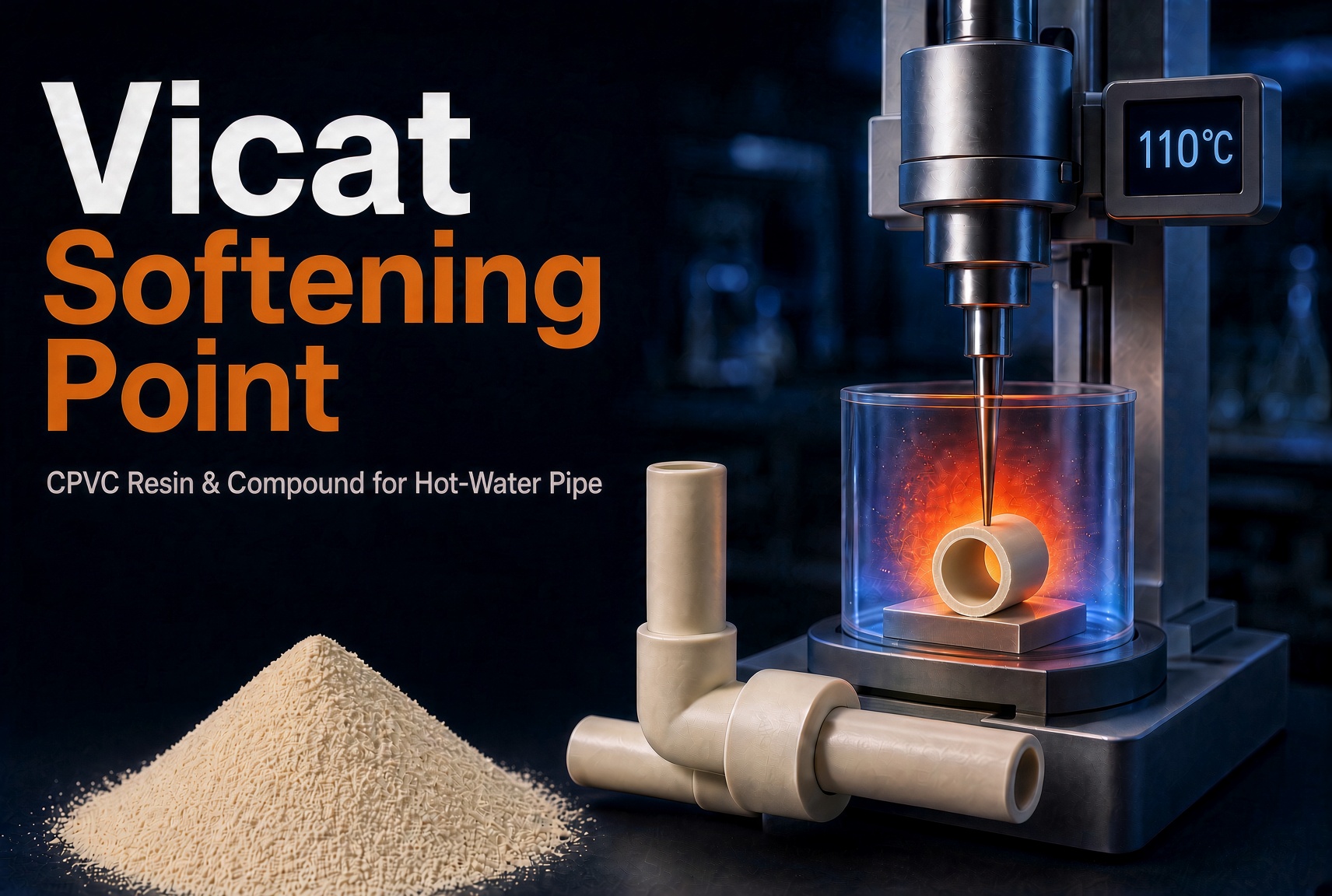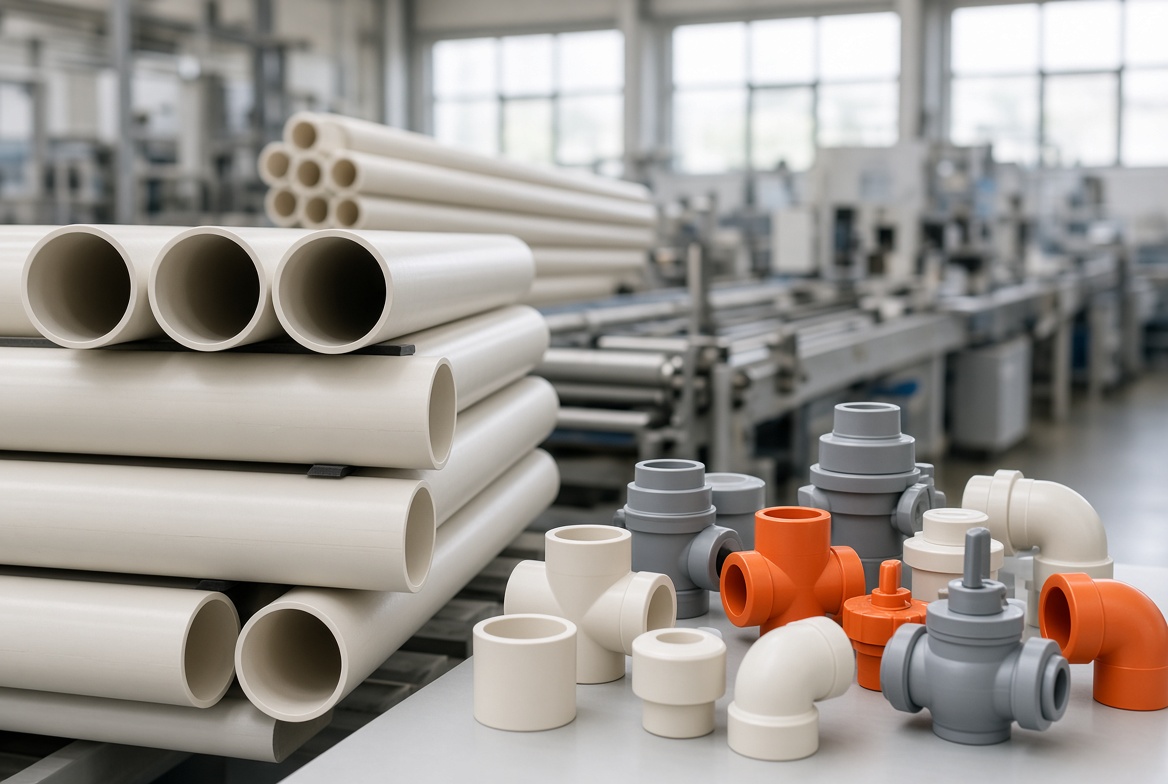
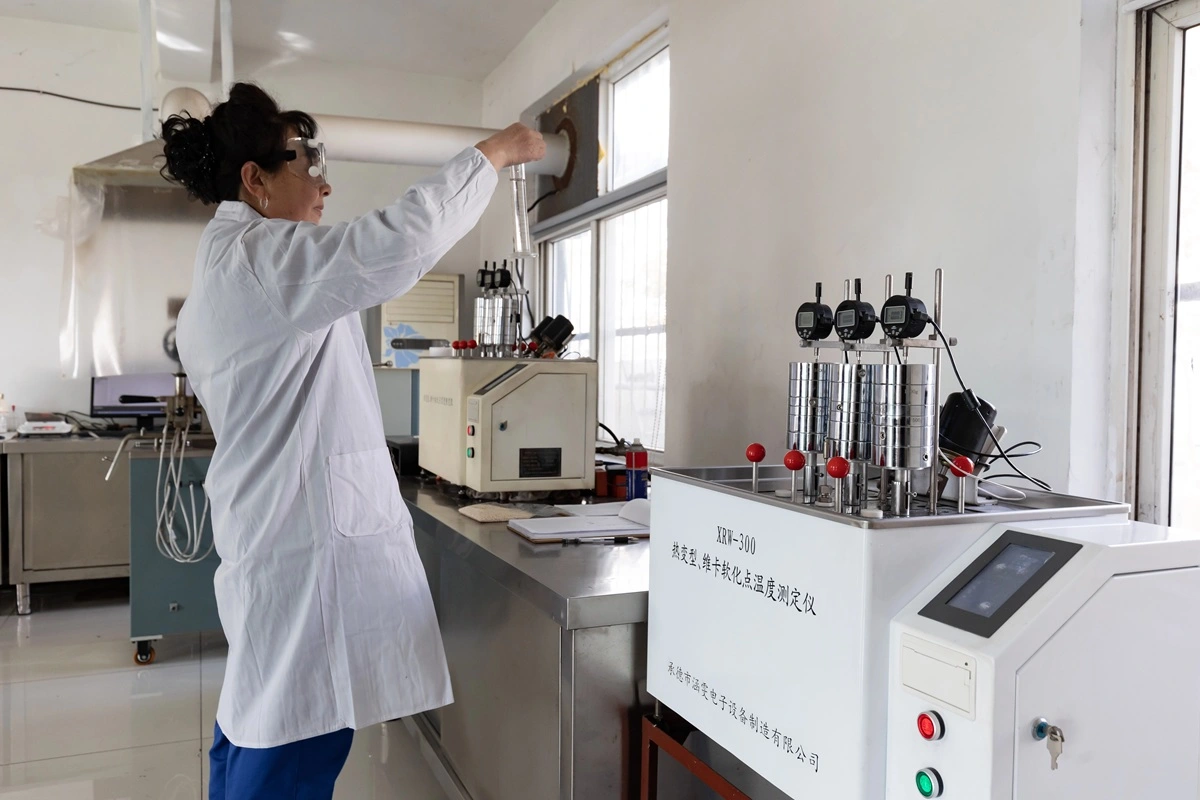
CPVC樹脂の塩素含有量は、重要な購入仕様の一つです。これは、グレードを選択するための単独の基準ではありません。.
If you formulate and compound in-house, evaluate the base resin. If you buy a prepared compound, evaluate the formulated material and its suitability for your production line. A resin chlorine figure alone does not set the temperature rating, pressure rating, or service life of a finished pipe.
This guide explains what to request from a supplier and what to verify before a production trial.
What Does Chlorine Content Mean in CPVC Resin?
CPVC is made by further chlorinating PVC resin. Chlorine content is the share of chlorine in the material, reported as a percentage. Chlorination changes the polymer structure and contributes to CPVC’s thermal characteristics. Ordinary PVC sits around 56–57%. CPVC is higher than 66%.
For extrusion and injection plants, the essential distinction is between the base resin, the compound and the finished product.
| 材料 | What the buyer should evaluate |
| CPVC樹脂 | Resin specifications and suitability for the intended formulation |
| CPVCコンパウンド | The formulated material’s properties, processing requirements, and application suitability |
| Finished pipe or fitting | Dimensions, performance tests, and requirements for the intended service conditions |
When a supplier reports chlorine content, ask whether the figure refers to the base resin or the complete compound. Also confirm the test and reporting basis before you compare results.
Chlorine content is not a substitute for Vicat softening temperature, thermal stability, or processing-temperature guidance. Each answers a different question.
Why Higher Chlorine Content Is Not a Complete Buying Rule
Extra chlorine raises the heat resistance of the polymer compared with PVC. That is the main reason hot-water pipe moves off ordinary PVC compound. PVC compound is commonly limited to about 60°C (140°F). CPVC sits above that. See CPVC vs PVC.
Higher chlorine is not automatically a better purchase. Molecular weight, the additive package, and the way the material is processed all change how the resin behaves on a line. A higher chlorine number does not, by itself, prove better long-term performance or easier processing.
Chlorine content that sits too high can raise viscosity and narrow the processing window. The usable range for hot-water pipe resin is typically kept where the material still processes cleanly. Without a matching trial on your equipment, treat chlorine content as one input, not the whole decision.
The practical question is simple: Will this resin work in our formulation and process to produce parts that meet our requirements? A chlorine-content percentage gives part of that answer, not the whole answer.
Do Extrusion and Injection Plants Need Different Chlorine Specifications?
Extrusion and injection molding place different demands on a formulated material. They do not automatically require different chlorine floors. Select a resin for its intended process, then review the full sheet: chlorine content, Vicat, thermal stability, particle size, and how the material runs on the line.
XUYE’s resin TDS documents identify J-700 for CPVC tube extrusion and Z-500 for CPVC fittings and other injection applications.
| Resin grade | Intended application | Typical chlorine-content value listed in the TDS (%) |
| J-700 | CPVC tube extrusion | 67以上 |
| Z-500 | CPVC継手およびその他の射出成形用途 | ≥66 |
Xuyeでは、製造ニーズに応じたグレード別の生産や配合要件についてご相談を承ります。選択されたグレードおよび注文内容に基づき、カスタマイズの可否、技術的な実現可能性、および合格基準について合意する必要があります。.
What Should Resin Buyers Specify and Verify?
自社でコンパウンドを製造する場合、樹脂のTDS(技術データシート)が出発点となります。以下の項目を明確にすることで、その情報を購入仕様書へと落とし込んでください。.
| 項目 | 確認事項 |
| グレードと用途 | 提供される樹脂とその想定される加工ルート |
| 試験対象材料 | 塩素含有量の結果がベース樹脂に関するものかどうか |
| 値の種類 | 記載内容が代表値、規定範囲、限界値、またはロット試験結果のいずれであるか |
| 試験基準 | 試験方法、サンプル調製、および報告基準 |
| その他の樹脂特性 | 配合や設備に関連する特性 |
| ロット文書 | 利用可能な試験記録、ロット識別、およびトレーサビリティ |
| 認定計画 | 配合試験、加工チェック、および最終製品の試験 |
| 注文要件 | カスタマイズされた仕様および合意された合格基準 |
Separate typical data from order requirements
TDSは製品情報を示すものです。合意された注文仕様書は、特定の供給に対する要件を定めるものです。分析証明書(COA)は、利用可能な場合、特定のロットの試験結果を提供するものです。.
例えば、「≥67%」という代表値の記載だけでは、納品されるロットの正確な塩素含有量や、ロット間のばらつきの程度は分かりません。どのような記録が入手可能かを確認し、入荷材料に必要な検査項目について合意してください。.
Qualify the resin in your own formulation
配合および加工チームと材料を検討してください。試験の目的と、通常供給を開始する前に必要なチェック項目を定めてください。記載された塩素含有量を満たす樹脂であっても、意図する配合、プロセス、および最終製品に対して評価を行う必要があります。.
What Should Compound Buyers Check Instead of Relying on Resin Chlorine Content Alone?
既製のコンパウンドを購入する場合は、状況が異なります。樹脂の塩素含有量は参考情報としては有用ですが、コンパウンドが適切に加工できるかどうかを決定する数値ではありません。.
以下の6つの項目を確認してください。
- 用途とグレード:材料がパイプ押出成形、継手射出成形、またはその他のプロセスのいずれを想定しているかを確認してください。.
- 供給形態と準備:供給形態、保管要件、および加工前に必要な準備を確認してください。.
- 関連特性:機械的データおよび熱的データを、試験方法や条件とともに確認してください。.
- 生産適合性:設備、製品形状、および試験目的についてサプライヤーと協議してください。.
- 供給管理:利用可能なロット文書、トレーサビリティ、および材料変更時の通知体制を明確にしてください。.
- 製品検証:製造されたパイプや継手が合格すべき検査項目を定義してください。.
Xuyeが提供する パイプ押出成形用J-700C CPVCコンパウンド および 継手およびバルブ用Z-500Cコンパウンド関連の射出成形用途。グレードの適合性については、意図する要件および試験に基づいて確認する必要があります。.
なぜ塩素含有量が最終製品の定格を決定しないのか パイプ’の定格
樹脂の特性、コンパウンドの性能、そして最終製品の評価は、それぞれ異なる評価レベルです。.
完成したパイプの性能は、配合された材料、製造プロセス、寸法、および製品が試験された条件に依存します。樹脂の塩素含有量の数値だけで、パイプの許容使用温度、圧力定格、耐薬品性、または期待寿命を決定することはできません。.
ビカット軟化温度は材料の試験結果であり、パイプが連続使用の定格として自動的に認定される温度ではありません。試験および報告の詳細については、以下をお読みください。 Vicat試験ガイド.
まず、意図する用途と適用される製品要件を定義してください。次に、製造されたパイプまたは継手がそれらの要件を満たしていることを確認してください。材料のTDS(技術データシート)は選定をサポートするものであり、最終製品の認定に代わるものではありません。.
次回のCPVC材料選定のためのチェックリスト お問い合わせ
サプライヤーがお客様の要望を評価するために、以下の情報をご提供ください:
- 用途:パイプ、継手、またはコンポーネントの使用目的。.
- プロセス:押出成形または射出成形、および関連する設備詳細。.
- 調達ルート:自社配合用のベース樹脂、または調製済みコンパウンド。.
- 目標要件:製品規格、顧客仕様、および性能目標。.
- 現在の課題:新しい配合、供給の変更、または調査が必要な生産上の問題。.
- 必要な書類:現在のTDS、試験方法の明確化、および利用可能なバッチ記録。.
- 試作計画:サンプルの要件および計画されている受け入れ検査。.
Xuyeの 技術文書 を確認し、用途、加工ルート、目標要件を共有してください。当社のチームがグレードの選定、カスタマイズの可能性、および評価に向けた次のステップについてご相談に応じます。.
技術サポートに連絡する 生産試作の前に、材料要件についてご相談ください。.
よくある質問
Is higher chlorine content always better for CPVC resin?
いいえ。塩素含有量は選定要因の一つに過ぎません。樹脂の特性、配合、加工要件、および最終製品の性能を総合的に考慮する必要があります。単に含有率が最も高いものを選ぶのではなく、意図する用途に適したグレードを選択してください。.
Is CPVC resin chlorine content the same as compound chlorine content?
必ずしもそうではありません。コンパウンドにはベース樹脂とその他の配合成分が含まれているため、全体の塩素含有量は異なる場合があります。値を比較する前に、報告されている数値が樹脂を指しているのか、それともコンパウンド全体を指しているのかを確認してください。.
Can chlorine content determine a CPVC pipe’s temperature rating?
いいえ。樹脂の塩素含有量の数値だけで、パイプの温度定格、圧力定格、または耐用年数を決定することはできません。それらには、意図する用途および適用される要件に基づいた、製造された製品の評価が必要です。.