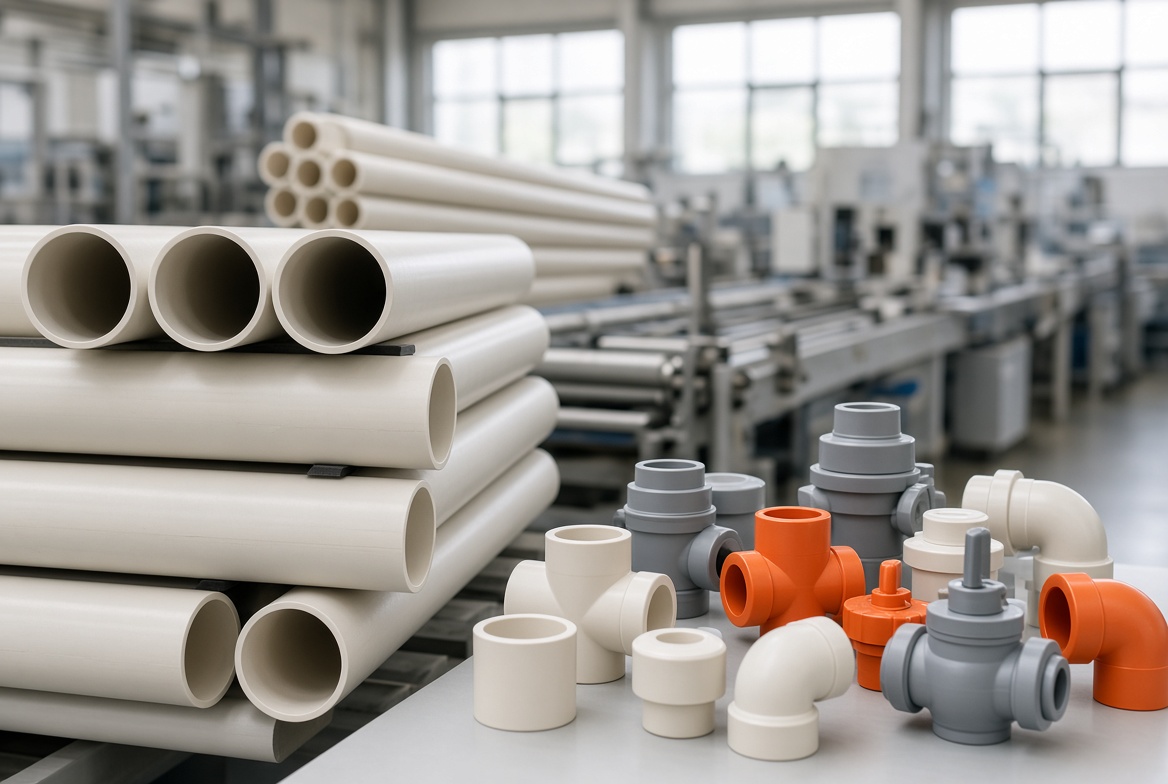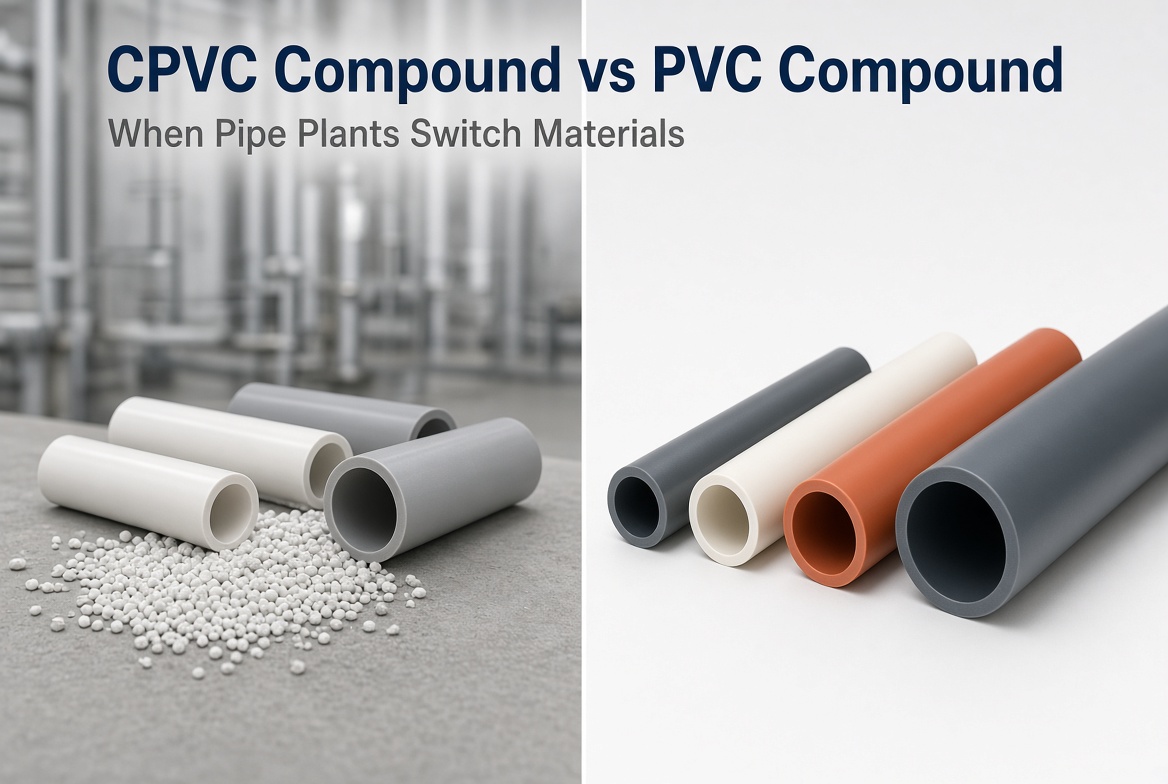
Plastikler, dayanıklılık, esneklik ve maliyet tasarrufu sunarak modern endüstrilerde vazgeçilmez hale gelmiştir. Birçok plastik türü arasında, Klorlu Polivinil Klorür (CPVC), benzersiz özellikleri ve çok yönlü uygulamalarıyla geniş çapta kabul görmüştür. PVC'nin modifiye edilmiş bir formu olan CPVC, ısıya, basınca ve kimyasallara karşı daha iyi direnç sağlayarak boru tesisatı, kaplamalar ve endüstriyel sistemlerde tercih edilen bir seçenek haline gelmiştir.
CPVC nedir?
CPVC, şu terimin kısaltmasıdır: Klorlu Polivinil Klorür, standart PVC'nin daha fazla klorlanmasıyla üretilen sentetik bir termoplastiktir. Bu ekstra adım, polimerin klor içeriğini kütlece genellikle ile arasına çıkarır. Bu yapısal modifikasyon, malzemenin sınıflandırmasını değiştirerek daha yüksek sıcaklıklara ve daha zorlu ortamlara dayanma yeteneğini geliştirir. Özünde CPVC, performansı artırılmış ve uygulama potansiyeli genişletilmiş bir PVC'dir.
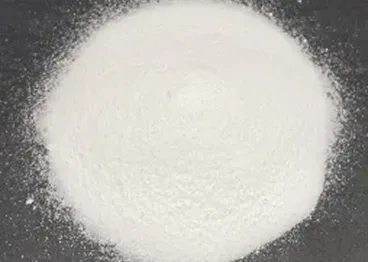
CPVC Nasıl Üretilir
CPVC üretimi, vinil klorür monomerlerinin polimerize edilmesiyle oluşan PVC ile başlar. Vinil klorür, genellikle hidrokarbonlardan elde edilen etilen gazının, sodyum klorürden elde edilen klor gazı ile reaksiyona girmesiyle üretilir. CPVC yapmak için PVC reçinesi, serbest radikal klorlama işlemine tabi tutulur. Bu reaksiyon sırasında, başlatıcı olarak ısı veya UV enerjisi kullanılarak polimer zincirine ek klor atomları bağlanır. Sulu, çözelti veya gaz fazı süreçleri gibi farklı üretim yöntemleri uygulanabilir, ancak sonuç aynıdır: daha yüksek klor içeriğine ve yükseltilmiş performansa sahip bir malzeme.
Temel Özellikler ve Nitelikler
CPVC'nin temel avantajlarından biri termal direncidir. Normal PVC daha düşük sıcaklıklarla sınırlıyken, CPVC ürünleri yaklaşık 200°F (93°C) sıcaklıkta ve belirli koşullar altında 230°F (110°C) dereceye kadar güvenle çalışabilir. Bunun ötesinde, malzeme yaklaşık 240°F'de yumuşamaya başlar, 350°F civarında viskoz hale gelir ve 425°F'nin üzerinde karbonize olur.
Isı direncine ek olarak CPVC, asitlerden, bazlardan, tuzlardan ve çok çeşitli organik kimyasallardan kaynaklanan korozyona karşı oldukça dirençlidir. Bu, onu zorlu endüstriyel ortamlar için güvenilir bir seçenek haline getirir. Ayrıca iyi bir mekanik dayanıklılık ve uzun ömür sunar. Örneğin, 1950'lerin sonlarında kurulan CPVC boru sistemleri etkin bir şekilde çalışmaya devam etmektedir. Uzun hizmet ömrü ve kanıtlanmış geçmişi, onu hem ticari hem de endüstriyel ortamlarda güvenilir bir malzeme yapmaktadır.
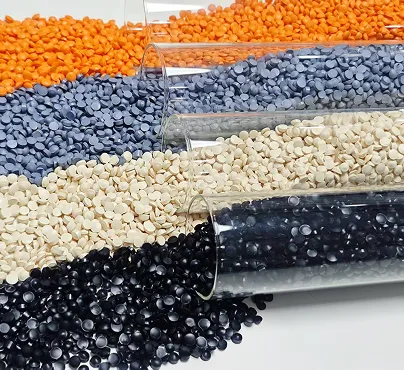
CPVC ve PVC karşılaştırması
CPVC ve PVC ilişkili olsalar da aralarındaki farklar önemlidir. Standart PVC yaklaşık klor içerirken, CPVC ile arasında klor içerir. Bu daha yüksek klor içeriği, polimerin camsı geçiş sıcaklığını artırarak CPVC'ye üstün ısı direnci sağlar. Ayrıca moleküler zinciri daha korumalı hale getirerek kimyasal saldırılara karşı savunmasızlığı azaltır. Sonuç olarak CPVC, PVC'nin uygun olmayacağı yüksek sıcaklık, yüksek basınç ve korozif ortamlarda daha iyi performans gösterir.
CPVC Katkı Maddeleri ve Bileşimleri
İşlenebilirliğini ve performansını daha da artırmak için CPVC reçinesi katkı maddeleriyle birleştirilir. Bunlar arasında stabilizatörler, darbe düzenleyiciler, yağlayıcılar ve pigmentler bulunabilir. Sonuç, ekstrüzyon, enjeksiyon kalıplama veya özel üretim gibi belirli uygulamalar için uyarlanmış CPVC bileşiğidir. Tüm bileşikler aynı değildir ve kesin formülasyon; mukavemeti, dayanıklılığı ve endüstri standartlarına uygunluğu etkiler.
CPVC Ürün Türleri
CPVC oldukça çok yönlüdür ve birçok biçimde üretilebilir. Yaygın ürün türleri şunlardır:
- Borular ve Bağlantı Parçaları: Sıhhi tesisat, yangın söndürme sistemleri ve endüstriyel sıvı taşıma için yaygın olarak kullanılır.
- Kanal Sistemleri: Korozif dumanların ve gazların güvenilir bir şekilde taşınması için.
- Levhalar ve Astar Malzemeleri: Endüstriyel ekipmanlarda, tanklarda ve koruyucu kaplamalarda uygulanır.
- Özel Parçalar: Özel ekipman ve uygulamalar için enjeksiyonla kalıplanmış veya üretilmiş bileşenler.
CPVC'nin Yaygın Uygulamaları
1950'lerden bu yana CPVC, giderek artan sayıda endüstride kullanılmaktadır. Sıhhi tesisatta hem sıcak hem de soğuk içme suyu sistemleri için kullanılır. Endüstriyel ortamlarda kimyasalların, gübrelerin ve atık suların taşınması için kullanılır. Enerji santralleri, madencilik tesisleri ve kimyasal işleme tesisleri de agresif sıvıları basınç altında taşıyabilme yeteneği nedeniyle CPVC'ye güvenir. Ayrıca CPVC, kaplamalarda, boyalarda ve kablo yalıtımı ile koruyucu muhafazalar gibi elektrik uygulamalarında kullanılır.
Kurulum ve Taşıma
CPVC'nin popüler olmasının nedenlerinden biri kurulum kolaylığıdır. Çeliğin yaklaşık sekizde biri ağırlığında olduğu için hafiftir, bu da taşınmasını ve kurulumunu kolaylaştırır. Özel aletler gerektirmeden sahada kesilebilir ve üretilebilir; solvent kaynağı veya sıcak hava kaynağı gibi birleştirme yöntemleri oldukça basittir. CPVC kurulumu açık alev gerektirmez, bu da güvenlik risklerini azaltır. Doğru kurulum ve standartlara uyum ile CPVC sistemleri uzun ömürlü ve maliyet etkin çözümlerdir.
Neden Tüm CPVC'ler Aynı Değildir
Tüm CPVC malzemelerinin eşit olmadığını belirtmek önemlidir. Farklı üreticiler ve bileşim yöntemleri, kalite ve performansta farklılıklara yol açar. Bu nedenle ASTM, ANSI, AWWA, NSF ve FDA gibi standartlara uygunluk ve sertifikalar esastır. Güvenilir bir tedarikçi seçmek, kritik uygulamalar için tutarlı kalite, dayanıklılık ve güvenlik sağlar.
Sonuç
Klorlu Polivinil Klorür, PVC'nin güçlü yönlerini ısıya, basınca ve kimyasallara karşı artırılmış dirençle birleştiren özel bir malzemedir. Çok yönlülüğü onu sıhhi tesisat, kaplamalar, endüstriyel ekipmanlar ve diğer birçok uygulama için uygun kılar. Onlarca yıllık kanıtlanmış kullanımı ve küresel kabulü ile CPVC, günümüzde mevcut olan en güvenilir termoplastiklerden biri olmaya devam etmektedir.
Eğer güvenilir bir klorlu polivinil klorür tedarikçisi, Xuye New Materials Co., Ltd. (XUYE), profesyonel Ar-Ge, gelişmiş üretim ve uluslararası itibar ile desteklenen yüksek kaliteli CPVC reçinesi ve CPVC bileşiği sağlar. Xuye ile İletişime Geçin CPVC çözümlerimiz hakkında daha fazla bilgi edinmek için bugün bizimle iletişime geçin.