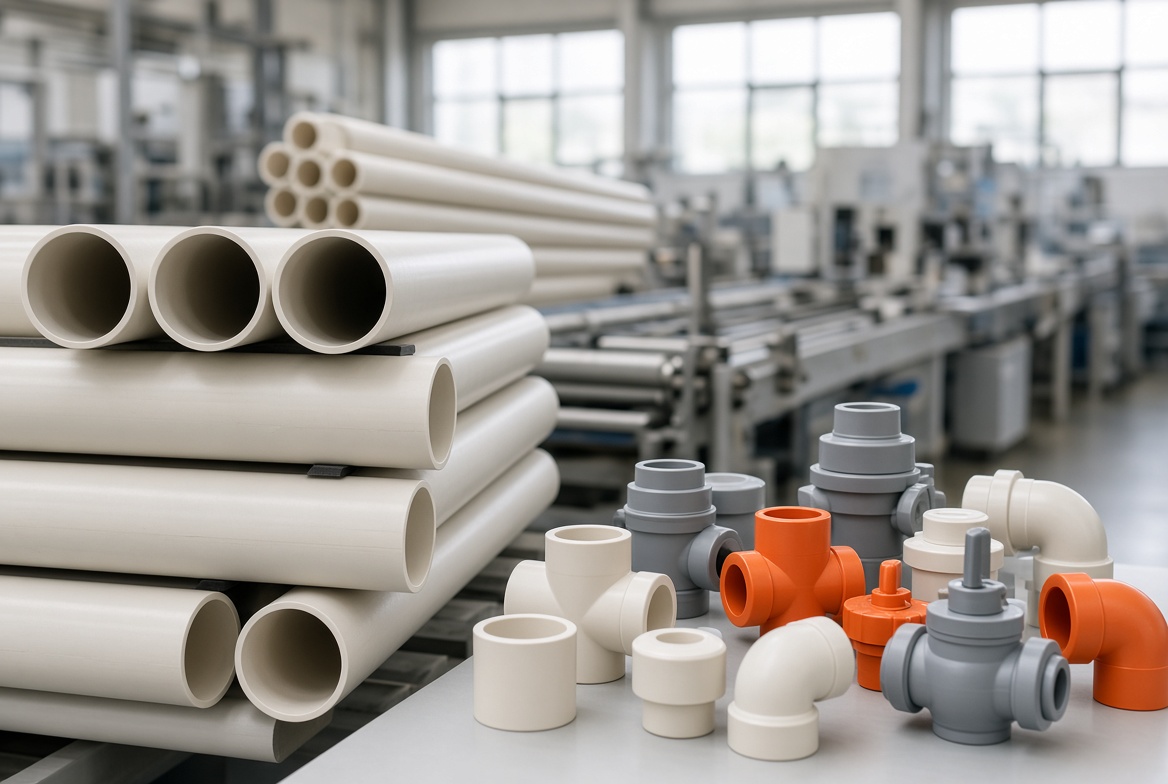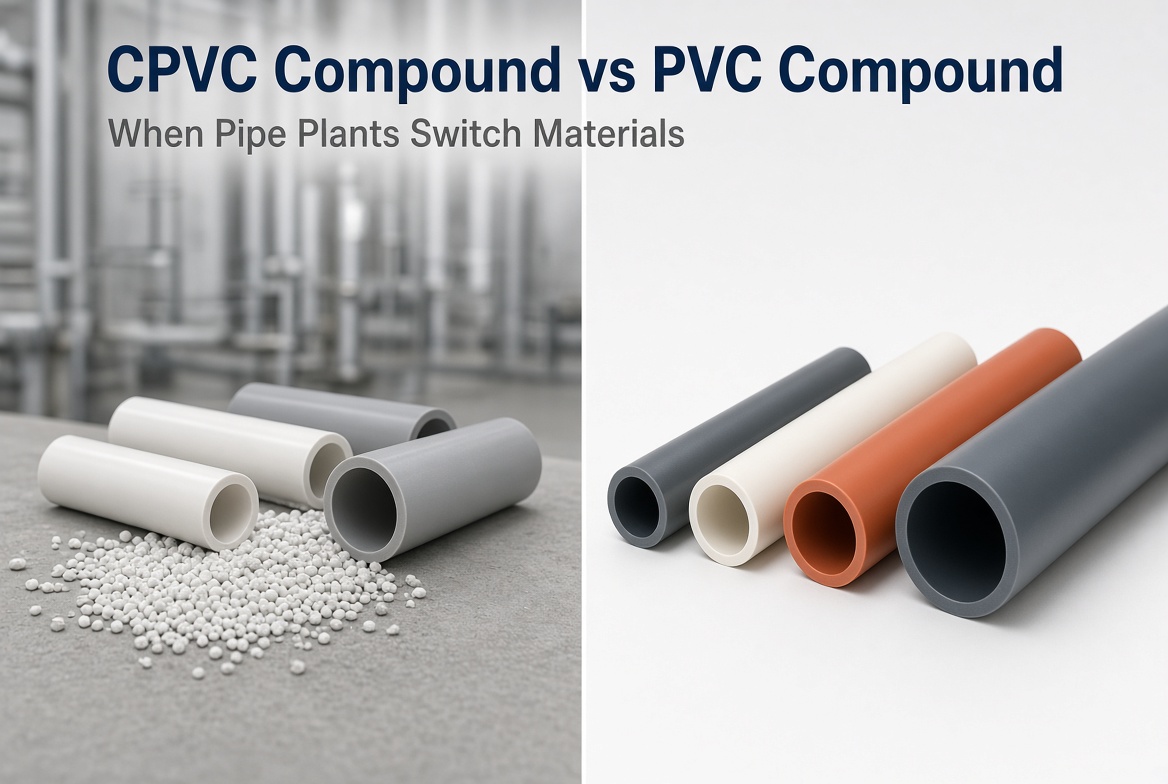
Bei der Betrachtung von Hart-PVC-Materialien wird deutlich, dass diese aufgrund ihrer hohen Festigkeit, guten Flammwidrigkeit und starken chemischen Stabilität weit verbreitet sind. Diese Vorteile machen PVC sehr geeignet für Rohre, Profile und Elektroinstallationsrohre. Trotz dieser Vorteile weist Hart-PVC jedoch eine wichtige Einschränkung auf. Das Material ist von Natur aus spröde, insbesondere unter Schlagbelastung oder bei niedrigen Temperaturen. Aus diesem Grund fügen Hersteller in der Regel Schlagzähmodifikatoren hinzu, um die Zähigkeit zu verbessern und das Endprodukt in realen Anwendungen zuverlässiger zu machen.
Die Rolle von CPE bei der Verbesserung der Zähigkeit von PVC
Bei der Diskussion gängiger Schlagzähmodifikatoren ist chloriertes Polyethylen (CPE) eines der am häufigsten verwendeten Materialien in der Hart-PVC-Produktion. Der Grund dafür hängt eng mit seiner Struktur und Leistung zusammen. CPE besitzt eine gummiartige Flexibilität, die es ihm ermöglicht, Energie zu absorbieren, wenn das Material einem Stoß ausgesetzt ist. Sobald es mit PVC vermischt wird, bildet es ein flexibles Netzwerk innerhalb des Materials. Diese Struktur trägt dazu bei, Spannungskonzentrationen zu reduzieren und die Rissbeständigkeit zu verbessern. Infolgedessen werden PVC-Produkte wie Fensterprofile und Rohre langlebiger und brechen während des Gebrauchs weniger wahrscheinlich.
Warum die Schmelzenthalpie die Modifikationsleistung beeinflusst
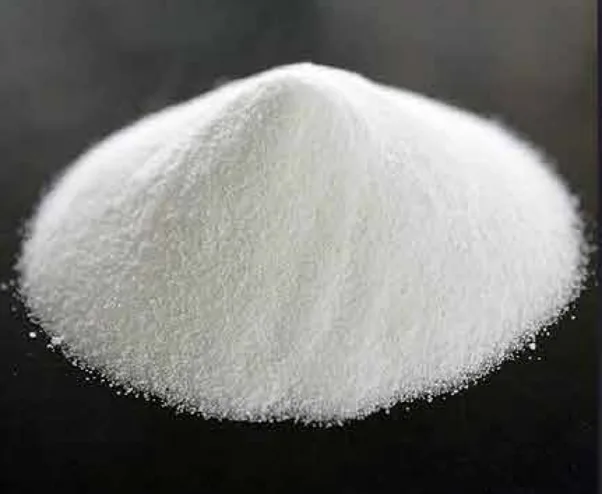
Bei der Bewertung der Qualität von CPE, ist die Schmelzenthalpie einer der wichtigsten Indikatoren. Dieser Wert spiegelt die Restkristallinität des Materials wider. In der Praxis bedeutet eine niedrigere Schmelzenthalpie in der Regel eine bessere Elastizität und eine bessere Kompatibilität mit PVC. Wenn CPE mit einer höheren Schmelzenthalpie verwendet wird, nimmt die Schlagzähigkeit des PVC-Verbundwerkstoffs häufig ab. Gleichzeitig kann sich auch das Verarbeitungsverhalten ändern, da Materialien mit höherer Kristallinität schwieriger gleichmäßig zu dispergieren sind. Daher ist die Kontrolle der Schmelzenthalpie sehr wichtig, um eine stabile Verarbeitung und gute mechanische Eigenschaften zu erreichen.
Der Einfluss des Gehalts an flüchtigen Bestandteilen auf die Verarbeitungsstabilität
Ein weiterer Faktor, der nicht ignoriert werden darf, ist der Gehalt an flüchtigen Bestandteilen in CPE. Während der Produktion können geringe Mengen an Feuchtigkeit und Chlorwasserstoff im Material verbleiben. Diese flüchtigen Substanzen können die Stabilität von PVC während der Verarbeitung beeinträchtigen. Wenn der Gehalt an flüchtigen Bestandteilen hoch ist, kann das Material zwar schneller plastifizieren, aber die Stabilität nimmt ab. In der tatsächlichen Produktion kann dies zu Vergilbung, geringerer Schlagzähigkeit und schwächerer Schweißfestigkeit führen. Aus diesem Grund wählen Hersteller in der Regel CPE mit einem niedrigen Gehalt an flüchtigen Bestandteilen, um eine gleichbleibende Qualität der PVC-Produkte zu gewährleisten.
Wie sich das Molekulargewicht auf die Verarbeitung und Festigkeit auswirkt
Betrachtet man die Eigenschaften von CPE weiter, so spielt auch das Molekulargewicht eine wichtige Rolle. Dieser Faktor wird oft durch den Mooney-Viskositätswert widergespiegelt. CPE mit einem höheren Molekulargewicht bietet in der Regel eine bessere Schlagfestigkeit und eine höhere Festigkeit im fertigen PVC-Produkt. Gleichzeitig kann ein höheres Molekulargewicht die Verarbeitung jedoch erschweren, da das Material weniger fließfähig wird. Im Gegensatz dazu ist CPE mit einem niedrigeren Molekulargewicht leichter zu verarbeiten, bietet aber möglicherweise nicht genügend Zähigkeit. Aus diesem Grund wird in der industriellen Produktion normalerweise ein ausgewogenes Molekulargewicht bevorzugt.
Die Bedeutung des Chlorgehalts in CPE
Ein weiterer Schlüsselfaktor, der die Leistung direkt beeinflusst, ist der Chlorgehalt in CPE. Dieser Wert bestimmt, wie gut sich das Material mit PVC vermischen lässt. Wenn der Chlorgehalt zu niedrig ist, ist die Kompatibilität schlecht und die schlagzähmachende Wirkung begrenzt. Wenn der Chlorgehalt hingegen zu hoch ist, verhält sich das Material eher wie ein Weichmacher als wie ein Schlagzähmodifikator. In der praktischen Anwendung zeigt CPE mit einem Chlorgehalt von etwa 35% bis 36% in der Regel das beste Gleichgewicht zwischen Flexibilität und Kompatibilität, was erklärt, warum es in Hart-PVC-Produkten weit verbreitet ist.
Die Auswirkung von Partikelgröße und Dispersion
Neben den chemischen Eigenschaften beeinflussen auch die physikalischen Merkmale die Modifikationsleistung. Die Partikelgröße ist in diesem Fall einer der wichtigsten Faktoren. Wenn CPE-Partikel zu groß sind, ist es schwierig, sie beim Mischen gleichmäßig zu dispergieren. Infolgedessen kann das Material keine stabile interne Struktur bilden, und die Schlagfestigkeit des Endprodukts nimmt ab. Gleichzeitig kann eine ungleichmäßige Dispersion auch die Oberflächenqualität beeinträchtigen. Aus diesem Grund trägt die Kontrolle der Partikelgröße dazu bei, sowohl die Verarbeitungsstabilität als auch die Produktleistung zu verbessern.
Warum Aschegehalt und Verunreinigungen kontrolliert werden müssen
Bei der Auswahl von CPE für die Modifikation von Hart-PVC sollten auch der Aschegehalt und Verunreinigungen berücksichtigt werden. Einige Hersteller fügen anorganische Materialien hinzu, um die Kosten zu senken, aber übermäßige Füllstoffe können die Zähigkeit von PVC-Produkten negativ beeinflussen. Ein hoher Aschegehalt kann die Plastifizierung verzögern und die Schlagzähigkeit verringern. Darüber hinaus können Verunreinigungen, die nicht richtig schmelzen, als kleine Defekte auf der Oberfläche des Endprodukts erscheinen. Diese Defekte beeinträchtigen nicht nur das Aussehen, sondern können auch die mechanische Festigkeit verringern. Daher weist hochwertiges CPE in der Regel einen niedrigen Aschegehalt und weniger Verunreinigungen auf.
Der Einfluss von Bruchdehnung und Härte auf die Endleistung
Ein weiterer wichtiger Aspekt ist die mechanische Leistung von CPE selbst, insbesondere die Bruchdehnung und die Härte. Diese Eigenschaften beeinflussen direkt die Zähigkeit des modifizierten PVC-Materials. Wenn die Bruchdehnung hoch ist, kann das Material bei einem Aufprall mehr Energie absorbieren, was die Leistung bei niedrigen Temperaturen verbessert. Wenn das Material jedoch zu weich ist, kann dies die Festigkeit des Endprodukts verringern. Aus diesem Grund suchen Hersteller bei der Auswahl von CPE für Hart-PVC-Anwendungen in der Regel nach einem Gleichgewicht zwischen Flexibilität und Festigkeit.
Fazit: Die Wahl des richtigen CPE für die Modifikation von Hart-PVC
Nach Berücksichtigung all dieser Faktoren wird deutlich, dass die Leistung von CPE-modifiziertem PVC von mehreren Schlüsselindikatoren abhängt, darunter Schmelzenthalpie, Gehalt an flüchtigen Bestandteilen, Molekulargewicht, Chlorgehalt, Partikelgröße, Aschegehalt und mechanische Eigenschaften. Nur wenn diese Parameter ordnungsgemäß kontrolliert werden, kann das Material sowohl eine gute Verarbeitungsleistung als auch eine starke Schlagfestigkeit erreichen. Für Hersteller von Rohren, Profilen und anderen Hart-PVC-Produkten ist die Auswahl des richtigen CPE ein wichtiger Schritt zur Verbesserung der Produktqualität und der langfristigen Zuverlässigkeit.
Wenn Sie auf der Suche nach stabilen und hochwertigen Schlagzähmodifikatoren sind, ist Xuye ein professioneller Hersteller von CPE-Materialien, der zuverlässige Lösungen für die Modifikation von Hart-PVC anbietet. Kontaktieren Sie Xuye noch heute, um mehr über unsere Produkte zu erfahren und wie diese zur Verbesserung Ihrer PVC-Anwendungen beitragen können.