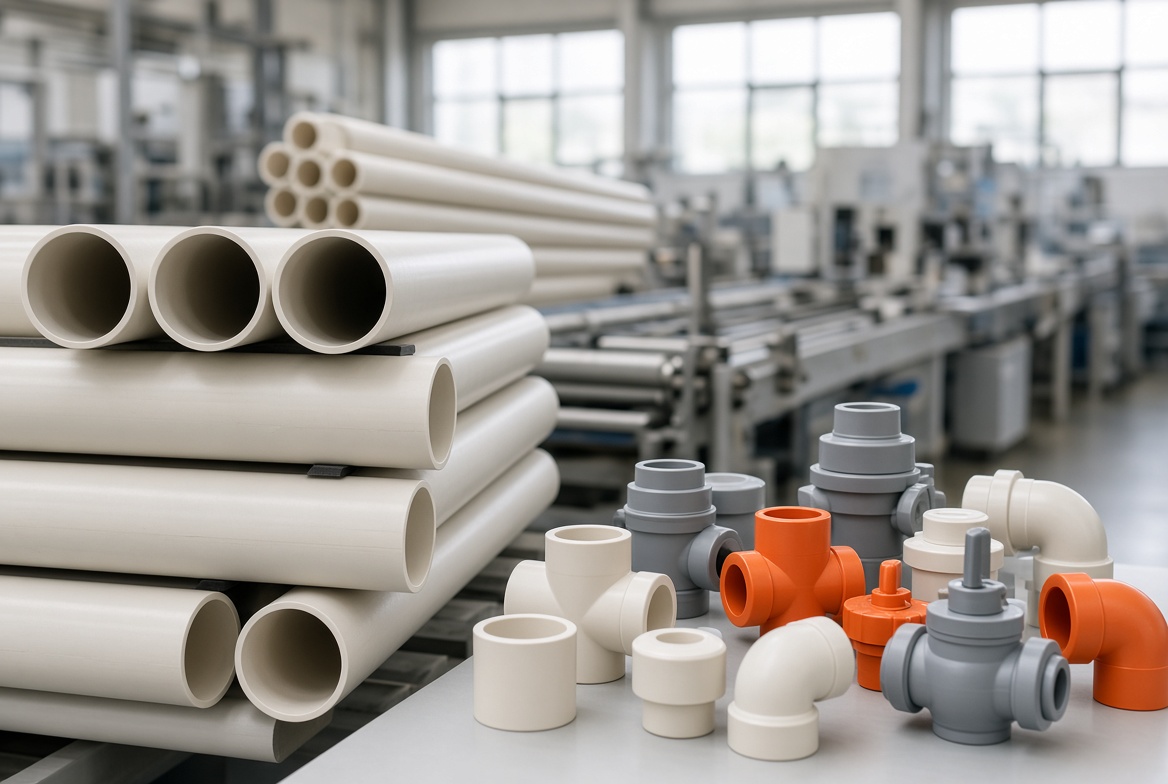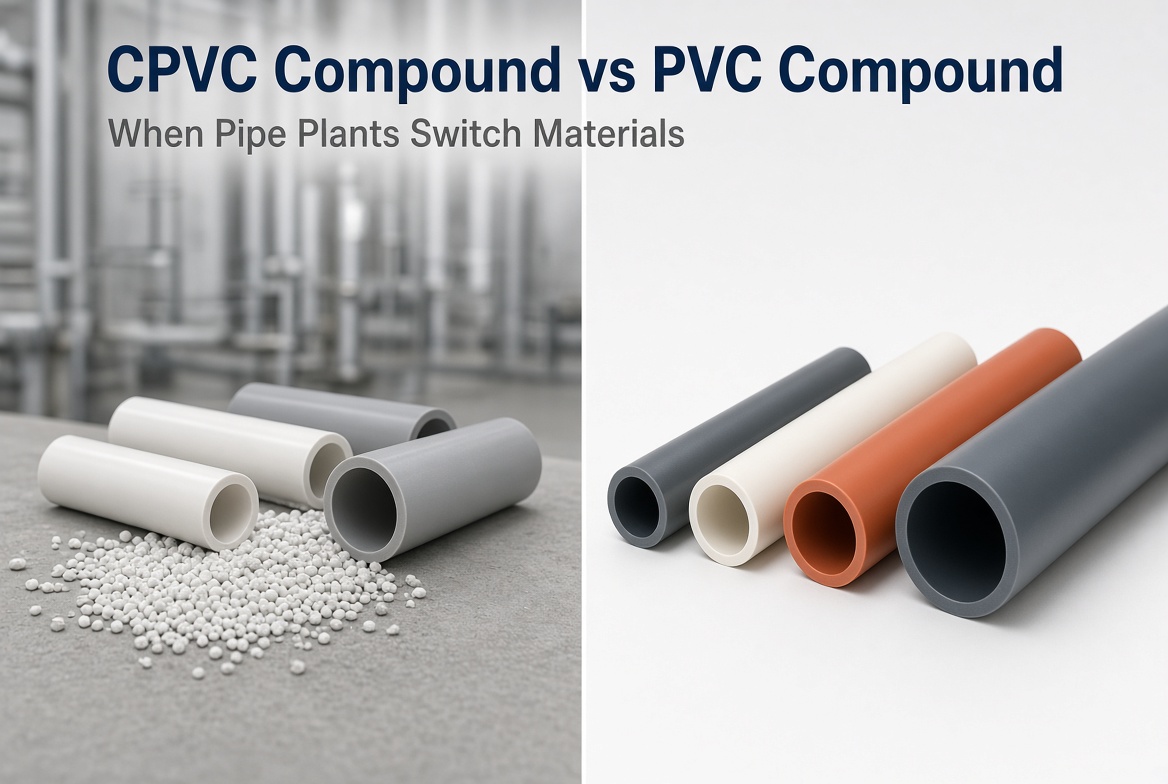
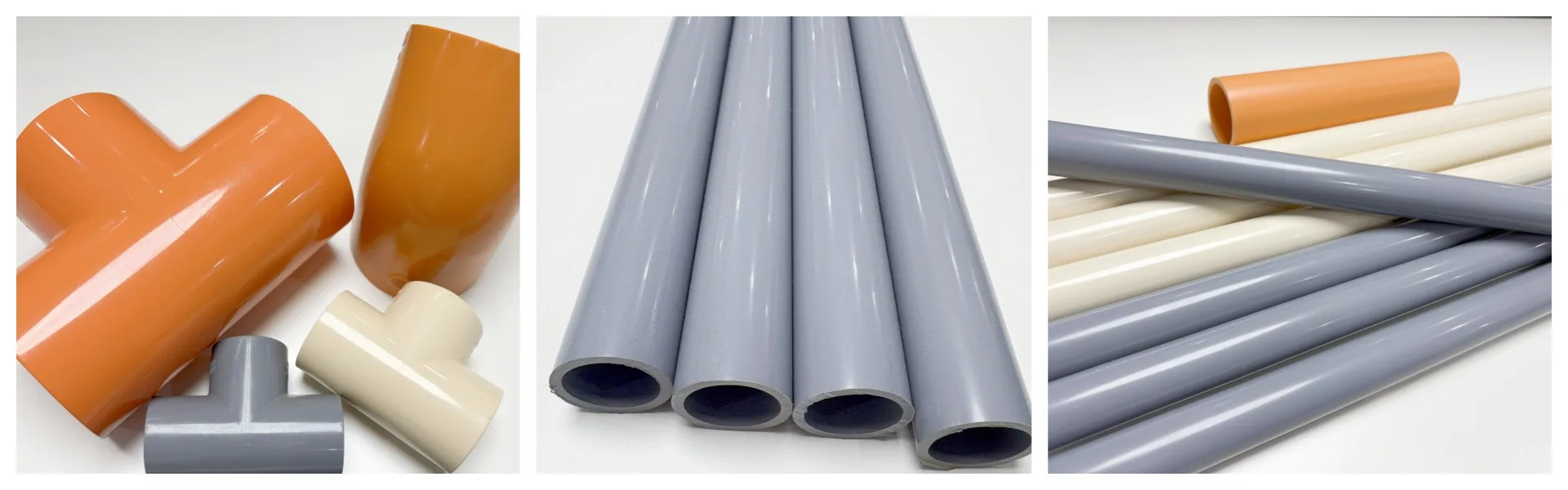
Para começar, a indústria de cloro-álcali transporta continuamente meios altamente corrosivos, como ácidos, álcalis e salmoura, o que impõe exigências extremas aos materiais de tubulação. Um sistema de tubulação industrial confiável deve operar com segurança por longos períodos sem falhas, mantendo um desempenho consistente. Portanto, a seleção do material afeta diretamente a segurança da planta, a eficiência da produção e os custos operacionais. Nos últimos anos, os sistemas de tubulação industrial de CPVC tornaram-se uma solução preferencial porque equilibram durabilidade, segurança e valor econômico.
Requisitos de desempenho na produção de cloro-álcali
Primeiramente, os ambientes de processamento de cloro-álcali envolvem substâncias altamente corrosivas que podem degradar rapidamente materiais comuns. A tubulação deve resistir ao ataque químico de ácidos, bases, sais e agentes oxidantes, mantendo a integridade estrutural. Além disso, as linhas de produção contínuas exigem alta confiabilidade para evitar vazamentos ou paralisações que possam causar incidentes de segurança ou prejuízos financeiros. Ademais, as empresas avaliam os materiais com base no custo do ciclo de vida, não apenas no preço inicial. Por essas razões, os engenheiros frequentemente buscam tubulações industriais resistentes à corrosão que minimizem a manutenção e o tempo de inatividade.
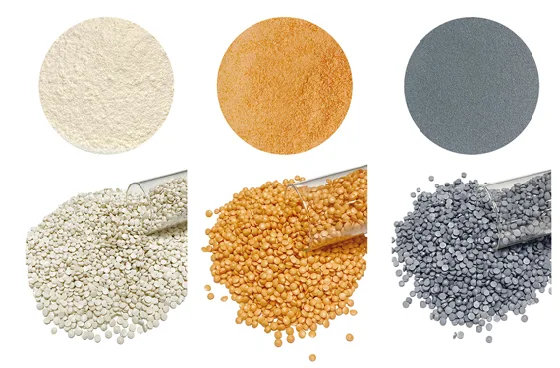
Vantagens do material da tubulação industrial de CPVC
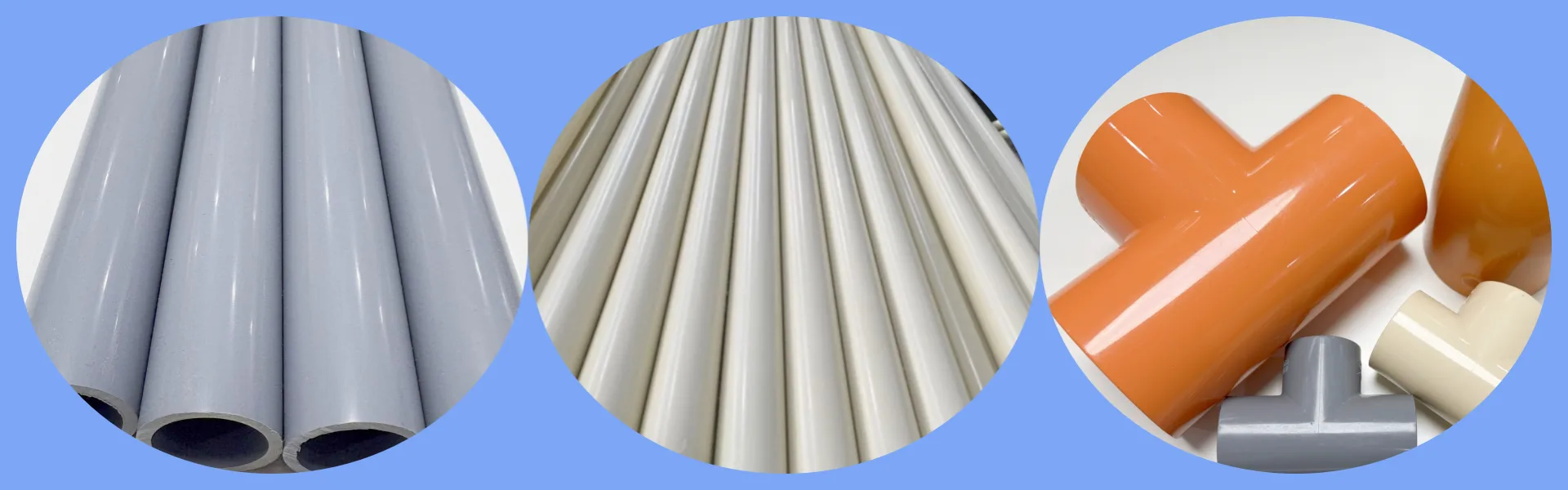
Em seguida, CPVC (policloreto de vinila clorado) oferece excelente resistência química devido à sua estrutura molecular. É inerte a muitos ácidos, álcalis, sais e hidrocarbonetos alifáticos, tornando-o adequado para o transporte de produtos químicos agressivos. Além disso, os tubos de CPVC possuem superfícies internas lisas que resistem à incrustação e ao acúmulo, ajudando a manter a eficiência do fluxo e evitando a contaminação do fluxo do processo. Outra vantagem fundamental é a capacidade de temperatura; o CPVC pode suportar temperaturas de serviço mais altas do que o PVC padrão, mantendo sua resistência. Devido a essas propriedades, palavras-chave como resistência à corrosão do CPVC e tubulação plástica de alta temperatura se encaixam naturalmente em discussões técnicas.
Custos de instalação mais baixos em comparação com o metal
Igualmente importante, os custos de instalação desempenham um papel fundamental na seleção do material. Os tubos de metal tradicionais são pesados, o que aumenta as despesas de transporte, manuseio e mão de obra. Em contraste, os tubos de CPVC pesam significativamente menos — aproximadamente um oitavo dos tubos de aço comparáveis —, tornando-os mais fáceis de mover e instalar. Normalmente, uma pequena equipe pode manusear tubulações de CPVC de grande diâmetro sem equipamentos de elevação pesados, reduzindo o tempo de instalação e a interrupção das operações da planta. Além disso, o CPVC utiliza união por cimento solvente, que funde quimicamente o tubo e as conexões em uma conexão forte e resistente a vazamentos. Este método elimina a soldagem, reduz os riscos de segurança e acelera a construção. Como resultado, as vantagens da instalação de tubulação de CPVC tornam-se claras quando comparadas com sistemas metálicos.
Redução de perdas por substituição e tempo de inatividade
Além disso, a corrosão é um problema importante para tubulações metálicas em plantas de cloro-álcali. A corrosão interna e externa pode levar a vazamentos, contaminação e paralisações não planejadas. Os tubos de metal também podem sofrer incrustações, o que aumenta a perda de pressão e reduz a eficiência. Escolher CPVC reduz significativamente esses riscos porque ele não corrói da mesma forma que o metal. Consequentemente, os requisitos de manutenção diminuem e a probabilidade de falhas repentinas é minimizada. Tubulações confiáveis ajudam a evitar interrupções na produção e reduzem o risco de incidentes de exposição química, tornando a tubulação industrial de baixa manutenção uma opção atraente.
Custos de manutenção de longo prazo mais baixos
Além de reduzir os riscos de falha, os sistemas de CPVC proporcionam uma longa vida útil com manutenção mínima. Tubos, conexões e válvulas feitos de CPVC permanecem estáveis quando expostos à maioria dos produtos químicos industriais, permitindo que as instalações mantenham uma produção consistente. Mesmo que reparos localizados sejam necessários, os componentes de CPVC são relativamente fáceis de substituir sem afetar todo o sistema. Com o tempo, isso se traduz em menores despesas de manutenção e maior eficiência operacional. Portanto, muitos engenheiros consideram o CPVC uma solução econômica ao avaliar o custo total do ciclo de vida dos sistemas de tubulação química.
Vantagens do custo do ciclo de vida
De uma perspectiva mais ampla, o verdadeiro valor do CPVC torna-se evidente ao considerar a economia do ciclo de vida. Embora algumas instalações possam exigir suportes adicionais devido ao peso mais leve do CPVC, o custo geral — desde a instalação até a manutenção e substituição — geralmente permanece menor do que as alternativas metálicas. Menor mão de obra, danos mínimos por corrosão e vida útil mais longa contribuem para um melhor retorno sobre o investimento. Para empresas focadas em operações sustentáveis e orçamentos previsíveis, a comparação de custos entre CPVC e tubulação metálica é um fator de decisão fundamental.
Conclusão: Uma escolha confiável para aplicações de cloro-álcali
Em conclusão, selecionar o material de tubulação correto é essencial para a operação segura e eficiente das instalações de cloro-álcali. Os sistemas de tubulação industrial de CPVC oferecem excelente resistência à corrosão, instalação leve, desempenho confiável e custos de longo prazo mais baixos. Essas vantagens explicam por que mais plantas químicas estão migrando da tubulação metálica tradicional para soluções de CPVC. Ao garantir uma operação estável e reduzir as demandas de manutenção, o CPVC apoia tanto a produtividade quanto a segurança em ambientes industriais exigentes.
A Xuye New Materials é uma fornecedora de CPVC profissional, especializada em resina e compostos de CPVC de alta qualidade para aplicações industriais. Com tecnologia de produção avançada e rigoroso controle de qualidade, a Xuye fornece materiais confiáveis para tubos, conexões, revestimentos de CPVC e outras soluções resistentes a produtos químicos. Se você está procurando um fornecedor confiável de policloreto de vinila clorado, a Xuye está pronta para apoiar seus projetos com qualidade consistente e serviço global.