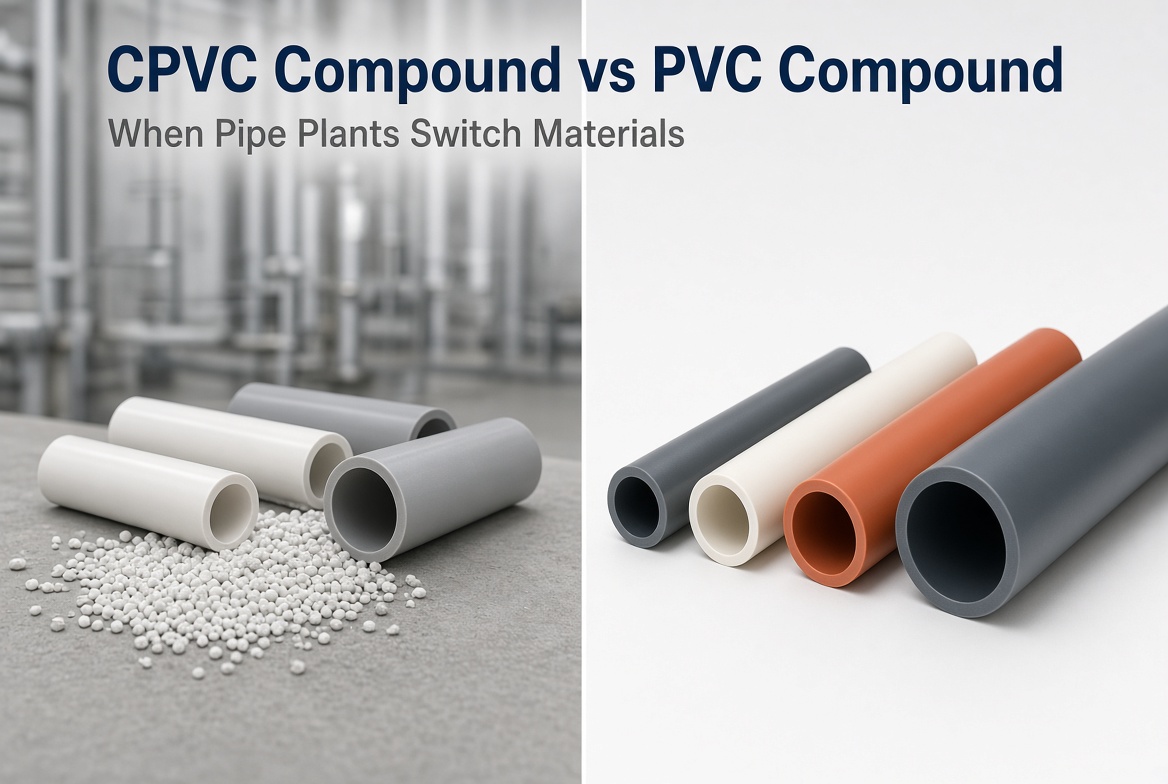
PVC (Policloreto de Vinila) e CPVC (Policloreto de Vinila Clorado) são dois dos materiais mais utilizados em sistemas de tubulação em todo o mundo. Eles são frequentemente confundidos devido à sua aparência semelhante e aplicações sobrepostas. No entanto, suas propriedades não são as mesmas, e usar o material errado pode afetar o desempenho e a segurança do sistema. Este artigo explica as principais diferenças entre CPVC e PVC, abrangendo sua composição, desempenho, métodos de instalação, aplicações e custos, para ajudá-lo a fazer a escolha certa.
Composição Química
A primeira diferença fundamental reside na composição química. O PVC é um polímero composto de carbono, hidrogênio e cloro. O CPVC, por outro lado, é produzido pela cloração do PVC, o que aumenta o teor de cloro. Esse nível mais alto de cloro altera a estrutura molecular do material, tornando-o CPVC mais resistente à corrosão, produtos químicos e crescimento microbiano. Isso explica por que o CPVC é frequentemente escolhido para ambientes exigentes onde o PVC pode não ter um desempenho tão bom.
Resistência à Temperatura
Outra grande diferença é a tolerância à temperatura. Os tubos de PVC geralmente suportam temperaturas de até 140°F (60°C). Além desse ponto, o PVC torna-se macio e perde resistência. O CPVC, com seu maior teor de cloro, pode lidar com temperaturas muito mais altas — até 200°F (93°C). Por causa disso, o CPVC é amplamente utilizado em sistemas de distribuição de água quente e aplicações industriais onde a resistência ao calor é crítica.
Pressão e Resistência
Ao comparar classificações de pressão e resistência, o CPVC geralmente apresenta um desempenho melhor. Por exemplo, o PVC tem uma resistência à tração de cerca de 7.500 PSI, enquanto o CPVC fica mais próximo de 8.200 PSI. Essa resistência adicional significa que o CPVC mantém um melhor desempenho sob estresse e em condições de alta temperatura. Ambos os materiais estão disponíveis em Schedule 40 e Schedule 80, mas o CPVC retém sua durabilidade de forma mais eficaz quando exposto a pressões operacionais e calor mais elevados.
Instalação e União
Embora ambos os materiais sejam leves e fáceis de instalar, eles exigem métodos de união diferentes. Os tubos de PVC usam cimento solvente que está em conformidade com os padrões ASTM D2564, enquanto os tubos de CPVC precisam de cimento solvente que atenda aos padrões ASTM F493. Esses adesivos não são intercambiáveis, pois a composição química de cada material requer uma fórmula específica para garantir uma união segura. Para os instaladores, é importante verificar sempre os rótulos dos primers e cimentos para evitar falhas nas conexões.
Tamanhos e Aparência dos Tubos
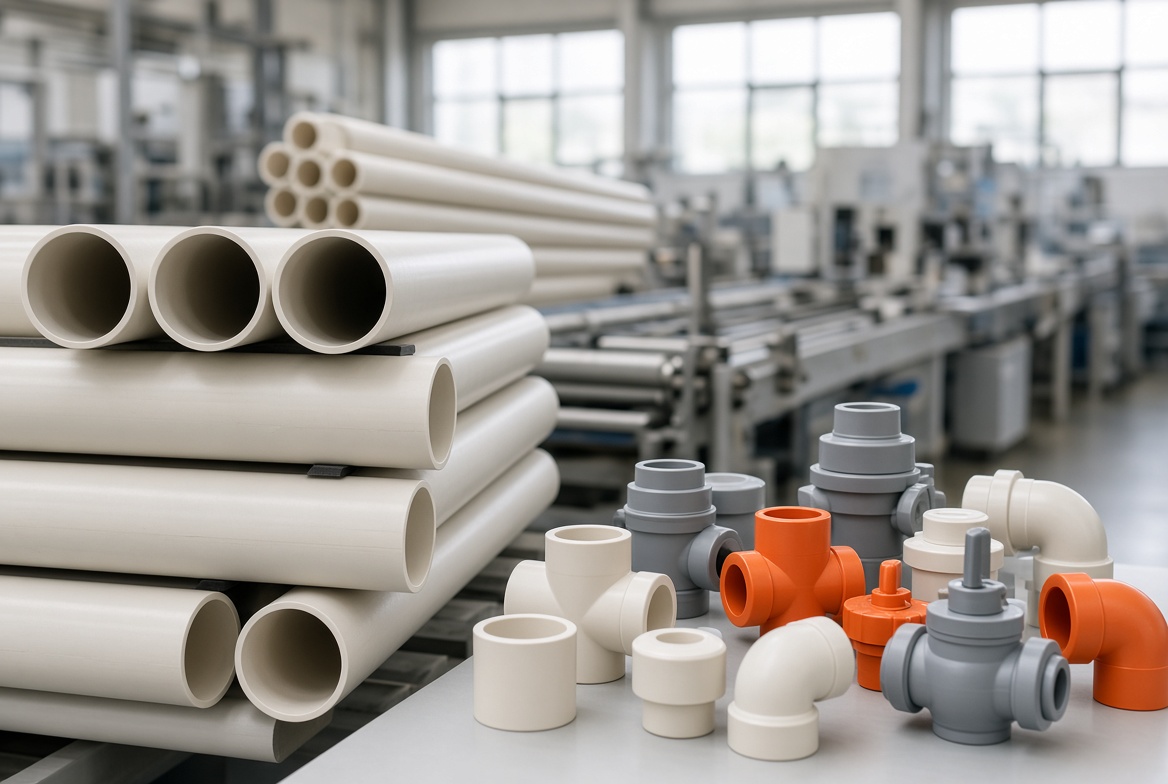
O PVC e o CPVC também podem ser identificados por seus tamanhos e cores. Os tubos de PVC são medidos apenas em NPS (tamanho nominal do tubo), enquanto o CPVC vem tanto em NPS quanto em CTS (tamanho de tubo de cobre), proporcionando maior compatibilidade em certos sistemas. Em termos de aparência, o PVC é geralmente branco ou cinza escuro, enquanto o CPVC é encontrado mais frequentemente em cinza claro, branco off-white ou amarelo. Essas diferenças tornam mais fácil distinguir os dois durante a seleção e a instalação.
Consideração de Custo
O custo é outro fator que influencia a tomada de decisão. O PVC é geralmente menos caro, com o tubo Schedule 40 custando em média cerca de US$ 0,40 por pé. O CPVC, por outro lado, custa mais, com média de cerca de US$ 2,50 por pé para o Schedule 40. O preço mais alto reflete sua maior resistência à temperatura e resistência mecânica. Ao escolher entre os dois, é importante equilibrar o custo inicial com as necessidades de desempenho a longo prazo.
Aplicações Comuns
Tanto o PVC quanto o CPVC são versáteis e usados em muitas indústrias, mas suas aplicações diferem dependendo dos requisitos de desempenho. O PVC é mais comumente usado para sistemas de água fria, drenagem, irrigação e conduítes elétricos. Sua acessibilidade o torna ideal para projetos residenciais e comerciais em geral. O CPVC, por outro lado, é a escolha preferida para sistemas de água quente, linhas de processamento químico e sistemas de sprinklers contra incêndio, onde maior resistência ao calor e a produtos químicos é essencial.
Segurança e Considerações Especiais
A segurança é outro ponto a ser lembrado. Ambos os materiais liberam gases nocivos quando aquecidos ou cortados, portanto, ventilação adequada e equipamentos de proteção são necessários durante a instalação. Para sistemas de água potável, é importante selecionar produtos certificados de acordo com os padrões ANSI/NSF 61 para garantir água potável segura. Além disso, instalações externas exigem proteção UV, pois a exposição prolongada ao sol pode degradar tanto o PVC quanto o CPVC, a menos que os tubos sejam enterrados ou revestidos.
Tabela de Comparação
| Propriedade | PVC | CPVC |
| Composição Química | Policloreto de vinila padrão | Policloreto de vinila clorado |
| Temperatura Máxima | 140°F (60°C) | 200°F (93°C) |
| Resistência à tração | ~7.500 PSI | ~8.200 PSI |
| Tamanhos de Tubo | Apenas NPS | NPS e CTS |
| Cores | Branco, cinza escuro | Cinza claro, branco off-white, amarelo |
| Custo Médio (por pé) | US$ 0,40 (Schedule 40) | US$ 2,50 (Schedule 40) |
| Aplicações Comuns | Água fria, drenagem, irrigação, conduíte | Água quente, sistemas químicos, sprinklers de incêndio |
Conclusão
Em resumo, o PVC e o CPVC podem parecer semelhantes, mas suas capacidades de desempenho são muito diferentes. O PVC é melhor para água fria, baixa temperatura e aplicações econômicas, enquanto o CPVC é mais adequado para água quente, uso industrial e ambientes que exigem maior resistência química. Ao entender suas propriedades únicas, você pode selecionar o material certo para seu projeto e garantir confiabilidade a longo prazo.
Se você está procurando por um fornecedor de policloreto de vinila clorado, a Xuye fornece produtos de CPVC de alta qualidade projetados para atender a aplicações exigentes. Com desempenho confiável e serviço profissional, a Xuye pode apoiar seus projetos de tubulação com soluções nas quais você pode confiar.