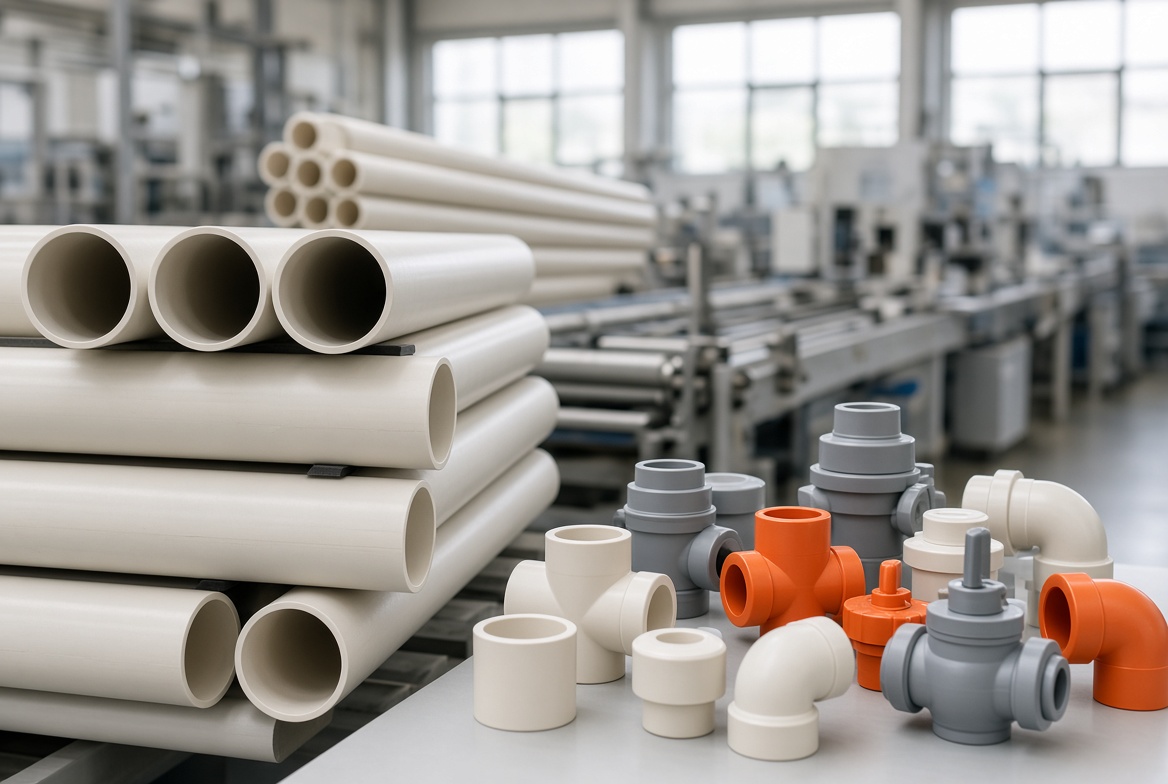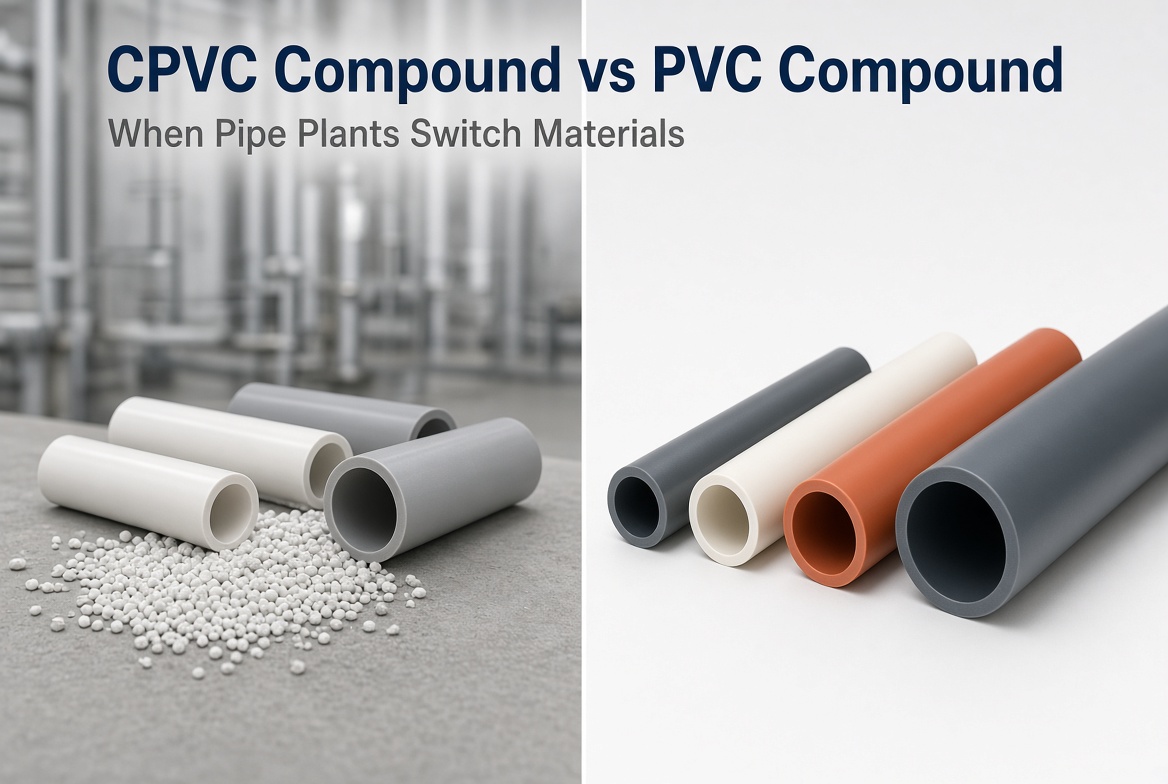
화합물 열화로 어려움을 겪고 계신 산업 엔지니어 또는 폴리머 가공 전문가이신가요? 이 기술 가이드는 고내열성 변형 제품부터 특수 화학 제형에 이르기까지 특정 분자 구조를 매칭하여 압출 수율을 최적화하는 방법을 분석하며, 산업용 CPVC 가공의 복잡한 과정을 명확히 설명합니다. 정밀한 열역학적 제어를 마스터하고 당사의 포괄적인 CPVC 등급 선택 매트릭스 를 탐색하여 제조 결함을 제거하고 장기적인 파이프라인 무결성을 보장하십시오.
산업용 CPVC 수지 소개
표준 폴리염화비닐(PVC)에서 염소화 폴리염화비닐(CPVC)로의 전환은 고사양 산업용 유체 핸들링을 위한 중요한 소재 업그레이드를 의미합니다. 이러한 구조적 변경이 성능 한계를 어떻게 변화시키는지 이해하는 것은 현장 신뢰성을 위해 필수적입니다.
CPVC 수지란 무엇인가요?
염소화 폴리염화비닐은 PVC 베이스 폴리머의 후염소화를 통해 생산되는 독특한 열가소성 수지입니다. 이러한 화학적 변형은 기본 염소 함량을 표준 57%에서 60%~75%의 매우 안정적인 범위로 높입니다. 이처럼 밀도가 높은 염소 구성은 탄소 골격을 효과적으로 보호하여 소재의 연속 사용 온도 임계값을 93°C 이상으로 높이는 동시에, 구조적 난연성과 탁월한 내산·내알칼리성을 본질적으로 향상시킵니다.
핵심 산업적 이점
- 열 안정성: 끓는 물과 저압 증기 라인에 지속적으로 노출되어도 높은 인장 탄성률과 기계적 강성을 유지합니다.
- 화학적 내성: 고농도 산, 가성소다 및 산업용 염수를 이송할 때 환경 응력 균열(ESC)에 대한 탁월한 보호 성능을 입증합니다.
- 기계적 강도: 긴 작동 수명 동안 높은 구조적 하중 지지력과 우수한 정수압 등급을 제공합니다.
- 난연성: 높은 한계 산소 지수(일반적으로 60% 이상)로 인해 연기 발생이 매우 적고 자기 소화성을 보장합니다.
주요 산업 응용 분야
- 온수 배관: 상업용 24/7 온수 순환 그리드 및 고온 배관 시스템.
- 화학 파이프라인: 중공업 화학 공장 유체 이송, 폐수 처리 및 전기도금 라인.
- 산업용 코팅: 부식 방지 화학 저장 탱크 라이닝 및 내구성이 뛰어난 해양 구조용 페인트.
- 플라스틱 개질: 표준 비닐 제형의 열변형 온도(HDT)를 높이기 위한 고성능 블렌딩제로 사용.
일반적인 CPVC 등급 개요
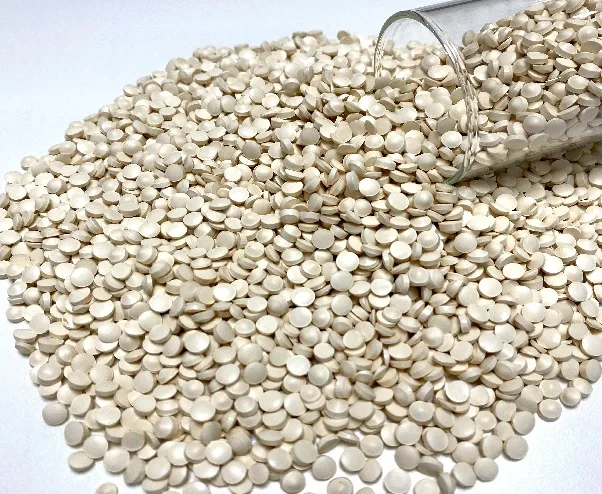
산업용 제조 라인을 최적화하려면 컴파운딩 기계에 맞는 올바른 분자 구조를 매칭해야 합니다. 현대 산업 환경을 정의하는 4가지 주요 등급은 CPVC J-700C, Z-500C, J-700 및 Z-500입니다. 이러한 변형 제품들은 염소 분포와 분자량의 균형을 맞추어 중공업용 압출부터 비용 효율적인 인프라 블렌딩에 이르기까지 뚜렷한 가공 프로필을 형성합니다.
CPVC 수지의 핵심 가공 원칙
원료 염소화 수지를 완벽한 완제품 프로필로 성공적으로 전환하려면 폴리머 유변학에 대한 깊은 이해가 필요합니다. 소재에 산업적 회복력을 부여하는 바로 그 구조가 공장 현장에서 매우 민감한 취급 매개변수를 결정짓기도 합니다.
CPVC가 PVC보다 가공하기 어려운 이유
탄소 골격을 보호하는 구조적 염소화는 분자 마찰을 급격히 증가시켜 용융 점도와 유리 전이 온도를 높입니다. 결과적으로 CPVC는 표준 비닐보다 훨씬 높은 압출 및 사출 온도를 필요로 합니다. 폴리머의 열분해 임계값이 필요한 용융점과 매우 가깝게 유지되기 때문에 가공 범위가 매우 좁습니다. 약간의 온도 급상승이나 과도한 기계적 전단열은 급격한 탈염화수소 반응을 유발하여 부식성 염화수소 가스를 방출하고 치명적인 화합물 열화를 초래합니다.
주요 가공 목표
- 완전한 겔화: 전체 프로필 단면에 걸쳐 균질하고 완전히 융합된 분자 매트릭스를 달성하여 완전한 정수압 설계 강도를 확보합니다.
- 최소한의 열화: 엄격한 열역학적 관리를 유지하여 폴리머 사슬 절단, 구조적 변색 및 국부적인 약점을 방지합니다.
- 일관된 점도: 배럴 내 헤드 압력 균일성을 관리하여 다운스트림 교정 중 벽 두께 변동 및 표면 변형을 제거합니다.
- 기계적 무결성: 고압 성형 중 결함 없는 웰드 라인 통합을 보장하여 유압 응력 하에서의 조기 현장 고장을 방지합니다.
산업용 CPVC의 주요 가공 방법
- Extrusion: The standard method for manufacturing continuous industrial piping, ductwork, and heavy sheets using specialized parallel or conical twin-screw configurations.
- 사출 성형: Employed for shaping complex, high-stress pipeline components like valves, flanges, and fittings, requiring low-compression screw designs to prevent shear spikes.
- Compounding for Coatings: Dissolving high-chlorine resin fractions into specific organic solvent systems to formulate anti-corrosive chemical storage tank linings and high-performance marine barriers.
Recommended CPVC Processing Parameters
Running industrial CPVC requires balancing your thermal profiles and mechanical shear to reach full gelation without triggering degradation.
Twin-Screw Extrusion
You should set your barrel gradient from a 170–180°C feed zone, through 180–195°C compression, to 185–205°C metering, keeping the die at 190–210°C. Maintain screw speeds at 15–40 rpm under 5–15 MPa head pressure. Increase profiles by +5°C for J-700C and +10°C for Z-500C, but lower by -5°C for Z-500.
Injection Molding
Regulate your injection barrel between 180–210°C and maintain mold water at 40–70°C to prevent surface defects. You need to inject at 80–140 MPa with a 10–30 second hold time to eliminate sink marks. J-700 is preferred for complex fittings, while you should avoid high-viscosity Z-500C.
Coating Compounding
Run your high-speed hot blending strictly between 160–175°C to preserve the resin matrix. You must boost primary heat stabilizers to 1.5–2.5 times standard PVC baselines and integrate lubricants at 1–2 phr. High-chlorine grades like J-700C and Z-500C are ideal here to maximize chemical permeation resistance.
Formulation Best Practices for Industrial CPVC
Raw resin requires a precisely balanced additive package before processing. Your compound recipe must directly counter the polymer’s inherent sensitivity to high thermal energy and mechanical shear.
Heat Stabilizers
You must use robust heat stabilizers, such as organotin or calcium-zinc systems, to prevent rapid dehydrochlorination. Ensure your dosage is scaled properly, as under-stabilization causes immediate degradation, turning the melt dark and destroying the mechanical properties of your profile.
충격 보강제
Integrating chlorinated polyethylene CPE impact modifier at 5–15% loading is essential to eliminate structural brittleness. This additive absorbs fracture energy during field impacts without lowering the compound’s heat distortion temperature, making it a benchmark component for your heavy-duty industrial pipelines.
Lubricants Balance
You need to establish a precise balance between internal and external lubricants, typically keeping the total loading within 1.5–2.5 phr. Internal types reduce inter-molecular friction to lower melt heat, while external alternatives prevent the sticky, high-viscosity compound from adhering to screw flights.
Mineral Fillers
Adding ultra-fine coated calcium carbonate or talc enhances profile rigidity while reducing raw material costs. However, you must limit filler content to 20% or less. Exceeding this critical boundary induces severe structural brittleness, leading to premature pipeline failures under hydrostatic pressure.
Grade-Specific Formulations
Modify your recipes based on your selected grade. High-heat J-700C requires an upgraded stabilizer package to handle elevated die temperatures, whereas high-viscosity Z-500C demands increased external lubricant ratios to reduce back pressure and control aggressive internal shear heating.
Common Processing Problems & Solutions
Troubleshooting industrial CPVC compounding requires distinguishing between chemical degradation and mechanical processing imbalances. You must adjust your lines carefully to maintain structural integrity.
Yellowing and Darkening (Degradation)
If your profile discolors or darkens during production, the compound is experiencing thermal degradation. This is caused by excessive melt temperatures, over-shear from high screw rotation, or stagnant dead zones. You should lower your metering zone temperatures and optimize your heat stabilizer input.
Brittle Finished Profiles
Low impact strength or brittle fracturing indicates incomplete resin gelation or insufficient modification. You need to slightly raise your adapter and die temperatures to ensure a thoroughly fused polymer matrix, and verify that your structural modifier loading matches your specific pressure-bearing requirements.
Surface Bubbles and Voids
Surface blistering and internal voids usually stem from high moisture levels in your raw resin or severe localized overheating caused by excessive shear force. You must ensure thorough pre-drying of your batches before feeding, and lower your screw speed to minimize friction.
Uneven Melt Viscosity
Fluctuating head pressure and inconsistent wall thickness point to poor mixing or utilizing an incorrect resin grade for your tooling geometry. Optimize your high-speed hot blending cycles for uniform additive dispersion, or evaluate your setup against a professional technical data sheet to switch grades.
Industrial Application-Specific Processing Tips
프로파일이 사용될 환경에 맞춰 제조 공정을 최적화하면 현장에서의 장기적인 성공을 보장할 수 있습니다. 대상 애플리케이션에 맞게 기계 설정을 조정해야 합니다.
Hot Water Piping
연속 온수 루프용 파이프라인을 압출할 때는 가공 온도를 180~200°C 사이로 엄격하게 유지해야 합니다. 고효율 열 안정화 패키지에 집중하고 진공 보정 탱크에서 느리고 균일한 냉각 공정을 구현하여 내부 응력이 잔류하지 않도록 하십시오.
화학 부식성 파이프라인
부식성 산을 이송하려면 190~210°C의 엄격한 범위 내에서 고염소 화합물을 가공해야 합니다. 파이프 표면의 미세 분리를 방지하기 위해 외부 윤활을 최소화해야 하며, 고압 화학 유체 이송 중에 화학적 장벽이 완전히 유지되도록 해야 합니다.
산업용 코팅 및 라이닝
보호용 유체 코팅을 배합할 때는 고분자량 매트릭스를 보존하기 위해 165~175°C 사이의 낮은 열 혼합 경계를 유지해야 합니다. 핀홀 없는 경화 표면층을 보장하려면 용매 믹서 내에서 초미세 입자 크기를 달성하고 첨가제를 완전히 분산시키는 데 집중해야 합니다.
결론
최적의 젤화를 확보하려면 각 산업용 CPVC 등급의 열적 요구 사항에 맞춰 기계를 동기화해야 합니다. 당사의 프리미엄 수지로 배합 효율성을 최적화하려면 오늘 저희에게 문의하십시오.