산동 쉬예 신소재 유한공사 로고
샘플 요청

News & insights

How Is CPVC Made? Manufacturing Process Explained

cpvc

CPVC (Chlorinated Polyvinyl Chloride) is a high-performance thermoplastic known for its excellent heat resistance, corrosion resistance, and long service life. Compared with standard PVC, CPVC can withstand higher operating temperatures while maintaining excellent mechanical strength, making it a preferred material for hot water piping, industrial fluid handling systems, fire sprinkler networks, and chemical processing applications.

Although CPVC is closely related to PVC, its manufacturing process involves far more than simply adding chlorine. Every stage, from chlorination to compounding and quality control, must be carefully managed to ensure the finished material delivers consistent performance.

From PVC Resin to CPVC

The production of CPVC begins with high-quality suspension-grade PVC resin. Standard PVC contains approximately 56–57% chlorine by weight and offers good chemical resistance, but its continuous operating temperature is generally limited to around 60°C. To improve heat resistance and overall performance, manufacturers increase the chlorine content to approximately 63–69% through a controlled chlorination process.

During production, PVC resin is first dispersed in water to create a uniform suspension. Chlorine gas is then introduced while ultraviolet light or chemical initiators activate the reaction. Instead of coating the surface of the particles, chlorine atoms replace selected hydrogen atoms along the PVC molecular chains, changing the polymer structure and enhancing its thermal and chemical properties.

The success of this reaction depends on precise control of several factors, including temperature, chlorine concentration, reaction time, and mixing conditions. Even small variations can influence chlorine distribution within the polymer, affecting the material’s strength, thermal stability, and processing performance.

Once the desired chlorine content has been reached, the reaction is stopped immediately to prevent over-chlorination. The resin then passes through several purification steps, including washing, neutralization, dewatering, and controlled drying. These processes remove residual chlorine and reaction by-products, resulting in a clean, stable CPVC resin with low moisture content.

cpvc

Compounding for Better Performance

The purified CPVC resin is only the foundation of the final material. Before it can be used to manufacture pipes, fittings, or valves, it must be blended with carefully selected additives that improve processing characteristics and long-term performance.

A typical CPVC compound includes heat stabilizers, processing aids, lubricants, impact modifiers, pigments, and, in some cases, fillers. Heat stabilizers protect the material during high-temperature extrusion or molding, while impact modifiers improve toughness and reduce brittleness. Processing aids and lubricants ensure smooth material flow and help produce products with consistent dimensions and high-quality surface finishes.

The exact formulation depends on the intended application. Materials designed for hot water plumbing, industrial chemical piping, or fire protection systems often require different additive packages to meet specific performance standards.

Manufacturing Pipes and Fittings

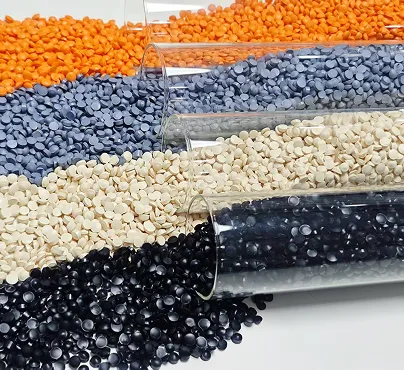
After compounding, the material is supplied either as powder or pellets, depending on customer requirements and manufacturing equipment.

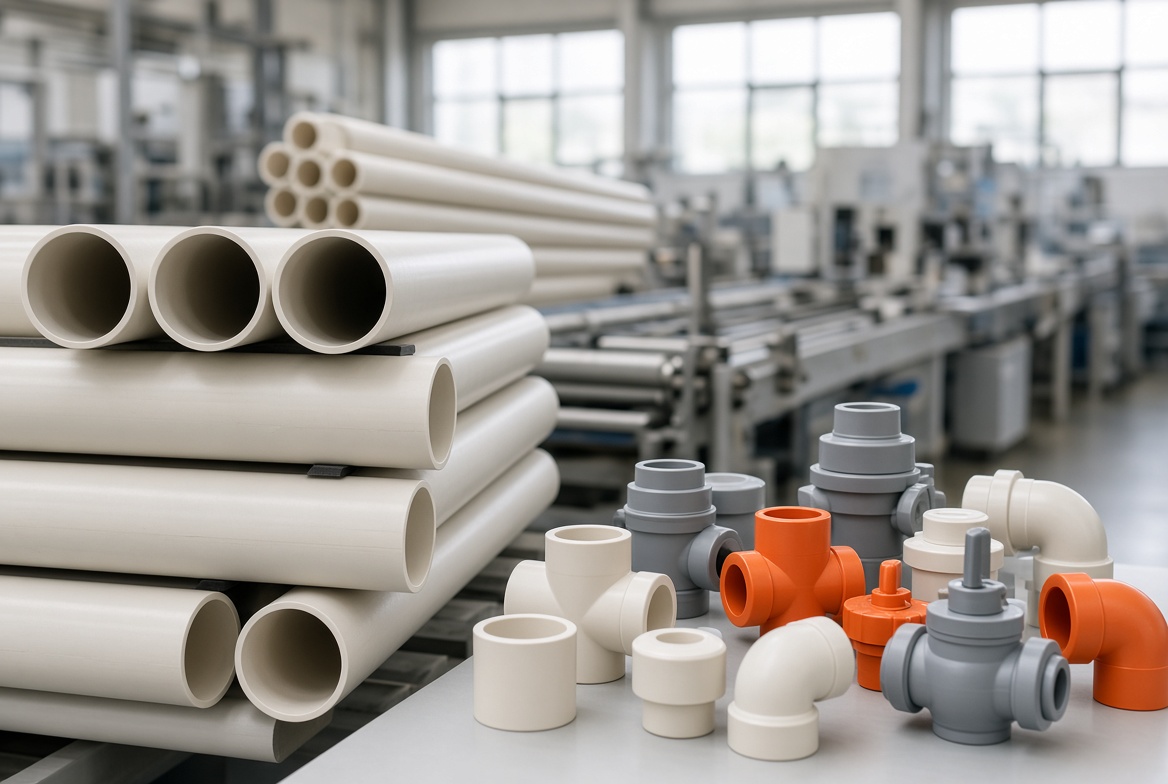
CPVC pipes are typically produced through extrusion. The compound is heated until molten and forced through a precisely designed die to form a continuous pipe. After extrusion, the pipe is cooled, sized, and cut to standard lengths while strict dimensional tolerances are maintained.

Fittings, valves, and other complex components are generally manufactured using injection molding. Molten CPVC is injected into precision molds under carefully controlled temperature and pressure, producing parts with excellent dimensional accuracy and mechanical strength.

Throughout processing, maintaining the proper temperature is critical. Excessive heat can cause polymer degradation, while insufficient heat may result in incomplete fusion and reduced product performance.

Quality Control Throughout Production

Consistent quality is one of the most important factors in CPVC manufacturing. Reliable producers perform rigorous testing throughout the production process rather than relying solely on inspections of the finished product.

Quality control typically includes chlorine content analysis, thermal stability testing, particle size measurement, melt processing evaluation, density testing, tensile strength, impact resistance, Vicat softening temperature, and long-term hydrostatic pressure testing. Manufacturers also monitor color consistency, dimensional stability, and processing behavior to ensure every production batch meets international standards and customer specifications.

This comprehensive testing helps guarantee that the material performs reliably under demanding operating conditions and delivers the long service life expected in plumbing and industrial applications.

Why the Manufacturing Process Matters

The manufacturing technology behind CPVC has a direct impact on its final performance. Differences in chlorination methods, additive formulations, and process control can lead to noticeable variations in heat resistance, pressure performance, chemical compatibility, and processing stability.

High-quality CPVC produced under strict quality management offers superior durability, excellent corrosion resistance, reliable long-term hydrostatic strength, and consistent processing characteristics. These advantages make it an ideal material for hot and cold water systems, industrial pipelines, fire sprinkler systems, and other demanding applications where reliability is essential.

CPVC

Conclusion

CPVC is created through a carefully controlled chlorination process that transforms standard PVC into a material capable of handling higher temperatures and more aggressive operating environments. From chlorination and purification to compounding, extrusion, and quality testing, every manufacturing step contributes to the material’s overall performance.

For pipe manufacturers, distributors, and OEM customers, understanding how CPVC is made provides valuable insight into material quality. Choosing a supplier with advanced production technology and strict quality control helps ensure consistent processing, dependable product performance, and long-term value across a wide range of applications.

Keep reading

More from the knowledge center.

XUYE에 문의하기

샘플 요청 또는 기술 상담 신청

지원하려는 학과와 목표 학년을 알려주세요. XUYE가 다음 단계의 구체적인 계획을 세우는 데 도움을 드리겠습니다.

전화
+86 546 363 7919
폭도
+86 189 5463 8366
이메일
sales@xuyechem.com
추가
중국 산둥성 동잉시

*당사는 귀하의 개인정보를 존중합니다. 당사는 당사의 개인정보 처리방침