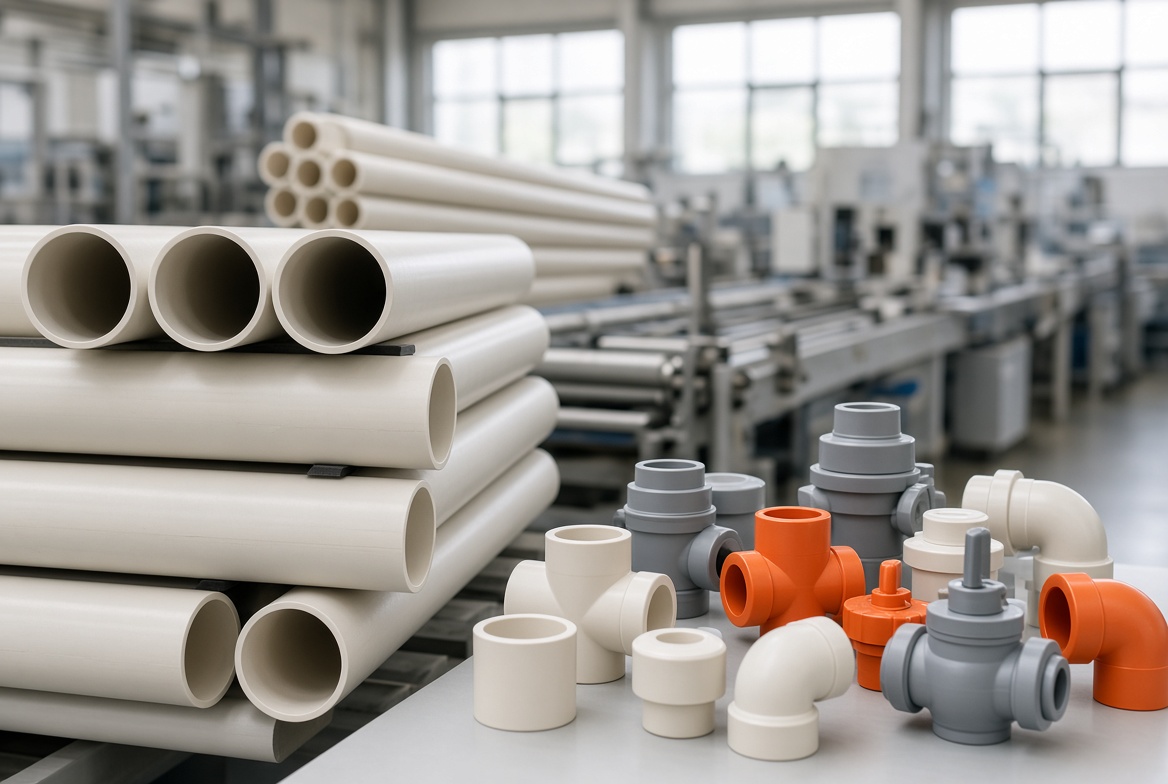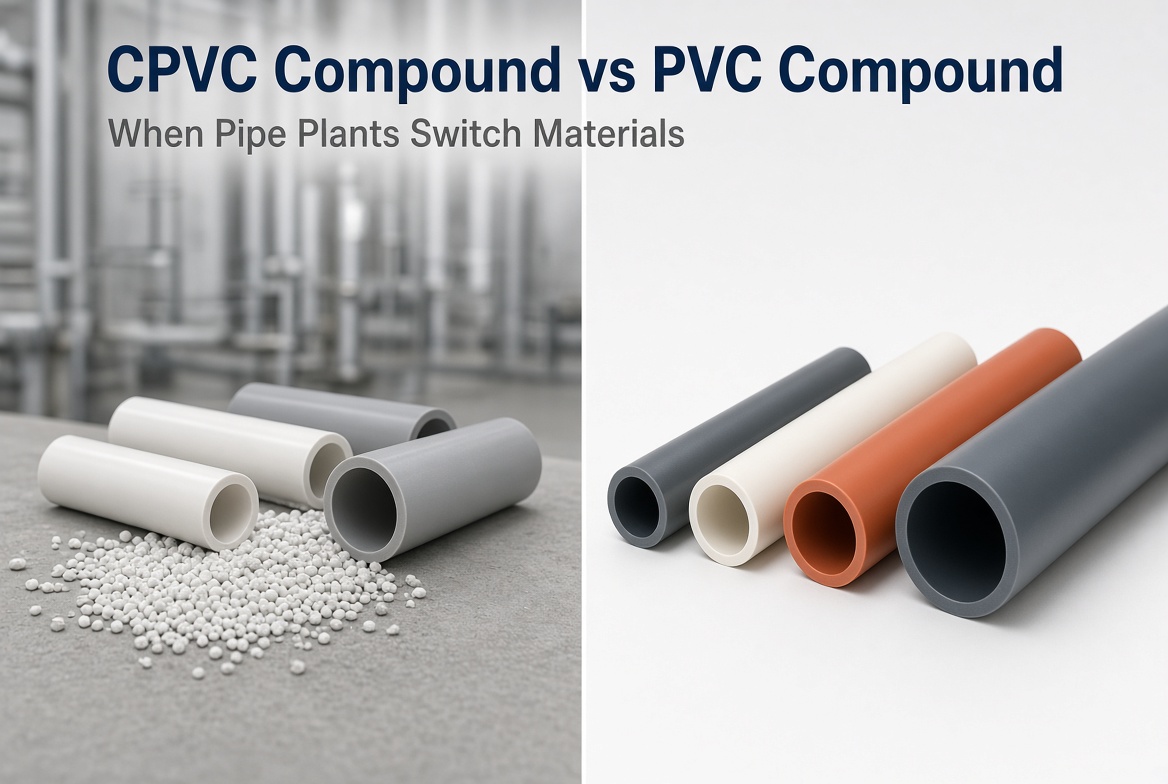
Los plásticos se han vuelto esenciales en las industrias modernas, ofreciendo durabilidad, flexibilidad y ahorro de costes. Entre los muchos tipos de plásticos, el policloruro de vinilo clorado (CPVC) ha ganado un amplio reconocimiento por sus propiedades únicas y sus aplicaciones versátiles. Como forma modificada de PVC, el CPVC proporciona una mejor resistencia al calor, a la presión y a los productos químicos, lo que lo convierte en una opción preferida en tuberías, revestimientos y sistemas industriales.
¿Qué es el CPVC?
El CPVC es la abreviatura de Policloruro de vinilo clorado, un termoplástico sintético producido mediante la cloración adicional del PVC estándar. Este paso adicional aumenta el contenido de cloro del polímero, típicamente entre el 63% y el 69% en masa. Esta modificación estructural cambia la clasificación del material, mejorando su capacidad para soportar temperaturas más altas y entornos más exigentes. En esencia, el CPVC es PVC con un rendimiento mejorado y un mayor potencial de aplicación.
Cómo se produce el CPVC
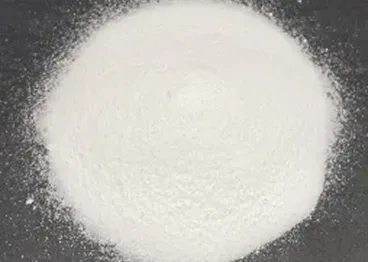
La producción de CPVC comienza con el PVC, que a su vez se forma mediante la polimerización de monómeros de cloruro de vinilo. El cloruro de vinilo proviene de la reacción de gas etileno, generalmente derivado de hidrocarburos, con gas cloro obtenido a partir de cloruro de sodio. Para fabricar CPVC, la resina de PVC se somete a un proceso de cloración por radicales libres. Durante esta reacción, se añaden átomos de cloro adicionales a la cadena polimérica, utilizando calor o energía UV como iniciador. Se pueden aplicar diferentes métodos de producción, como procesos acuosos, en solución o en fase gaseosa, pero el resultado es el mismo: un material con mayor contenido de cloro y un rendimiento mejorado.
Características y propiedades clave
Una de las principales ventajas del CPVC es su resistencia térmica. Mientras que el PVC normal está limitado a temperaturas más bajas, los productos de CPVC pueden operar de forma segura a unos 200°F (93°C) y, bajo condiciones específicas, hasta 230°F (110°C). Más allá de esto, el material comienza a ablandarse a unos 240°F, se vuelve viscoso cerca de los 350°F y se carboniza por encima de los 425°F.
Además de la resistencia al calor, el CPVC es altamente resistente a la corrosión por ácidos, bases, sales y una amplia gama de productos químicos orgánicos. Esto lo convierte en una opción fiable para entornos industriales hostiles. También ofrece una buena resistencia mecánica y durabilidad. Por ejemplo, los sistemas de tuberías de CPVC instalados desde finales de la década de 1950 han seguido funcionando eficazmente. Su larga vida útil y su historial probado lo convierten en un material de confianza tanto en entornos comerciales como industriales.
CPVC vs. PVC
Aunque el CPVC y el PVC están relacionados, sus diferencias son significativas. El PVC estándar contiene aproximadamente un 57% de cloro, mientras que el CPVC contiene entre un 63% y un 69%. Este mayor contenido de cloro aumenta la temperatura de transición vítrea del polímero, lo que confiere al CPVC una resistencia al calor superior. También hace que la cadena molecular esté más protegida, reduciendo la vulnerabilidad al ataque químico. Como resultado, el CPVC funciona mejor en entornos de alta temperatura, alta presión y corrosivos donde el PVC no sería adecuado.
Aditivos y compuestos de CPVC
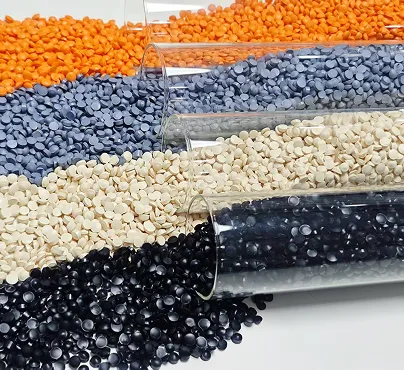
Para mejorar aún más su procesamiento y rendimiento, la resina de CPVC se combina con aditivos. Estos pueden incluir estabilizadores, modificadores de impacto, lubricantes y pigmentos. El resultado es un compuesto de CPVC, que se adapta a aplicaciones específicas como extrusión, moldeo por inyección o fabricación personalizada. No todos los compuestos son iguales, y la formulación exacta afecta a la resistencia, la durabilidad y el cumplimiento de las normas de la industria.
Tipos de productos de CPVC
El CPVC es altamente versátil y puede fabricarse en muchas formas. Los tipos de productos comunes incluyen:
- Tuberías y accesorios: Ampliamente utilizados para fontanería, sistemas de rociadores contra incendios y manejo de fluidos industriales.
- Sistemas de conductos: Para el transporte fiable de humos y gases corrosivos.
- Láminas y revestimientos: Aplicados en equipos industriales, tanques y recubrimientos protectores.
- Piezas personalizadas: Componentes moldeados por inyección o fabricados para equipos y aplicaciones especiales.
Aplicaciones comunes del CPVC
Desde la década de 1950, el CPVC se ha utilizado en una lista creciente de industrias. En fontanería, se emplea tanto para sistemas de agua potable fría como caliente. En entornos industriales, se utiliza para transportar productos químicos, fertilizantes y aguas residuales. Las centrales eléctricas, las instalaciones mineras y las plantas de procesamiento químico también confían en el CPVC debido a su capacidad para manejar fluidos agresivos bajo presión. Además, el CPVC se utiliza en recubrimientos, pinturas y aplicaciones eléctricas como aislamiento de cables y carcasas protectoras.
Instalación y manipulación
Una de las razones por las que el CPVC es popular es su facilidad de instalación. Es ligero (aproximadamente una octava parte del peso del acero), lo que facilita su manipulación y transporte. Se puede cortar y fabricar en el lugar sin herramientas especiales, y los métodos de unión como el cementado con disolvente o la soldadura por aire caliente son sencillos. La instalación de CPVC no requiere llamas abiertas, lo que reduce los riesgos de seguridad. Con una instalación adecuada y el cumplimiento de las normas, los sistemas de CPVC son duraderos y rentables.
Por qué no todo el CPVC es igual
Es importante señalar que no todos los materiales de CPVC son iguales. Los diferentes fabricantes y métodos de composición dan lugar a variaciones en la calidad y el rendimiento. Por eso son esenciales las certificaciones y el cumplimiento de normas como ASTM, ANSI, AWWA, NSF y FDA. Elegir un proveedor de confianza garantiza una calidad, durabilidad y seguridad constantes para aplicaciones críticas.
Conclusión
El policloruro de vinilo clorado es un material especializado que combina las fortalezas del PVC con una mayor resistencia al calor, la presión y los productos químicos. Su versatilidad lo hace adecuado para fontanería, recubrimientos, equipos industriales y muchas otras aplicaciones. Con décadas de uso probado y reconocimiento global, el CPVC sigue siendo uno de los termoplásticos más fiables disponibles en la actualidad.
Si está buscando un proveedor de CPVC, Xuye New Materials Co., Ltd. (XUYE) proporciona resina de CPVC y compuestos de CPVC de alta calidad respaldados por I+D profesional, producción avanzada y reputación internacional. Contacte con XUYE hoy para obtener más información sobre nuestras soluciones de CPVC.