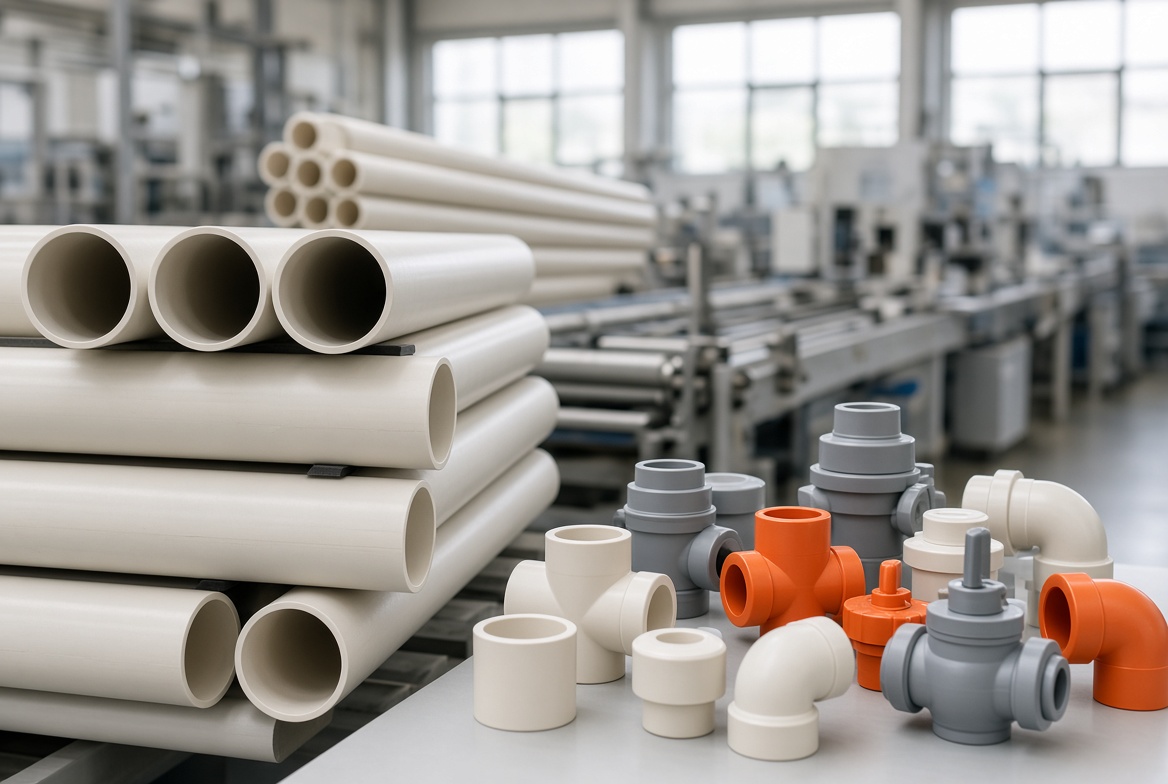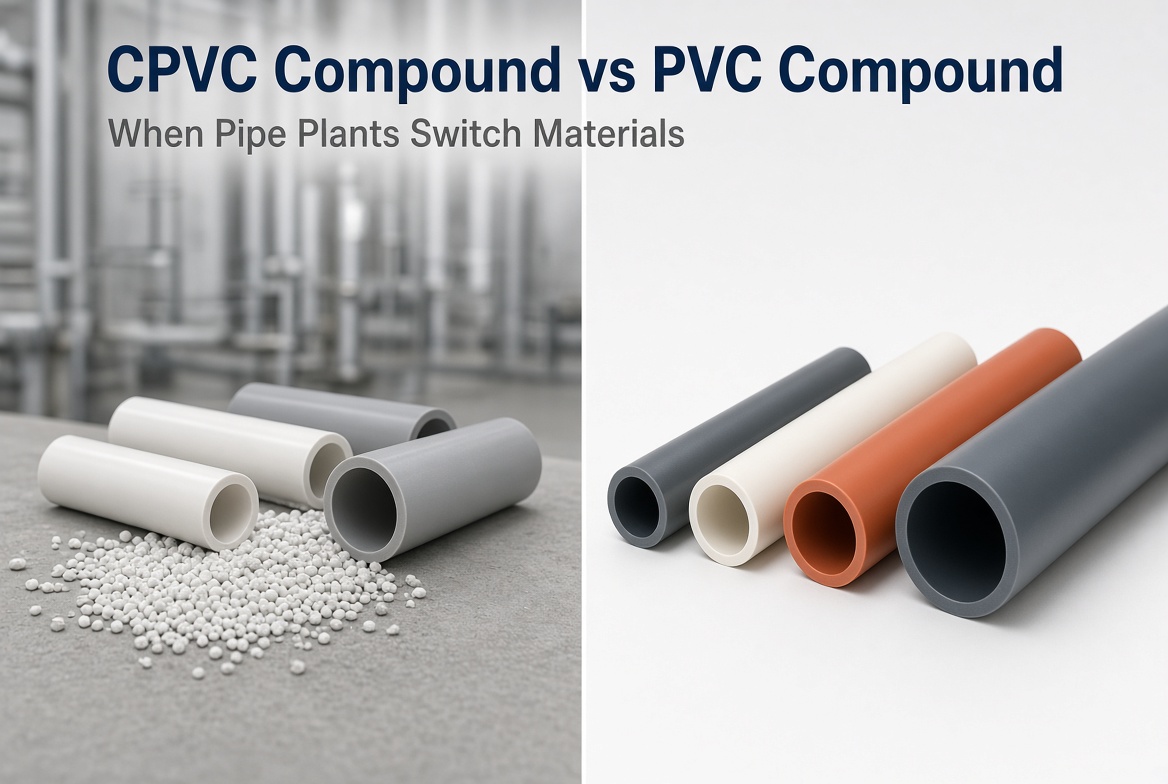
Cuando se trata de elegir materiales de tubería para fontanería, sistemas industriales o proyectos de construcción, el CPVC (policloruro de vinilo clorado) y el UPVC (policloruro de vinilo no plastificado) son dos de las opciones más utilizadas. Ambos derivan del PVC, pero difieren en su composición química, propiedades y aplicaciones. Comprender estas diferencias ayuda a ingenieros, constructores y fabricantes a tomar la decisión correcta para cada proyecto.
¿Qué es el CPVC?
Para empezar, CPVC significa policloruro de vinilo clorado. Se produce mediante la cloración de resina de PVC estándar, lo que aumenta su contenido de cloro y mejora su resistencia al calor y a los productos químicos. Este material puede soportar temperaturas más altas (hasta unos 93°C o 200°F), lo que lo hace adecuado para el suministro de agua caliente, el manejo de líquidos industriales y el procesamiento químico.
Debido a su alta tolerancia al calor y durabilidad, el CPVC se utiliza ampliamente tanto en sistemas de fontanería residenciales como industriales. Mantiene su integridad estructural incluso bajo altas temperaturas y presiones, proporcionando una fiabilidad a largo plazo en entornos exigentes.
¿Qué es el UPVC?
Por otro lado, el UPVC se refiere al policloruro de vinilo no plastificado. A diferencia del CPVC, no contiene plastificantes, que son aditivos químicos que hacen que los materiales sean más blandos o flexibles. Como resultado, el UPVC es rígido y resistente, con una excelente resistencia a la corrosión, a la intemperie y a la mayoría de los ácidos y álcalis.
El UPVC es ideal para tuberías de agua fría, marcos de ventanas, puertas y sistemas de drenaje. Su rigidez y resistencia a la exposición ambiental lo convierten en un material preferido en la construcción, especialmente donde se requiere durabilidad a largo plazo y bajo mantenimiento.
Diferencias químicas y físicas
Continuando, una de las diferencias clave entre el CPVC y el UPVC radica en su contenido de cloro. El CPVC contiene aproximadamente entre un 63% y un 69% de cloro, en comparación con aproximadamente un 56% a 57% en el UPVC. Este mayor contenido de cloro le otorga al CPVC una mejor estabilidad térmica y resistencia química, especialmente contra ácidos fuertes, álcalis y solventes orgánicos.
Físicamente, el CPVC es ligeramente más flexible que el UPVC, lo que facilita su instalación en sistemas de tuberías complejos. El UPVC, al ser rígido, ofrece una estabilidad dimensional y una resistencia al impacto superiores, lo cual es útil en aplicaciones estructurales y exteriores.
Resistencia a la temperatura y a la presión
El rendimiento ante la temperatura y la presión son factores decisivos importantes entre ambos materiales. El CPVC puede manejar temperaturas y presiones más altas, lo que lo hace adecuado para aplicaciones de agua caliente y ciertos procesos industriales. Puede conservar su resistencia y propiedades mecánicas incluso al transportar fluidos calientes.
Por el contrario, el UPVC solo es adecuado para fluidos fríos o a temperatura ambiente. La exposición a altas temperaturas puede ablandar el material o reducir su vida útil. Sin embargo, dentro de su rango operativo, el UPVC ofrece un excelente rendimiento de presión y resiste eficazmente la corrosión y las incrustaciones.
Aplicaciones e industrias
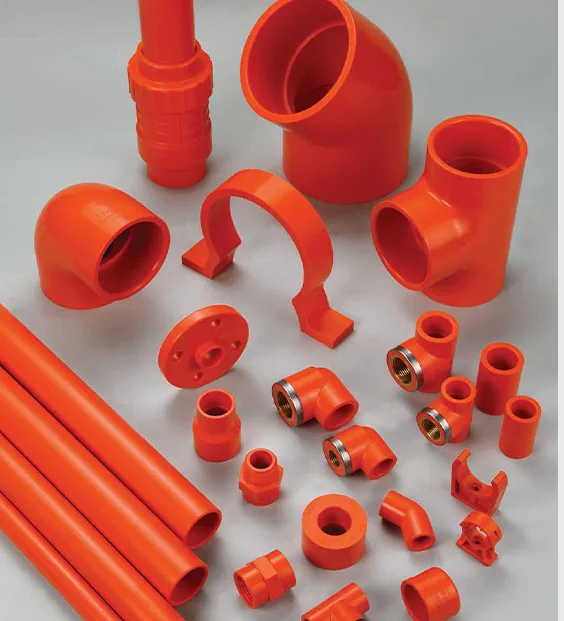
En términos de aplicación, el CPVC se utiliza a menudo en entornos que requieren resistencia al calor y durabilidad química. Esto incluye:
- Sistemas de agua caliente residenciales y comerciales
- Tuberías de transporte de productos químicos
- Sistemas de rociadores contra incendios
- Manejo de fluidos industriales
El UPVC, en comparación, se encuentra comúnmente en:
- Redes de distribución de agua fría
- Sistemas de drenaje y alcantarillado
- Riego agrícola
- Marcos de puertas y ventanas
Cada material se adapta a necesidades específicas. Por ejemplo, el CPVC funciona mejor en sistemas de fontanería que transportan agua caliente o productos químicos corrosivos, mientras que el UPVC es ideal para la construcción y tuberías de baja temperatura que requieren rigidez y resistencia a la intemperie.
Coste e instalación
Al evaluar el coste y la instalación, el UPVC generalmente tiene un precio más bajo debido a su proceso de producción más sencillo. También es ligero y fácil de fabricar, lo que lo convierte en una solución rentable para proyectos a gran escala, como sistemas de agua municipales o estructuras de construcción.
El CPVC, al ser un material más modificado químicamente, es ligeramente más caro, pero ofrece un mayor rendimiento en aplicaciones exigentes. Su instalación requiere cementos solventes especiales diseñados para CPVC, mientras que el UPVC se puede unir con adhesivos o accesorios de PVC estándar. Sin embargo, ambos son más fáciles de manejar que las tuberías de metal, lo que ahorra mano de obra y reduce el tiempo total de instalación.
Consideraciones ambientales y de durabilidad
Tanto el CPVC como el UPVC son altamente duraderos y reciclables, lo que contribuye a una larga vida útil y sostenibilidad en las tuberías y la construcción. Resisten la corrosión, las incrustaciones y el crecimiento biológico, lo que reduce los costes de mantenimiento y el impacto ambiental.
Sin embargo, vale la pena señalar que la mayor resistencia al calor y a los productos químicos del CPVC le otorga una ventaja en entornos operativos hostiles. El UPVC, mientras tanto, destaca por su resistencia a los rayos UV y su estabilidad estructural a largo plazo, especialmente en entornos exteriores.
Elegir entre CPVC y UPVC
En última instancia, la decisión entre CPVC y UPVC depende de los requisitos de temperatura, el tipo de fluido y el entorno de instalación. Para proyectos que involucran agua caliente o productos químicos, el CPVC ofrece una solución más segura y duradera. Para agua fría, drenaje o aplicaciones de construcción, el UPVC sigue siendo la opción práctica y económica.
Al comprender las fortalezas únicas de cada material, los diseñadores de proyectos y los ingenieros pueden seleccionar la opción más eficiente y rentable que garantice la fiabilidad del sistema a largo plazo.
Conclusión
En resumen, tanto el CPVC como el UPVC ofrecen ventajas valiosas según el caso de uso específico. El CPVC destaca por su resistencia al calor y a los productos químicos, mientras que el UPVC sobresale en rigidez, resistencia a la intemperie y asequibilidad. Ya sea que se utilicen en fontanería, construcción o aplicaciones industriales, la elección correcta del material puede afectar significativamente el rendimiento, la seguridad y la rentabilidad.
Si busca soluciones de tuberías de CPVC de alta calidad, Xuye proporciona materiales duraderos y fiables diseñados para diversas aplicaciones. Con tecnología de producción avanzada y un estricto control de calidad, Xuye garantiza un rendimiento constante y un valor a largo plazo para sus proyectos. Contactar con Xuye hoy mismo para obtener más información sobre nuestras soluciones personalizadas de tuberías de plástico.