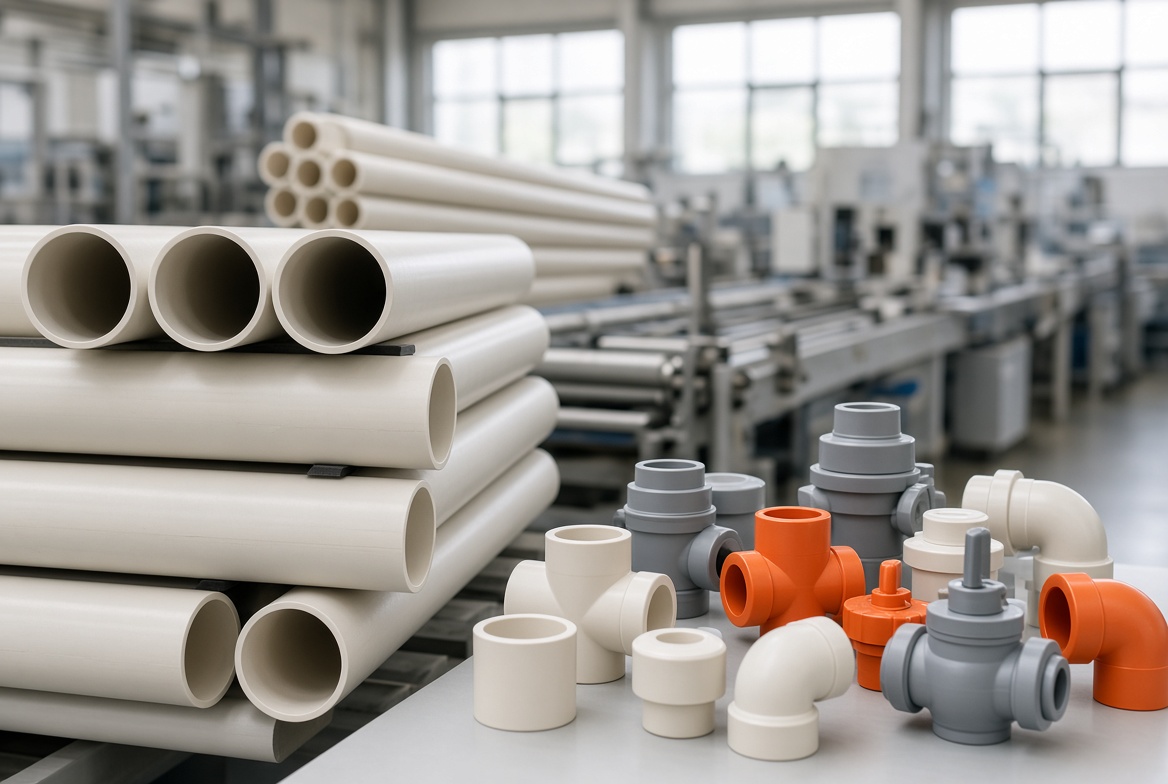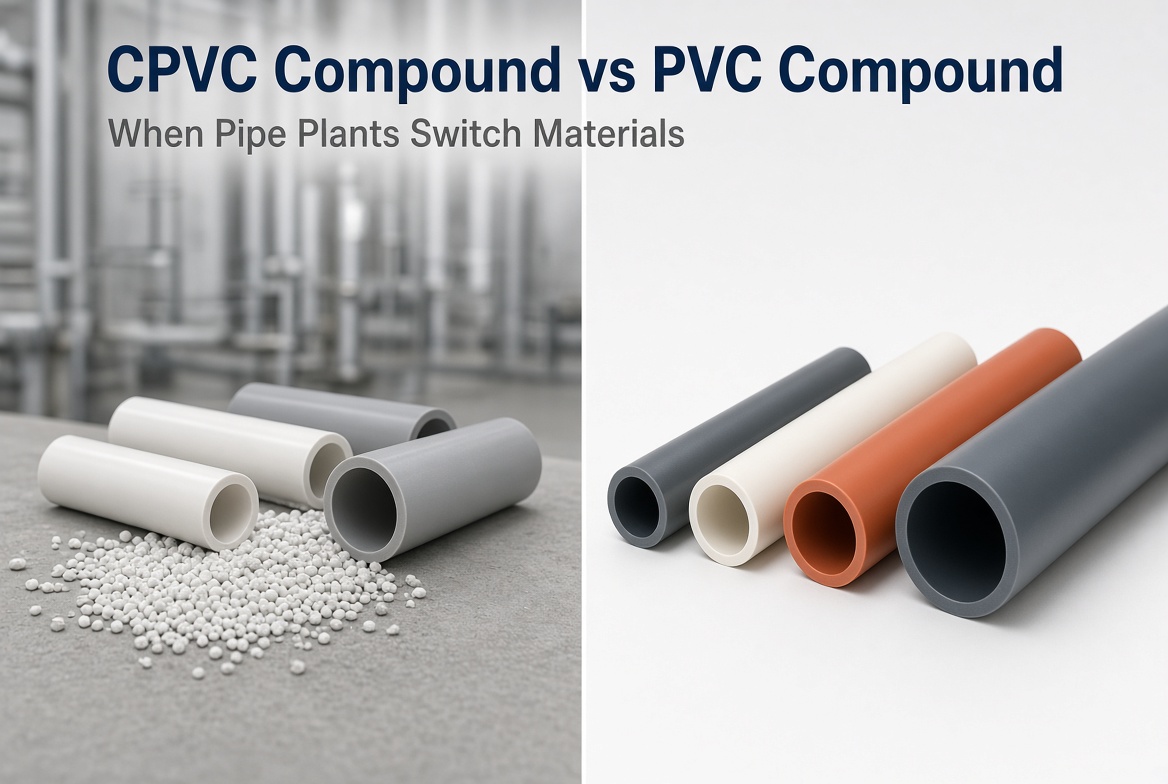
CPVC (كلوريد البوليفينيل المكلور) هو PVC معدل يتم إنتاجه عن طريق الكلورة اللاحقة، مما يوفر مقاومة فائقة للحرارة، ومقاومة للتآكل الكيميائي، وخصائص ميكانيكية ممتازة. فيما يلي ملخص للنقاط الأساسية المتعلقة بخلفيته.

1. تاريخ التطوير
- الأصل: تم تطوير CPVC لأول مرة في أواخر الخمسينيات وأوائل الستينيات لتحسين مقاومة PVC للحرارة.
- التسويق التجاري: بحلول منتصف الستينيات، دخل CPVC إلى السوق، بشكل أساسي لأنظمة أنابيب المياه الساخنة والأنظمة الصناعية.
2. التركيب الكيميائي
- الكلورة: يتم كلورة راتنج CPVC لرفع محتوى الكلور من 56.7% إلى 63-69%.
- التركيب الجزيئي: يزيد الكلور الإضافي من القطبية الجزيئية، مما يعزز الاستقرار الحراري والمقاومة الكيميائية.
3. الخصائص الرئيسية
- مقاومة الحرارة: درجة حرارة التشغيل تصل إلى 200 درجة فهرنهايت (93 درجة مئوية)، وهي مثالية لأنظمة المياه الساخنة.
- المقاومة الكيميائية: ممتازة ضد الأحماض والقلويات والأملاح.
- القوة الميكانيكية: قوة عالية وصلابة ضد الصدمات.
- مقاومة اللهب: مؤشر أكسجين مرتفع، وتتميز بخاصية الإطفاء الذاتي بطبيعتها.
4. مجالات التطبيق
- البناء: أنظمة سباكة المياه الباردة والساخنة.
- الصناعة: أنابيب للوسائط الكيميائية القوية.
- الحماية من الحرائق: أنظمة الرش الآلي.
- الصناعة الكيميائية: المعدات وخزانات التخزين.
5. المعايير والشهادات
- المعايير الدولية: ASTM، NSF، ISO.
- شهادة مياه الشرب: NSF/ANSI 61 والموافقات ذات الصلة.
6. وضع السوق
- السوق العالمي: نمو مطرد في السنوات الأخيرة، مدفوعاً بقطاعات البناء والصناعة والكيمياء.
7. الاتجاهات المستقبلية
- الابتكار التقني: تحسينات إضافية في الأداء الحراري والكيميائي والميكانيكي.
- المتطلبات البيئية: تركيز أكبر على التركيبات والعمليات الصديقة للبيئة.
- توسيع نطاق التطبيق: زيادة الاستخدام في الطاقة الجديدة، والهندسة البيئية، وغيرها من المجالات الناشئة.
منذ تسويقه تجارياً في الستينيات، أصبح CPVC مادة عالية الأداء معتمدة على نطاق واسع في تطبيقات البناء والصناعة والكيمياء. ستؤدي التطورات التكنولوجية المستمرة والمتطلبات البيئية الأكثر صرامة إلى توسيع آفاقه بشكل أكبر.