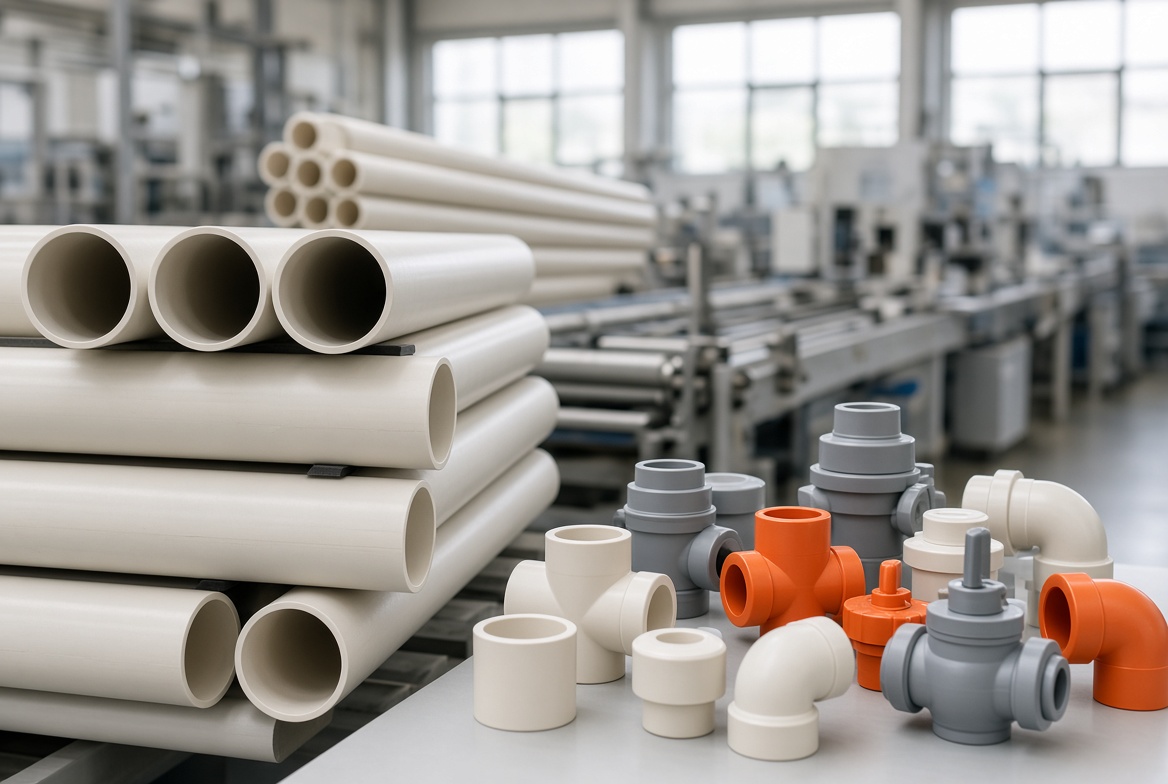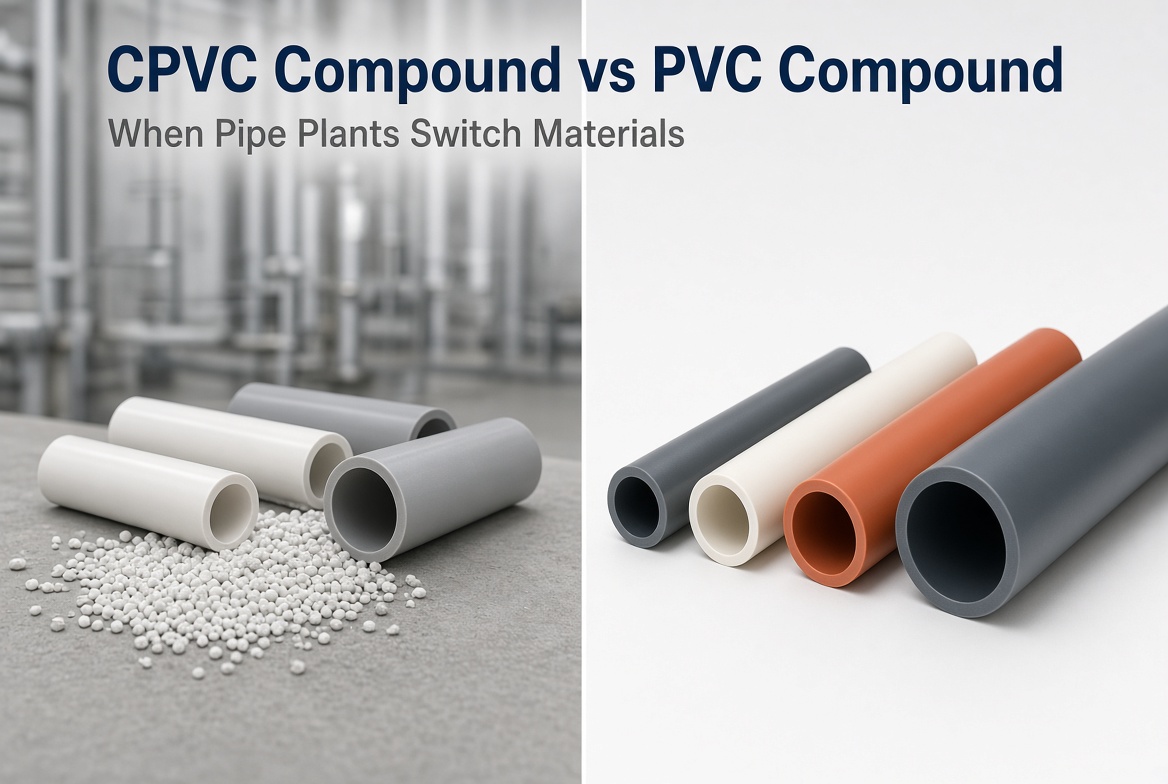
PVC (поливинилхлорид) и CPVC (хлорированный поливинилхлорид) — два наиболее часто используемых материала в трубопроводных системах по всему миру. Их часто путают из-за схожего внешнего вида и пересекающихся областей применения. Однако их свойства различаются, и использование неподходящего материала может повлиять на производительность и безопасность системы. В этой статье объясняются основные различия между CPVC и PVC, включая их состав, эксплуатационные характеристики, методы монтажа, области применения и стоимость, чтобы помочь вам сделать правильный выбор.
Химический состав
Первое ключевое различие заключается в химическом составе. PVC — это полимер, состоящий из углерода, водорода и хлора. CPVC, в свою очередь, производится путем хлорирования PVC, что увеличивает содержание хлора. Этот более высокий уровень хлора изменяет молекулярную структуру материала, делая его CPVC более устойчивым к коррозии, химическим веществам и росту микроорганизмов. Этим объясняется, почему CPVC часто выбирают для сложных условий эксплуатации, где PVC может работать менее эффективно.
Термостойкость
Еще одно важное различие — температурная устойчивость. Трубы из PVC обычно выдерживают температуру до 140°F (60°C). При превышении этого значения PVC становится мягким и теряет прочность. CPVC, благодаря более высокому содержанию хлора, может выдерживать гораздо более высокие температуры — до 200°F (93°C). По этой причине CPVC широко используется в системах горячего водоснабжения и промышленных установках, где критически важна термостойкость.
Давление и прочность
При сравнении номинального давления и прочности CPVC обычно показывает лучшие результаты. Например, предел прочности на разрыв у PVC составляет около 7500 фунтов на кв. дюйм (PSI), тогда как у CPVC он ближе к 8200 PSI. Эта дополнительная прочность означает, что CPVC лучше сохраняет свои характеристики под нагрузкой и в условиях высоких температур. Оба материала доступны в стандартах Schedule 40 и Schedule 80, но CPVC более эффективно сохраняет свою долговечность при воздействии повышенного рабочего давления и тепла.
Монтаж и соединение
Хотя оба материала легкие и простые в монтаже, они требуют различных методов соединения. Для труб из PVC используется клей-растворитель, соответствующий стандартам ASTM D2564, в то время как для труб из CPVC необходим клей-растворитель, отвечающий стандартам ASTM F493. Эти клеи не являются взаимозаменяемыми, так как химический состав каждого материала требует специальной формулы для обеспечения надежного соединения. Монтажникам важно всегда проверять этикетки праймеров и клеев, чтобы избежать негерметичности соединений.
Размеры труб и внешний вид
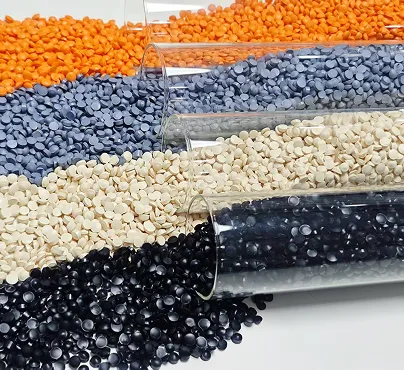
PVC и CPVC также можно различить по размерам и цветам. Трубы из PVC измеряются только в NPS (номинальный размер трубы), в то время как CPVC поставляется как в NPS, так и в CTS (размер медной трубы), что обеспечивает более широкую совместимость в определенных системах. Что касается внешнего вида, PVC обычно бывает белого или темно-серого цвета, тогда как CPVC чаще встречается в светло-сером, кремовом или желтом цвете. Эти различия облегчают идентификацию материалов при выборе и монтаже.
Вопросы стоимости
Стоимость — еще один фактор, влияющий на принятие решения. PVC, как правило, дешевле: труба Schedule 40 стоит в среднем около $0,40 за фут. CPVC, напротив, стоит дороже — в среднем около $2,50 за фут для Schedule 40. Более высокая цена отражает его повышенную термостойкость и прочность. При выборе между ними важно сбалансировать первоначальные затраты с потребностями в долгосрочной эксплуатации.
Области применения
И PVC, и CPVC универсальны и используются во многих отраслях, но их применение различается в зависимости от требований к производительности. PVC чаще всего используется для систем холодного водоснабжения, дренажа, ирригации и электрических кабелепроводов. Его доступность делает его идеальным для общих жилых и коммерческих проектов. CPVC, с другой стороны, является предпочтительным выбором для систем горячего водоснабжения, линий химической обработки и систем пожаротушения, где необходимы повышенная термостойкость и химическая стойкость.
Безопасность и особые указания
Безопасность — еще один момент, который следует учитывать. Оба материала выделяют вредные газы при нагревании или резке, поэтому во время монтажа необходимы надлежащая вентиляция и средства индивидуальной защиты. Для систем питьевого водоснабжения важно выбирать продукцию, сертифицированную по стандартам ANSI/NSF 61, чтобы обеспечить безопасность питьевой воды. Кроме того, при наружной установке требуется защита от ультрафиолета, так как длительное воздействие солнца может привести к деградации как PVC, так и CPVC, если трубы не закопаны в землю или не покрыты защитным слоем.
Сравнительная таблица
| Свойство | PVC | CPVC |
| Химический состав | Стандартный поливинилхлорид | Хлорированный поливинилхлорид |
| Макс. температура | 140°F (60°C) | 200°F (93°C) |
| Прочность на разрыв | ~7500 PSI | ~8200 PSI |
| Размеры труб | Только NPS | NPS и CTS |
| Цвета | Белый, темно-серый | Светло-серый, кремовый, желтый |
| Средняя стоимость (за фут) | $0,40 (Schedule 40) | $2,50 (Schedule 40) |
| Области применения | Холодная вода, дренаж, ирригация, кабелепроводы | Горячая вода, химические системы, пожарные спринклеры |
Заключение
Подводя итог, можно сказать, что PVC и CPVC могут выглядеть похоже, но их эксплуатационные возможности сильно различаются. PVC лучше всего подходит для холодной воды, низких температур и бюджетных проектов, в то время как CPVC лучше подходит для горячей воды, промышленного использования и сред, требующих повышенной химической стойкости. Понимая их уникальные свойства, вы сможете выбрать правильный материал для своего проекта и обеспечить его долгосрочную надежность.
Если вы ищете надежного поставщик хлорированного поливинилхлорида, Xuye предоставляет высококачественную продукцию из CPVC, разработанную для удовлетворения самых строгих требований. Благодаря надежным эксплуатационным характеристикам и профессиональному обслуживанию, Xuye готова поддержать ваши трубопроводные проекты решениями, на которые можно положиться.